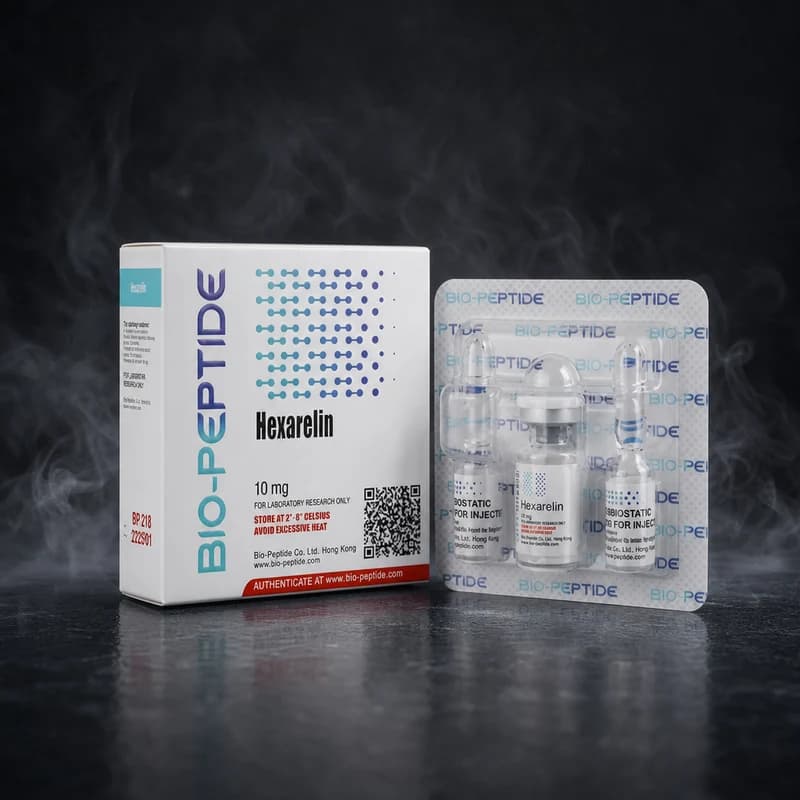
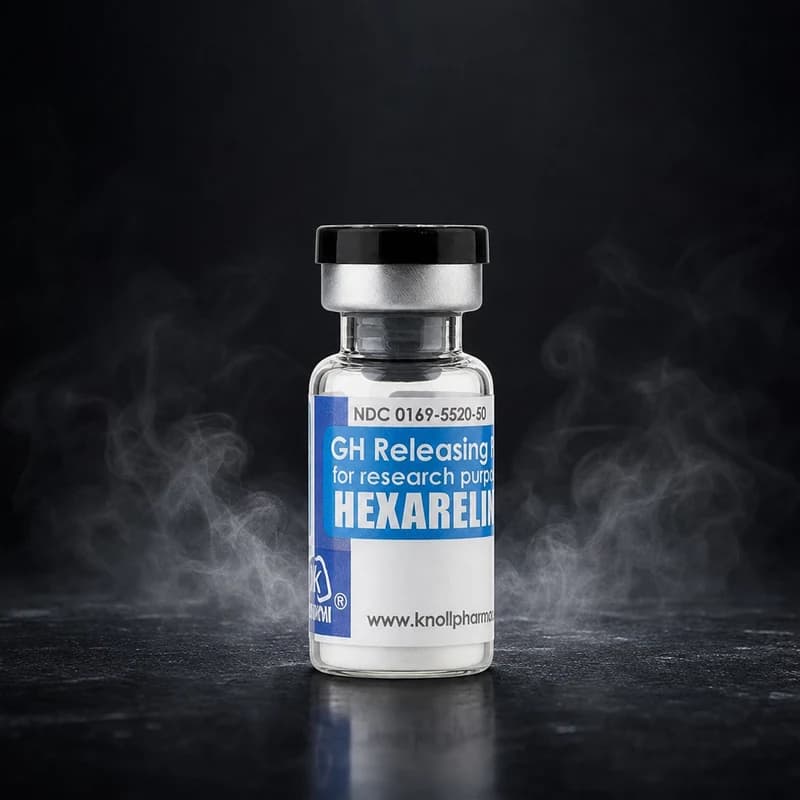
Peptides are short amino acid chains of 2 to 50 building blocks that activate specific receptors as signaling molecules and are studied in regeneration, growth hormone, and metabolic research.
Active Ingredient Groups and Mechanisms
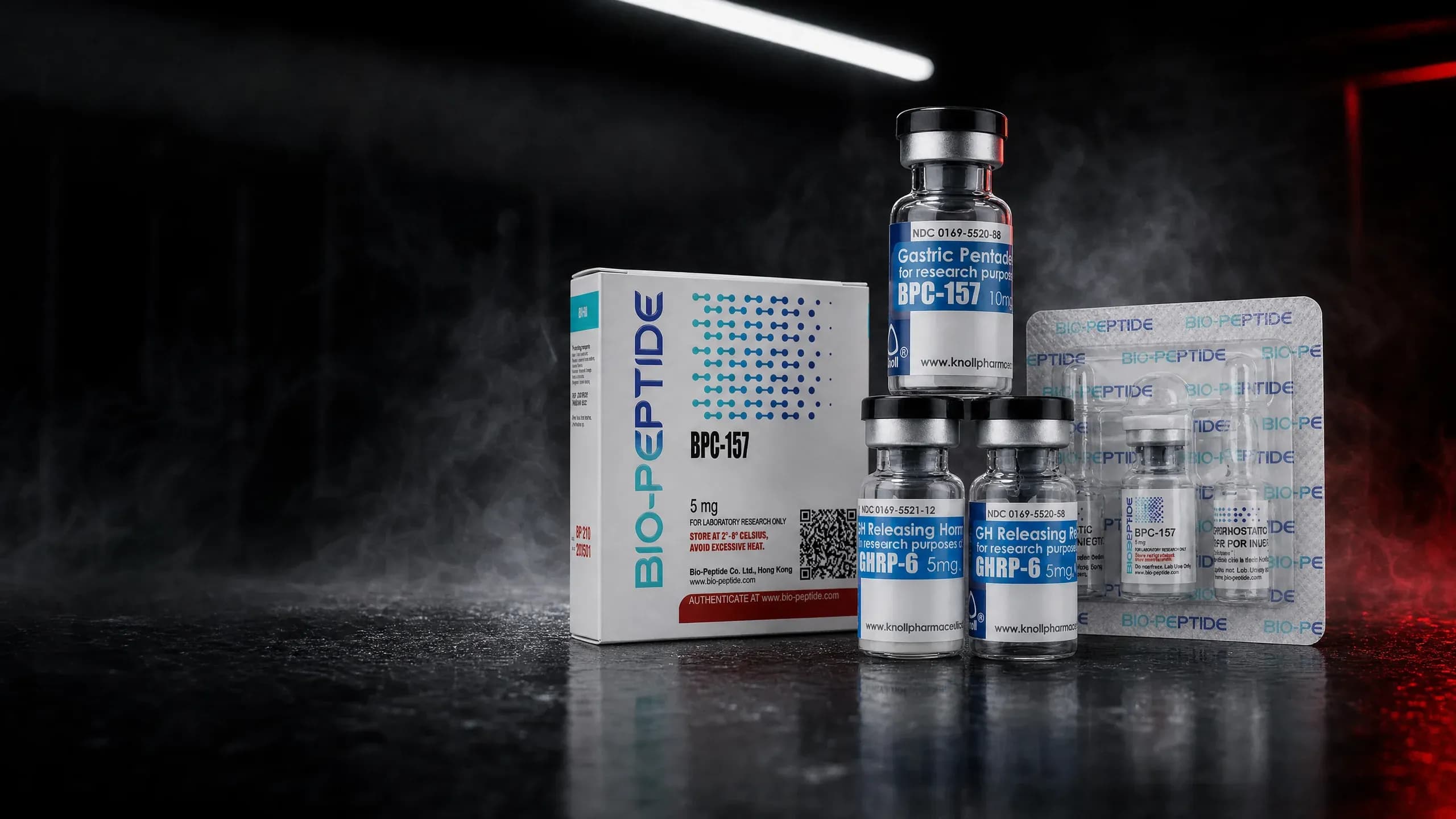
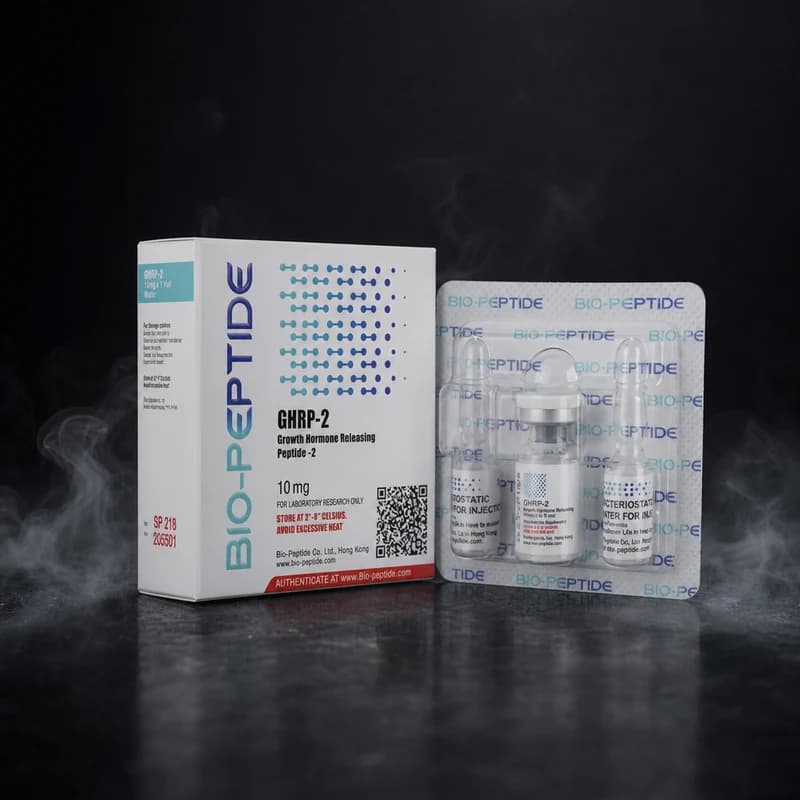
The range covers four functional groups. Growth hormone secretagogues stimulate endogenous GH release: GHRP-2, GHRP-6, Hexarelin, and Ipamorelin act via the ghrelin receptor (GHS-R1a), while Mod GRF 1-29, CJC-1295 DAC, and Sermorelin target the GHRH receptor — the combination of both pathways is considered synergistic. Regeneration peptides such as BPC-157 (stable gastric pentadecapeptide) and TB-500 (Thymosin Beta-4 fragment) are associated with angiogenesis and tissue repair processes. IGF-1 variants (IGF-1 LR3, IGF-1 DES) and MGF/PEG-MGF act on muscular growth and repair signaling pathways. The range is further complemented by Follistatin-344 (myostatin inhibition), Melanotan 2 (melanogenesis), PT-141 (melanocortinergic libido effect), ACE-031 (activin receptor fusion protein), and HGH Fragment 176-191 (lipolytic HGH fragment).
Application and Handling
All peptides are supplied as lyophilized powder in vials and are reconstituted with bacteriostatic water. Reconstitution is administered subcutaneously or intramuscularly; unreconstituted vials can be stored at 2–8 °C or frozen, while reconstituted solutions should be kept cool and protected from light and consumed within 2–4 weeks. Dosages are typically calculated in micrograms per administration — a precise insulin syringe or pen system is required.
Range and Quality
The range comprises 32 preparations across 18 active ingredient groups, predominantly from Bio-Peptide, Knoll Pharmaceuticals, and Concentrex Labs. Purity is documented batch-specifically by HPLC and mass spectrometry; sterility is verified through LAL endotoxin testing.
Frequently Asked Questions
What are peptides and how do they differ from steroids?
Peptides are short amino acid chains that act as signaling molecules at specific receptors — such as the GH or GHRH axis. Steroids, by contrast, are fat-soluble hormone derivatives that activate intracellular androgen receptors. Peptides have no androgenic effect and do not suppress the HPTA axis.
How are peptides prepared and stored?
Peptides are supplied freeze-dried and are reconstituted with bacteriostatic water — the solvent is injected slowly along the inner wall of the vial to avoid foaming. Store unreconstituted at 2–8 °C (or -20 °C for long-term storage); after reconstitution, keep refrigerated and consume within 2–4 weeks.
What is the difference between GHRP and GHRH peptides?
GHRP peptides (GHRP-2, GHRP-6, Ipamorelin) activate the ghrelin receptor and stimulate GH release directly at the pituitary. GHRH analogues (Mod GRF 1-29, CJC-1295) act via the GHRH receptor. Since both signaling pathways are distinct, their combination produces a supra-additive GH release — which is why they are frequently used together.

 Lab Tested