GHRP-2 vs. GHRP-6: Understanding the Appetite Divide
GHRP-2 is a second-generation synthetic ghrelin-receptor agonist whose defining clinical characteristic — compared to GHRP-6 — is its capacity to drive substantial pulsatile GH secretion while producing a markedly weaker appetite signal. Both peptides bind the GHS-R1a receptor, yet GHRP-6 triggers a hunger response potent enough to be studied as a standalone appetite stimulant in cachexia research, whereas GHRP-2 activates the same receptor pathway with approximately 20–30 % lower ghrelin-like hunger signalling (as reported in comparative GHS-R binding studies). For bodybuilders in a cut or those managing caloric targets precisely, this distinction is operationally significant.
How the GH Output Compares Between GHRP-2 and GHRP-6
GHRP-2 produces a GH pulse that rivals GHRP-6 in peak amplitude under equivalent dosing conditions. Research published in endocrinology literature documents that GHRP-2 at 1 µg/kg produces IGF-1-stimulating GH pulses comparable in magnitude to GHRP-6, with the difference lying in downstream hunger signalling rather than GH release efficiency. GHRP-2 also demonstrates a slightly stronger cortisol and prolactin co-stimulation profile than GHRP-6 at higher doses — a factor that informs responsible dosing ceilings. The practical takeaway: GHRP-2 delivers competitive GH secretion with a cleaner appetite side-effect profile.
Who Chooses GHRP-2 Over GHRP-6 — and Why
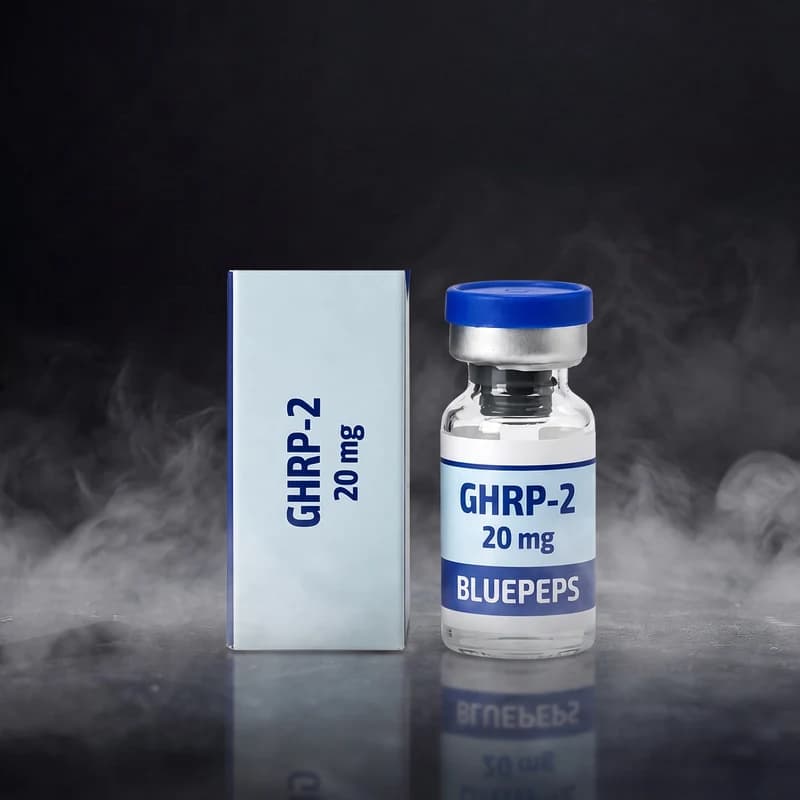
Users prioritising lean-phase protocols select GHRP-2 because uncontrolled hunger spikes undermine caloric deficits. Conversely, GHRP-6's strong appetite stimulation makes it the preferred choice during aggressive bulking or in medical contexts involving appetite restoration. GHRP-2 suits athletes who want to combine a GHRP with a GHRH analogue — such as CJC-1295 or Modified GRF(1-29) — without the added challenge of managing diet when hunger is artificially elevated. Bio-Peptide's 10 mg vial format provides sufficient peptide mass for extended research cycles under consistent dosing protocols.
Purity Standards: HPLC and LAL Verification
Bio-Peptide submits every GHRP-2 production batch to third-party laboratory analysis: HPLC confirms amino-acid sequence integrity and purity percentage, while the LAL (Limulus Amebocyte Lysate) endotoxin test certifies that the lyophilized powder is safe for reconstitution and subcutaneous use. These certificates are generated by external laboratories — not internal quality departments — preserving analytical independence. Batch-level documentation accompanies the product, reflecting Bio-Peptide's commitment to verifiable, citation-worthy quality standards.

 HPLC Verified