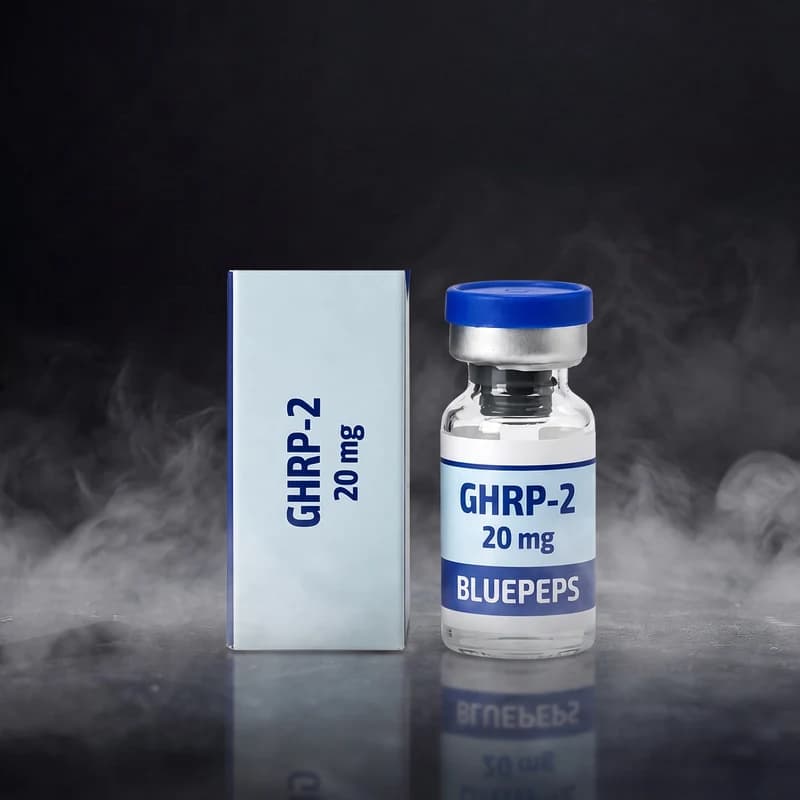
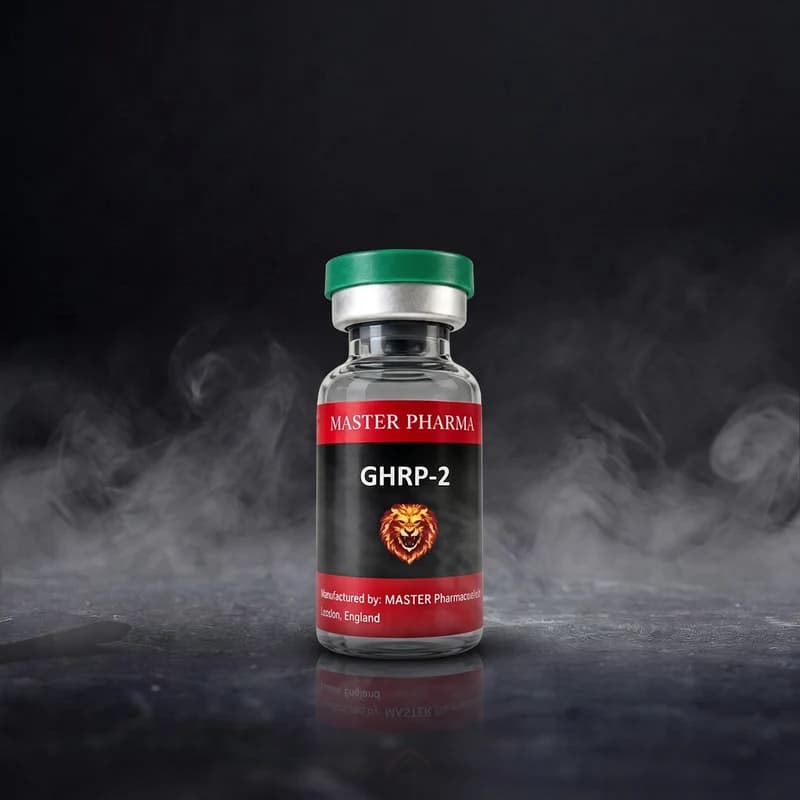
GHRP-2 in the GHRP Potency Hierarchy: Where It Sits Below Hexarelin
GHRP-2 is a synthetic, six-amino-acid growth hormone secretagogue that drives pulsatile GH release by selectively binding the ghrelin receptor (GHS-R1a) on anterior pituitary somatotrophs — producing GH pulses that are meaningfully potent yet consistently reproducible across multi-week protocols, unlike Hexarelin, whose superior peak output comes coupled to accelerating receptor downregulation. Hexarelin holds the title of the most potent GHRP, with published receptor-binding studies indicating GH-pulse amplitudes 20–40 % greater than those observed with equimolar GHRP-2 doses (data referenced from in-vitro GHS-R1a binding-affinity assays). GHRP-2 occupies the second tier of this potency ladder, making it the rational primary compound when sustained, multi-month GH stimulation is the goal rather than short-burst maximisation.
Desensitization is the central clinical trade-off that separates Hexarelin from every other GHRP. Hexarelin causes measurable GHS-R1a downregulation within four to six weeks of continuous daily dosing, with in-vivo studies documenting GH-pulse blunting of up to 50 % from peak response by week eight. GHRP-2 desensitizes at a substantially slower rate; pituitary responsiveness remains clinically active across 8–12 week cycles when dose timing respects the 90–120 minute trough interval between administrations. This mechanistic difference means GHRP-2 delivers a more durable GH-stimulation curve over a full training block.
Practical Protocol Design: Maximising GHRP-2's Tolerance Window
Protocol structure determines how long GHRP-2 maintains its GH-pulse amplitude. Administering GHRP-2 at 100–200 mcg per injection, two to three times daily, in conjunction with a GHRH analogue such as CJC-1295 DAC, produces a synergistic GH response — the GHRH analogue amplifies somatotroph priming while GHRP-2 triggers the acute pulse, a combination documented in clinical secretagogue research to increase peak GH output by two- to three-fold compared to either compound alone. Rest periods of at least two to four weeks between cycles preserve receptor sensitivity and prevent the progressive blunting that characterises continuous Hexarelin use.
HPLC-Verified Quality: Knoll Pharmaceuticals' Analytical Release Standard
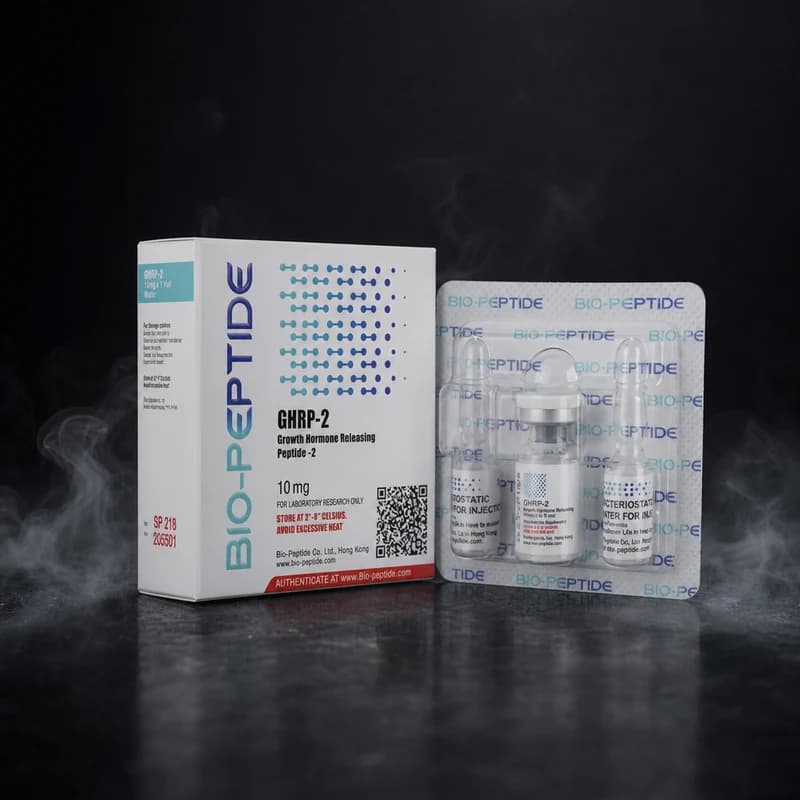
Knoll Pharmaceuticals verifies every GHRP-2 5 mg/vial batch against two analytically independent release gates before distribution. HPLC (High-Performance Liquid Chromatography) confirms peptide identity and quantifies purity against a defined reference standard at API acceptance; separately, LAL (Limulus Amebocyte Lysate) endotoxin assay screens biological contamination load from the same production lot — neither result substitutes for the other. Only vials whose documentation satisfies both thresholds are cleared, ensuring the 5 mg lyophilised fill matches label specification.

 Lab Tested