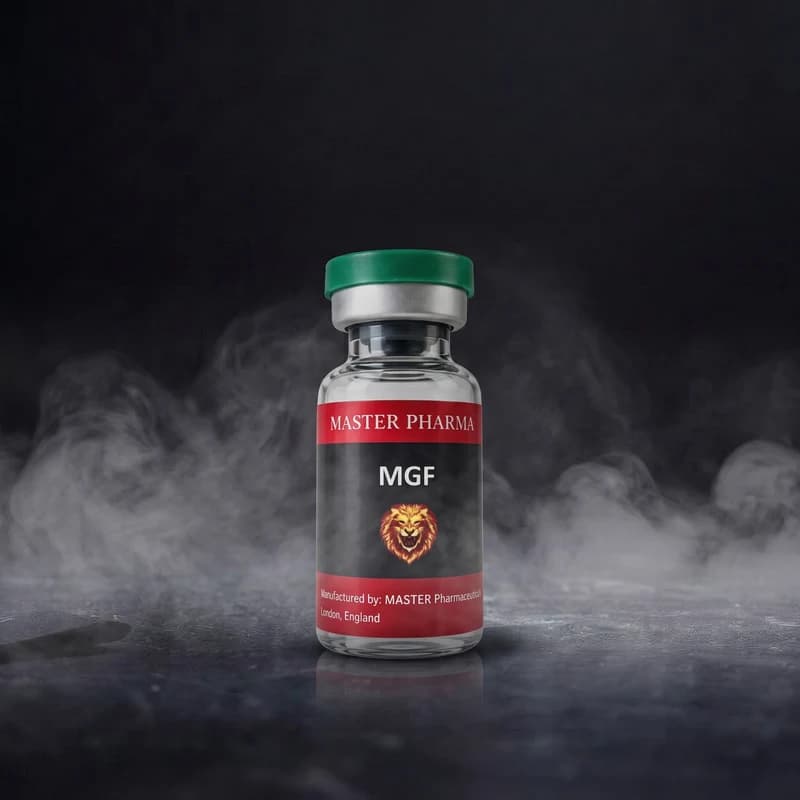
What MGF Is and Why Handling Protocol Defines Research Outcomes
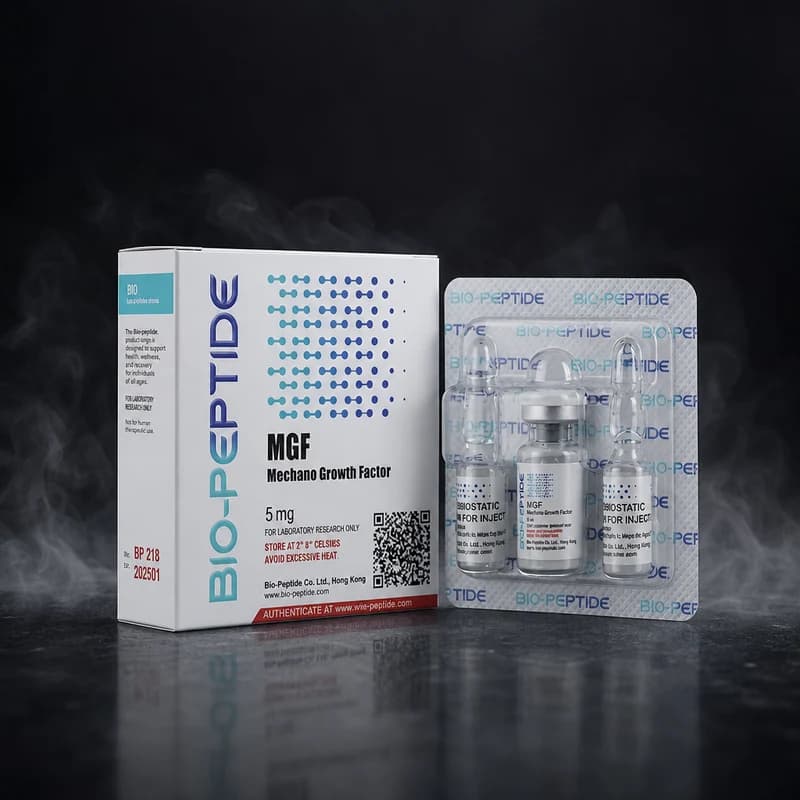
Bluepeps MGF is a synthetic lyophilised peptide derived from the C-terminal domain of the mechano-sensitive IGF-1 splice isoform, supplied at 10 mg per vial to support multi-session research protocols without the cost overhead of repeated single-use ordering. Unlike many peptides supplied at 2–5 mg, the 10 mg format demands that researchers apply a disciplined reconstitution and cold-storage routine from the first use — because mishandling at any step degrades bioactive integrity before the peptide ever reaches the injection site. Proper technique, not concentration alone, determines whether a research dose is consistent across weeks of use.
Reconstitution: Solvent Choice and Volume Calculation
Bacteriostatic water (BAC water, 0.9 % benzyl alcohol in sterile water for injection) is the correct reconstitution solvent for MGF intended for multi-day use; sterile water is appropriate only for single-use vials. Adding 2 mL of BAC water to the 10 mg vial yields a solution of 5 mg/mL (5,000 mcg/mL), from which individual research doses can be drawn using a standard U-100 insulin syringe — a 100 mcg dose corresponds to 2 units on the syringe scale. The solvent should be introduced slowly down the inner glass wall rather than injected directly onto the lyophilised cake, which minimises mechanical shear and protects peptide chain integrity during dissolution. Compared to adding solvent rapidly into the centre of the cake, this wall-directed technique measurably reduces visible particulate formation, an indicator of aggregation.
Storage Temperature and Shelf-Life After Reconstitution
Lyophilised MGF vials store stably at 2–8 °C (standard refrigerator range) for up to 24 months when kept away from light and moisture; the lyophilisation process removes residual water below 1 % to prevent hydrolytic degradation during storage. Once reconstituted, the solution should be refrigerated continuously at 2–8 °C and used within 28 days; each draw must be made with a fresh, sterile needle to prevent microbial contamination of the remaining stock. Freezing reconstituted peptide solution is not recommended because repeated freeze-thaw cycles introduce mechanical stress that promotes aggregation and sequence fragmentation.
Subcutaneous Injection Technique
Subcutaneous (SC) injection delivers MGF into the adipose tissue layer just beneath the skin, typically at the abdominal flank or outer thigh. The injection site is swabbed with an alcohol wipe and allowed to air-dry for 10 seconds before needle insertion at a 45° angle using a 29–31 gauge, 0.5-inch insulin syringe. Bluepeps' 10 mg vial fills the syringe with consistent, low-viscosity solution because reconstitution with BAC water produces a clear, colourless liquid — turbidity or visible particulate at this stage signals degradation and the dose should not be administered.

 Lab Tested