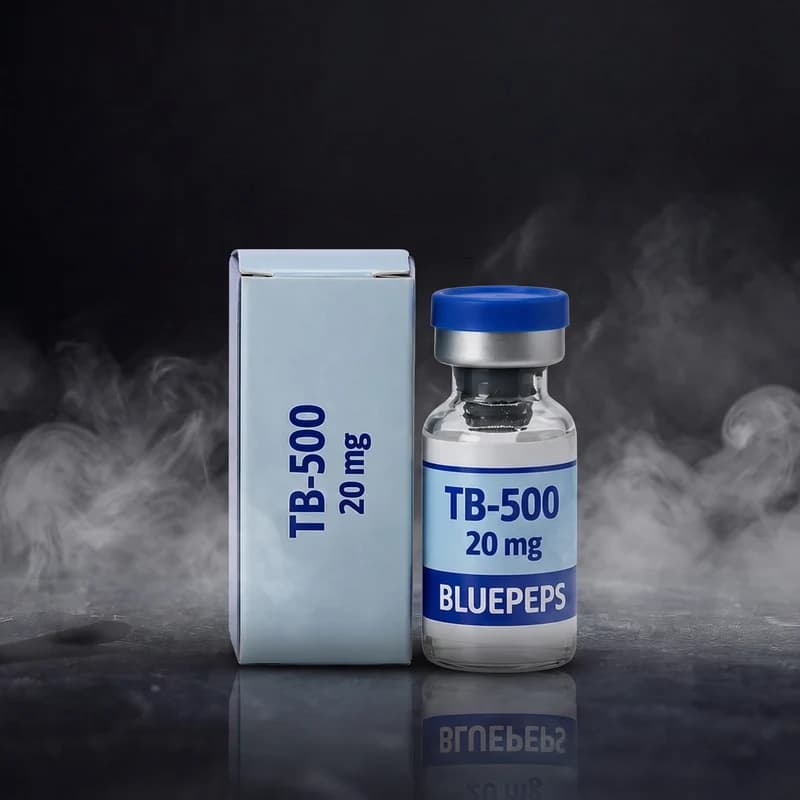
TB-500 as the Systemic Half of the Wolverine Healing Stack
TB-500 (thymosin beta-4 fragment) is a 43-amino-acid peptide whose principal function is to upregulate actin polymerisation and cell migration, enabling repair signals to reach injury sites throughout the body irrespective of where the peptide was injected. When researchers discuss combining peptides for musculoskeletal recovery, TB-500 is consistently paired with BPC-157 precisely because the two compounds operate through non-overlapping mechanisms: BPC-157 acts locally via fibroblast recruitment and angiogenesis at the injection site, while TB-500 mobilises progenitor cells and modulates inflammation at a broader, circulating level. This mechanistic complementarity is the scientific rationale behind what the bodybuilding community calls the Wolverine stack — a protocol named for the fictional superhero's near-instant tissue regeneration.
Why BPC-157 and TB-500 Together Outperform Either Alone
Comparatively, BPC-157 administered as a standalone agent produces measurable improvement in tendon-to-bone healing (demonstrated in rat Achilles models at 10 µg/kg), yet it shows limited reach beyond the local injection depot. TB-500 fills that gap: the peptide suppresses pro-inflammatory cytokines including TNF-α and IL-1β across multiple tissue compartments, creating a body-wide anti-inflammatory environment that amplifies the localised repair work BPC-157 is already performing. Swiss Pharma's TB-500 vial provides 10 mg of HPLC-verified active content, sufficient for a full 8–12 week Wolverine loading and maintenance cycle when dosed at the 5–10 mg weekly range common in peer-reviewed peptide-recovery literature.
Mechanism, Verified Purity, and Stack Timing
TB-500 accelerates recovery by increasing thymosin beta-4 availability, which in turn promotes endothelial cell proliferation and reduces oxidative stress markers in damaged connective tissue. Swiss Pharma verifies every production lot via reversed-phase HPLC quantification against a certified reference standard, and a separate LAL (Limulus Amebocyte Lysate) endotoxin assay confirms the solution meets injectable-grade bacterial endotoxin limits — both results are on file before any vial leaves the facility. In a combined Wolverine protocol, TB-500 is typically injected 2–3 times per week, offset by 24–48 hours from BPC-157 injections, allowing each peptide's distinct half-life window (TB-500: estimated 24–36 hours; BPC-157: estimated 4–6 hours) to be managed without receptor competition.

 Lab Tested