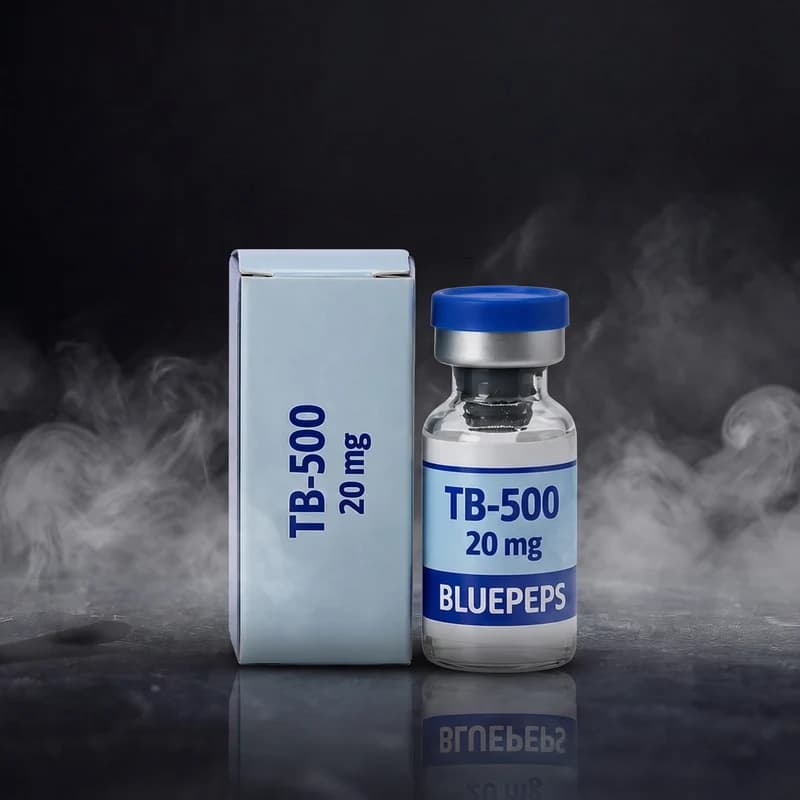
TB-500 as a Systemic Regeneration Agent: How Thymosin Beta-4 Targets the Whole Body
TB-500 is the synthetic analogue of the actin-sequestering domain of Thymosin Beta-4, a protein that regulates cell migration, differentiation, and inflammatory response across multiple tissue types simultaneously — distinguishing it from site-specific growth factors that act only at the injection depot. That systemic reach is the peptide's defining characteristic: rather than concentrating repair signals at a single location, TB-500 distributes its pro-regenerative effects through the bloodstream, influencing connective tissue, skeletal muscle, and vascular endothelium in parallel.
TB-500 promotes tissue repair by upregulating actin polymerisation, a cellular process fundamental to wound closure, myofibre reconstruction, and the remodelling of collagen-dense structures such as tendons and ligaments. In peer-reviewed cardiac and orthopaedic research, Thymosin Beta-4 administration has been associated with measurable reductions in inflammatory cytokine expression and accelerated re-epithelialisation — effects documented using validated immunohistochemical and ELISA-based assay methods. Compared to localised peptides like BPC-157 (which exerts gastroprotective and tendon-repair actions primarily near the injection site), TB-500's mechanism operates via circulatory distribution, making it the preferred choice when multiple tissue systems require concurrent support.
Flexibility, Mobility, and Connective Tissue Remodelling
TB-500 improves flexibility by reducing fibrotic tissue accumulation and supporting controlled collagen turnover in tendons, fasciae, and joint capsules. Thymosin Beta-4 modulates the ratio of matrix metalloproteinases (MMPs) to their tissue inhibitors (TIMPs), a balance that governs whether connective tissue becomes progressively stiffer through fibrosis or remains pliable through healthy remodelling. Athletes and researchers using structured TB-500 loading protocols — typically a 2 mg twice-weekly administration phase lasting four to six weeks — report improved range of motion in previously restricted joints, consistent with the compound's documented anti-fibrotic mechanism.
Purity Verification and Lab Testing Standards
Bio-Peptide TB-500 carries the Lab Tested badge, reflecting mandatory pre-release analysis by independent third-party laboratories. HPLC (High-Performance Liquid Chromatography) confirms the peptide's molecular sequence integrity and purity percentage for every production batch. A LAL (Limulus Amebocyte Lysate) endotoxin assay certifies injection-grade microbiological safety — both tests are performed externally, not by in-house quality control teams, and results are batch-specific rather than representative. Each 10 mg vial is produced under GMP-aligned manufacturing conditions and supplied as a lyophilised powder stable at −20 °C until reconstitution.

 HPLC Verified