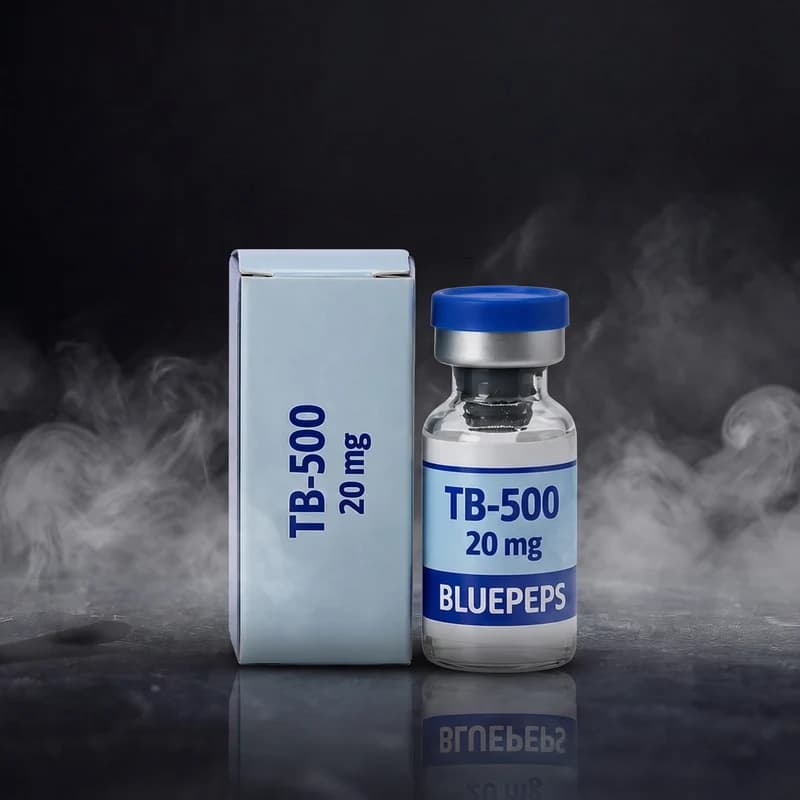
TB-500: Mechanism and Pharmacology
TB-500 is a synthetic analogue of thymosin beta-4, a naturally occurring 43-amino-acid peptide encoded by the TMSB4X gene and found at high concentrations in blood platelets, wound fluid, and most nucleated cells. Thymosin beta-4 was first isolated from calf thymus tissue in 1981, and subsequent research identified it as a principal regulator of G-actin sequestration — the mechanism that underpins its profound influence on cell migration, differentiation, and tissue repair. The synthetic fragment studied most widely in research settings corresponds to the full-length endogenous sequence, and TB-500 replicates this profile closely.
At the molecular level, TB-500 binds G-actin monomers via its central LKKTETQ domain, the heptapeptide motif responsible for the majority of its bioactivity. This binding prevents actin polymerisation into F-actin filaments in resting cells, maintaining a cytoplasmic pool of monomeric actin ready for rapid mobilisation when tissue damage signals are received. TB-500 also upregulates cell-surface receptor expression for growth factors including vascular endothelial growth factor (VEGF) and hepatocyte growth factor (HGF), facilitating angiogenesis and satellite cell proliferation at injury sites.
Pharmacokinetically, the peptide demonstrates reasonable aqueous solubility and is typically reconstituted in bacteriostatic water for subcutaneous or intramuscular administration. Estimated half-life in research models ranges between 30 and 90 minutes for the unmodified peptide in plasma, though the downstream biological effects — particularly on macrophage differentiation and collagen deposition — persist considerably longer due to receptor-mediated and transcriptional cascades initiated well after the compound clears circulation. Subcutaneous bioavailability in rodent studies has been reported at approximately 60–75%, making it a practical route compared with intravenous delivery for tissue-targeted endpoints.
TB-500 also modulates inflammatory pathways by reducing expression of pro-inflammatory cytokines including interleukin-1 beta (IL-1β) and tumour necrosis factor alpha (TNF-α), whilst promoting a shift toward M2 macrophage polarisation — the reparative phenotype associated with fibrotic resolution and reduced scar formation. This dual action on both structural cytoskeletal dynamics and immune modulation distinguishes TB-500 mechanistically from simpler growth peptides that act through a single receptor axis.
Application Context and User Groups
Within the research and bodybuilding communities, TB-500 has attracted consistent interest across several distinct user profiles, each prioritising different aspects of its reported bioactivity.
Athletes in high-volume training cycles — particularly those engaged in resistance training, combat sports, or endurance disciplines — represent the most prominent research-adjacent user group. Connective tissue stress is a limiting factor in progressive overload programmes; tendons and ligaments adapt more slowly than skeletal muscle, and this mismatch frequently produces partial-thickness injuries to structures such as the rotator cuff, Achilles tendon, and knee ligament complex. TB-500's capacity to promote satellite cell migration and enhance angiogenic signalling in hypovascular connective tissues makes it a logical subject of investigation in these contexts.
Older athletes constitute a second meaningful segment. Thymosin beta-4 expression declines with age, mirroring the broader reduction in regenerative capacity observed in ageing tissue. Research published in academic literature has demonstrated that exogenous thymosin beta-4 administration in aged rodent models partially restores rates of wound closure and collagen synthesis toward values observed in younger animals — a finding with intuitive relevance to masters-level competitors managing chronic tissue damage accumulated over years of training.
Post-surgical recovery is a third context frequently cited in research literature. Thymosin beta-4 has been investigated in ophthalmological settings — notably for corneal wound healing — where it received orphan drug designation from the US FDA for neurotrophic keratopathy, providing a degree of institutional validation for its tissue-repair profile that few peptides of similar research status can claim.
It bears emphasising that TB-500 products available through bodybuilding suppliers are designated for research purposes. Users should remain aware of regulatory distinctions between licensed medical products and research-grade peptides, and should consult qualified professionals before any self-administration protocol.
Range and Selection by Concentration and Pack Size
Our TB-500 category currently features two products spanning the standard 10 mg single-vial format, reflecting the most common presentation in current research-grade supply chains.
TB-500 10mg/vial 1 Vial by Bio-Peptide offers the active peptide lyophilised to a 10 mg dose per vial, a concentration well-suited to protocols requiring precise individual dose titration following reconstitution. Bio-Peptide is a recognised manufacturer within the research peptide sector with a consistent quality reputation, making this product a reliable entry point for those beginning structured TB-500 research cycles. At 10 mg per vial, the researcher can prepare working solutions at a range of concentrations depending on the volume of bacteriostatic water used, affording flexibility for lower-dose exploratory protocols (commonly 2–2.5 mg per administration in research literature) or higher acute-loading approaches.
TB-500 10mg (1vial) 10mg/10ml 1 Vial by Swiss Pharma presents the same 10 mg active content but in a pre-specified 10 ml solution volume, yielding a ready-calculated concentration of 1 mg/ml. This presentation removes a preparation variable and reduces the risk of reconstitution errors for users who prefer a straightforward draw-and-administer workflow. Swiss Pharma's manufacturing standards and consistent product labelling are well regarded in the research community, and this format is particularly practical for researchers running fixed-dose protocols where reproducibility between sessions is a priority.
For users selecting between the two, the decision is primarily logistical rather than pharmacological, since both deliver identical active peptide mass. Those conducting multiple-variable research protocols or requiring flexibility in working concentration may favour the lyophilised Bio-Peptide format. Those seeking operational simplicity and reduced preparation time will find the Swiss Pharma liquid presentation more convenient. Both pack sizes are single-vial units, appropriate for short-cycle pilot research or as individual top-up purchases within a longer ongoing programme.
Frequently Asked Questions
What is the difference between TB-500 and BPC-157?
TB-500 and BPC-157 are both tissue-repair peptides but operate through distinct mechanisms. TB-500 primarily sequesters G-actin and modulates cytoskeletal dynamics, whilst BPC-157 acts largely via nitric oxide pathways and growth hormone receptor interactions. They are sometimes studied in combination, as their mechanisms are considered complementary rather than redundant.
Does TB-500 require refrigeration after reconstitution?
Lyophilised TB-500 can be stored at room temperature for short periods, though refrigeration at 2–8°C is recommended for longer-term stability. Once reconstituted in bacteriostatic water, the solution should be kept refrigerated and used within 28 days. Repeated freeze-thaw cycles degrade the peptide and should be avoided to preserve research-grade integrity.
What concentration should I select for a standard TB-500 research protocol?
Most published research and community-documented protocols work within the 2–5 mg dose range per administration, making a 10 mg vial sufficient for two to five research sessions. The 10mg/10ml pre-dissolved format from Swiss Pharma simplifies measurement at 1 mg/ml, whilst the lyophilised Bio-Peptide vial allows custom reconstitution volumes to suit specific protocol requirements.


 HPLC Verified