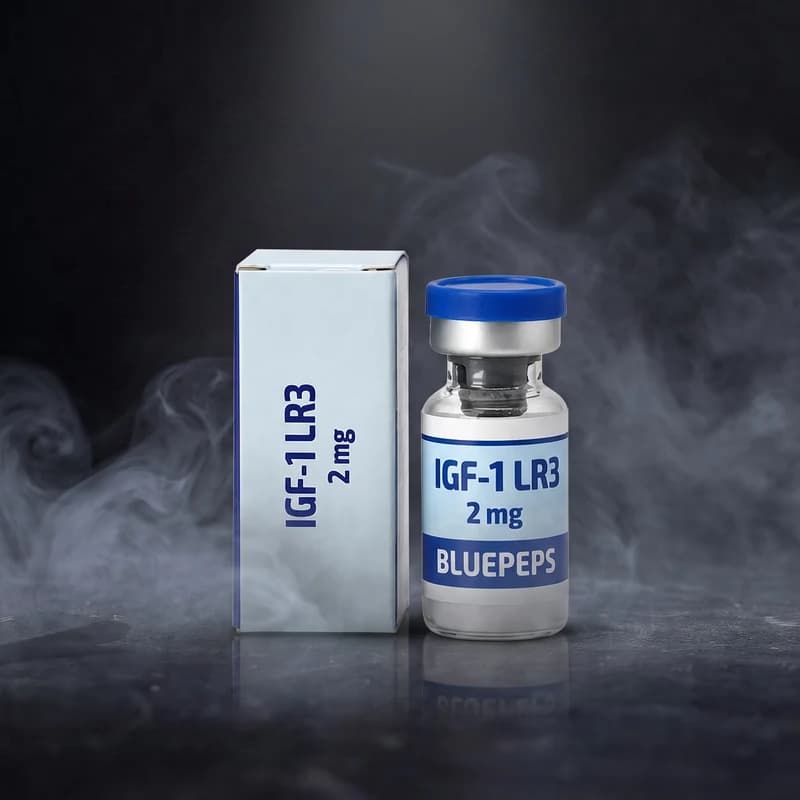
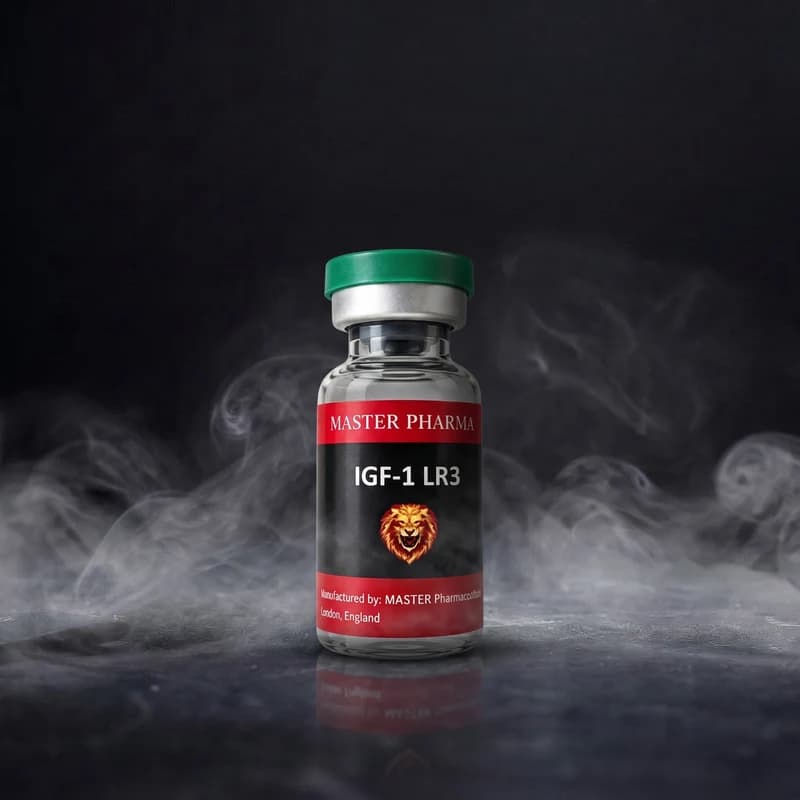
Mechanism & Pharmacology of IGF-1 LR3
IGF-1 LR3 is a synthetic, 83-amino-acid analogue of endogenous insulin-like growth factor-1 (IGF-1), engineered with an arginine-to-lysine substitution at position 3 and an additional 13-amino-acid N-terminal extension that renders the molecule far less susceptible to sequestration by IGF-binding proteins (IGFBPs). In unmodified IGF-1, circulating IGFBPs capture the majority of the peptide within minutes, restricting its biological window to roughly 10–20 minutes. IGF-1 LR3 sidesteps this limitation almost entirely: its reduced IGFBP affinity — approximately 1,000-fold lower than native IGF-1 — extends the active half-life to roughly 20–30 hours, allowing sustained receptor engagement over a full diurnal cycle from a single administration.
The peptide binds the IGF-1 receptor (IGF-1R), a transmembrane receptor tyrosine kinase expressed widely across skeletal muscle, cardiac tissue, liver, and the central nervous system. Once IGF-1 LR3 occupies the extracellular alpha-subunits of IGF-1R, the receptor undergoes autophosphorylation at tyrosine residues within its intracellular beta-subunits, triggering the PI3K/Akt/mTOR signalling cascade. This cascade drives protein synthesis, glucose uptake via GLUT4 translocation, and the suppression of apoptotic signals through phosphorylation of FOXO transcription factors. A secondary downstream pathway — the RAS/MAPK/ERK axis — contributes additional mitogenic signalling, supporting cellular proliferation and differentiation in satellite cells within skeletal muscle.
Because IGF-1 LR3 retains partial affinity for the insulin receptor (IR), particularly the IR-A isoform preferentially expressed in muscle, it also stimulates modest glucose disposal without the pronounced hypoglycaemic risk associated with exogenous insulin at equivalent anabolic doses. Bioavailability following subcutaneous injection is considered high relative to peptides of comparable molecular weight, with peak plasma concentrations typically observed within 2–4 hours post-injection. The combined effect of extended half-life, IGF-1R agonism, mTOR activation, and satellite-cell recruitment places IGF-1 LR3 among the most mechanistically sophisticated peptides studied in the context of skeletal muscle hypertrophy.
Application Context & User Groups
Research into IGF-1 LR3 has centred predominantly on its capacity to accelerate muscle fibre repair and increase myonuclei density — two outcomes directly relevant to competitive bodybuilders and strength athletes operating at the upper boundary of adaptive capacity. Myonuclei accumulation is significant because each additional nucleus within a muscle fibre expands the transcriptional output available to support protein synthesis, raising the fibre's theoretical hypertrophic ceiling. Animal studies published in peer-reviewed literature have demonstrated measurable increases in lean tissue mass alongside attenuated muscle-wasting following IGF-1 LR3 administration, effects that have made the compound a point of interest in research programmes examining age-related sarcopenia and muscular dystrophy models.
Among advanced recreational and competitive users, IGF-1 LR3 is typically employed during dedicated muscle-building phases, where the priority is maximising the anabolic stimulus beyond what endogenous IGF-1 and growth hormone secretion can supply. The peptide is also contextually relevant to users managing recovery from connective-tissue injury: IGF-1R is expressed in tendon fibroblasts and chondrocytes, and the downstream signalling it initiates supports collagen matrix deposition and cellular proliferation in these tissues, though this application remains an area of active preclinical investigation.
A distinct user group consists of researchers and laboratory professionals procuring lyophilised IGF-1 LR3 for in vitro or ex vivo cell-culture work. In these settings, the extended stability of the LR3 analogue in solution — compared with native IGF-1 — reduces experimental variability caused by rapid peptide degradation, making it the preferred form for sustained-treatment cell-culture protocols. Standard in vitro concentrations range from 10 ng/mL to 100 ng/mL depending on the cell line and endpoint being measured.
It bears brief noting that IGF-1 LR3, like all research peptides in this category, is intended for research and investigational purposes. Users should familiarise themselves with the regulatory status in their jurisdiction prior to use.
Range & Selection by Concentration and Pack Size
The IGF-1 LR3 category presented here is focused and precise: all available products are supplied at a single standardised concentration of 1mg per vial, in individual single-vial packs. This uniformity reflects the practical reality of the compound — 1mg represents a meaningful and research-relevant quantity that balances usability with the stability constraints inherent to lyophilised peptides, which are susceptible to degradation once reconstituted if not consumed within a defined window (typically 2–4 weeks refrigerated post-reconstitution in bacteriostatic water).
Two manufacturers supply this category, each offering the same concentration and format with differences in synthesis source, purity certification, and quality-assurance process:
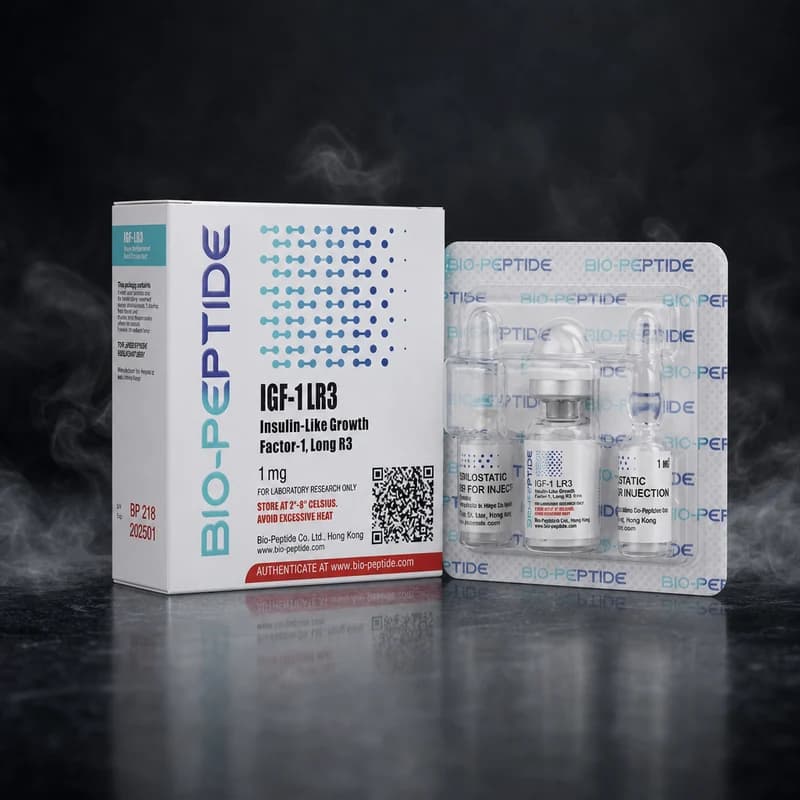
IGF-1 LR3 1mg/vial by Bio-Peptide is produced by Bio-Peptide, a manufacturer recognised for pharmaceutical-grade synthesis standards and HPLC-verified purity profiles. For users who prioritise documented analytical quality alongside consistent batch reproducibility, this option represents a well-regarded choice within the research peptide market.
IGF-1 LR3 1mg/vial by Knoll Pharmaceuticals comes from Knoll Pharmaceuticals, a name with established presence in the peptide supply chain. This variant suits researchers and experienced users seeking a credible alternative source at equivalent specification, allowing comparative use across experimental runs where sourcing diversity is methodologically relevant.
At the 1mg/vial tier, guidance is straightforward: the format is universally appropriate for both introductory investigational use and established research protocols. Single-vial procurement is advisable for first-time users assessing peptide quality and individual response before committing to larger quantities. Those running extended protocols or multi-arm research programmes may benefit from procuring multiple vials simultaneously to ensure consistent batch-to-batch exposure — though each vial should be stored lyophilised and reconstituted only as needed. Both products in this category are supplied in lyophilised powder form requiring reconstitution with sterile or bacteriostatic water prior to use.
Frequently Asked Questions
What is the difference between IGF-1 and IGF-1 LR3?
Native IGF-1 has a plasma half-life of roughly 10–20 minutes due to rapid binding by IGF-binding proteins. IGF-1 LR3 is a modified analogue with approximately 1,000-fold reduced IGFBP affinity, extending its active half-life to 20–30 hours. This structural change allows sustained IGF-1 receptor engagement from a single administration, making it significantly more efficient for research applications requiring prolonged receptor stimulation.
How should IGF-1 LR3 1mg vials be stored and reconstituted?
Lyophilised IGF-1 LR3 should be stored frozen or refrigerated, away from light, until use. Reconstitution is performed using bacteriostatic water or sterile water for injection, introduced slowly down the vial wall without vigorous shaking to preserve peptide integrity. Once reconstituted, the solution should be refrigerated and used within 2–4 weeks. Repeated freeze-thaw cycles after reconstitution are not recommended.
Which user groups typically research IGF-1 LR3?
IGF-1 LR3 is relevant to advanced bodybuilders and strength athletes researching hypertrophy and recovery, sports scientists studying satellite cell activation and myonuclei accumulation, and laboratory researchers using the compound in cell-culture models exploring muscle wasting, sarcopenia, or connective-tissue repair. Its superior stability in solution compared with native IGF-1 also makes it preferable for sustained in vitro treatment protocols.


 Lab Tested