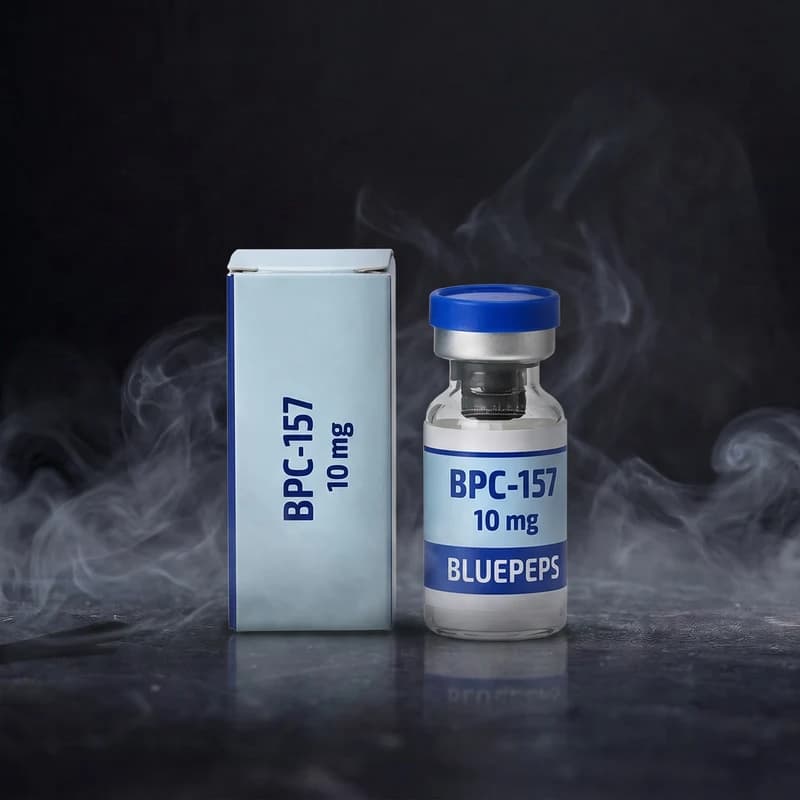
BPC-157 is a synthetic pentadecapeptide derived from a protective protein found in human gastric juice, comprising fifteen amino acids in a sequence that has demonstrated remarkable stability and pleiotropic biological activity across multiple organ systems.
How BPC-157 Works: Mechanism and Pharmacology
BPC-157 exerts its effects through a convergence of molecular pathways that distinguish it from simpler growth factors or conventional anabolic peptides. At the vascular level, BPC-157 upregulates the expression of vascular endothelial growth factor (VEGF) and promotes the formation of new blood vessels — a process called angiogenesis — which underpins much of its tissue-repair capability. This angiogenic action accelerates the delivery of oxygen and nutrients to damaged tissue, shortening recovery windows that athletes and bodybuilders seek to compress.
At the receptor level, BPC-157 interacts with the nitric oxide (NO) system: the peptide modulates endothelial nitric oxide synthase (eNOS) activity, increasing local NO production and thereby promoting vasodilation at injury sites. This mechanism is particularly relevant for musculotendinous and ligament injuries, where localised ischaemia is a primary barrier to healing. BPC-157 also engages growth hormone receptor signalling pathways — specifically, it appears to sensitise tissues to growth hormone without elevating systemic GH levels, offering a targeted rather than systemic stimulus.
From a pharmacokinetic standpoint, BPC-157 is notable for its remarkable stability in the gastric environment, which is the evolutionary basis for its origin — it is a fragment of a naturally occurring body protection compound in gastric juice. When administered parenterally (subcutaneous or intramuscular injection), bioavailability is high relative to orally delivered peptides. Half-life estimates in preclinical models suggest a relatively short systemic half-life of approximately 1–4 hours, which is consistent with most short-chain peptides; however, the downstream transcriptional effects at injury sites persist significantly longer, decoupling the duration of effect from the plasma half-life.
BPC-157 further modulates the GABAergic system and dopaminergic signalling in the central nervous system, which accounts for the reported anxiolytic and gut-motility effects observed in animal models. The peptide inhibits pro-inflammatory cytokine cascades — notably reducing tumour necrosis factor alpha (TNF-α) and interleukin-6 (IL-6) — and upregulates the synthesis of collagen type I, the primary structural protein in tendons and ligaments. These combined actions make BPC-157 mechanistically unique: it simultaneously reduces the inflammatory phase, accelerates the proliferative phase, and supports the remodelling phase of wound healing.
Application Context and User Groups
BPC-157 occupies a specific and compelling niche within the research peptide space, and its user base reflects that specificity. The primary application context in bodybuilding and strength sports is accelerated connective-tissue recovery. Tendons and ligaments are notoriously slow to heal due to their relatively poor vascularisation; BPC-157's VEGF-upregulating and collagen-synthesising properties directly address this physiological bottleneck. Athletes managing rotator cuff strain, patellar tendinopathy, Achilles issues, or elbow soft-tissue damage constitute the largest self-reported user group.
A secondary — and increasingly prominent — user group consists of individuals dealing with gastrointestinal distress linked to high-dose NSAID use, which is endemic among serious lifters who rely on ibuprofen and similar compounds to manage chronic training inflammation. Preclinical data, primarily from rodent models published across a range of peer-reviewed journals from 1993 through to the early 2020s, consistently show that BPC-157 counteracts NSAID-induced gastric lesions, modulates gut motility, and supports intestinal epithelial integrity. This makes it one of the few peptides with a plausible dual role: systemic tissue repair and localised gut protection.
A third user group comprises those using BPC-157 in conjunction with other anabolic or recovery compounds — notably TB-500 (Thymosin Beta-4) and growth hormone peptides — in structured research protocols. In this context, BPC-157 is typically used at the site of injury (local injection) while systemic peptides handle broader systemic recovery. The peptide's safety profile in animal research is considered favourable, with no oncogenic signals identified in standard models, which contrasts with some other growth-factor-modulating compounds.
Dosing in user communities typically ranges from 250mcg to 500mcg per administration, administered once or twice daily, often in cycles of four to six weeks. Site-specific subcutaneous injection proximal to the injury is the most commonly reported protocol. Systemic (distal) injection is also practised when gut healing is the primary objective.
Range and Selection by Concentration and Pack Size
Three concentration tiers are currently available in this category, each serving a distinct phase of use or level of experience. Selecting the right concentration tier depends on protocol duration, injection frequency, and the precision of dosing required.
The entry-level option is BPC-157 5mg/vial by Bio-Peptide, which provides a single vial containing 5mg of lyophilised BPC-157. At the commonly cited research dose of 250–500mcg per injection, a 5mg vial yields approximately 10–20 administrations. This tier is well suited to short trial protocols or to users who wish to assess individual response before committing to higher-volume supplies. Bio-Peptide's 5mg format is a practical starting point for those new to this peptide.
The mid-range option is BPC-157 10mg/10ml by Swiss Pharma, presented as a 1-vial product at a concentration of 10mg per 10ml. The pre-dissolved or ready-to-dilute liquid format at this concentration offers straightforward volumetric dosing — 0.25ml per injection delivers 250mcg at this concentration — reducing the need for reconstitution calculations and making it accessible for users who prefer liquid peptide formats. Swiss Pharma's offering is particularly suitable for individuals already familiar with BPC-157 and seeking reliable, consistent dosing across a multi-week protocol.
At the top of the range, BPC-157 20mg/vial by Knoll Pharmaceuticals delivers the highest concentration available in this category. A single 20mg vial at 250–500mcg per dose supports 40–80 injections, making it cost-efficient for extended protocols or for researchers running parallel injury-site and systemic administration simultaneously. Knoll Pharmaceuticals positions this product for experienced users who have established their optimal dose and seek to minimise the frequency of vial turnover during longer research windows.
When selecting between tiers, consider whether precision or volume is the priority. Lower concentration vials offer greater per-dose precision control when diluted to individual preference; higher concentration vials reduce logistical overhead. All three formats are supplied as single-vial units, allowing flexible procurement regardless of protocol length.
Frequently Asked Questions
What is BPC-157 and why is it used in bodybuilding research?
BPC-157 is a synthetic pentadecapeptide derived from human gastric juice proteins. In bodybuilding research contexts, it is studied for its ability to accelerate tendon, ligament, and muscle repair by upregulating VEGF, stimulating collagen synthesis, and modulating nitric oxide pathways — all of which support faster recovery from training-related connective-tissue injuries.
What is the difference between the 5mg, 10mg, and 20mg BPC-157 vials?
The key difference is the total peptide content per vial, which affects how many doses each unit yields. At a 250–500mcg research dose, a 5mg vial provides roughly 10–20 administrations, a 10mg vial provides 20–40, and a 20mg vial supports up to 80 administrations. Higher-concentration vials suit longer protocols; lower-concentration vials are practical for initial research phases.
Can BPC-157 be used alongside other peptides such as TB-500 or growth hormone secretagogues?
In research settings, BPC-157 is frequently stacked with TB-500 for synergistic connective-tissue repair, with BPC-157 typically administered locally near the injury site and TB-500 used systemically. It has also been used alongside growth hormone peptides. Each compound acts via distinct mechanisms, so combinations are studied to address both localised and systemic aspects of tissue recovery.


 Pharma Grade