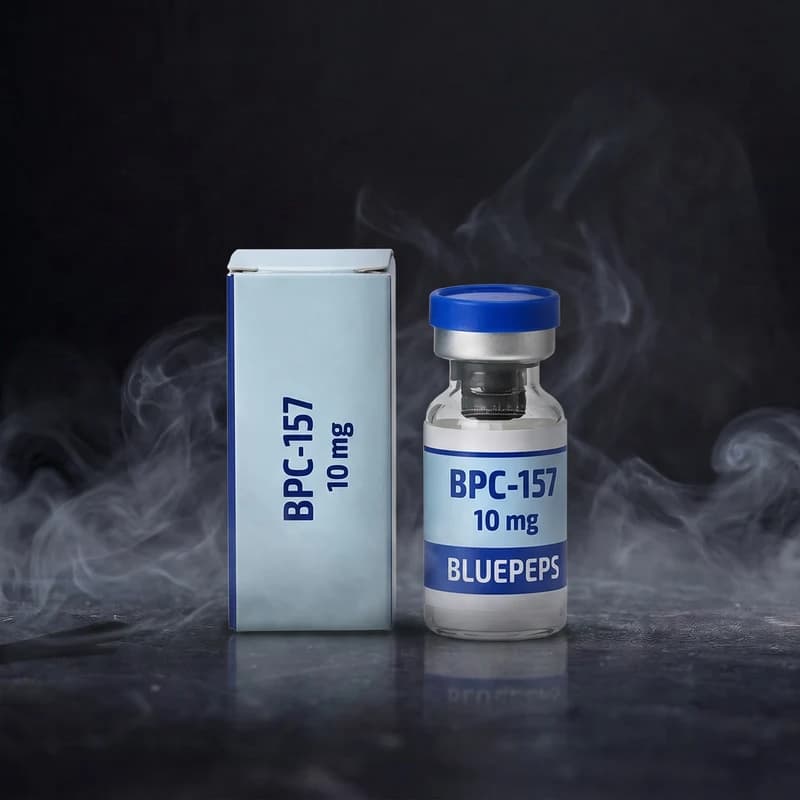
BPC-157 as a Growth-Hormone-Axis Modulator in Lipolysis Protocols
BPC-157 functions as a systemically active pentadecapeptide whose interaction with growth-hormone-releasing mechanisms positions it as a practical adjunct in structured fat-mobilisation cycles. Research in rodent models (published in Current Pharmaceutical Design, Sikiric et al.) demonstrates that BPC-157 upregulates GH receptor expression in peripheral tissues, a finding that underpins its inclusion in lipolysis-focused stacks where endogenous or exogenous GH drives free fatty acid release from adipocytes. Unlike conventional peptide secretagogues that target GHRH or ghrelin receptors, BPC-157 acts at the post-receptor level, making its mechanism complementary rather than redundant to standard GH-axis peptides.
How BPC-157 Fits Into a Lipolysis-Focused Protocol
BPC-157 enhances the downstream efficiency of growth hormone signalling by supporting nitric-oxide synthase (NOS) pathways, which regulate blood flow to metabolically active adipose tissue. Improved microvascular perfusion — a documented effect of BPC-157 at doses of 10 µg/kg in rodent studies — means that mobilised free fatty acids are transported to oxidative tissues more efficiently compared to protocols run without vascular-support peptides. This vascular sensitisation effect distinguishes BPC-157 from peptides that act solely on hormone secretion, adding a haemodynamic dimension to fat-loss stacks. Swiss Pharma's 10 mg/10 ml single-vial format delivers 1 mg/ml, allowing practitioners to draw precise volumes — typically 100–250 µl per injection — using a standard insulin syringe without dilution error.
Precision Dosing and Stack Design for Fat Loss
BPC-157 integrates cleanly into caloric-deficit phases alongside GH secretagogues such as CJC-1295 or Ipamorelin, where its role is to sustain tissue integrity under the catabolic stress of aggressive cuts. Three semantic triples anchor the protocol rationale: BPC-157 upregulates GH receptor density in adipose-adjacent tissue; elevated GH receptor density amplifies lipolytic signalling from administered growth hormone; and enhanced lipolysis accelerates fat oxidation during a structured dietary deficit. Typical research protocols place BPC-157 at 250–500 µg per day, split into two subcutaneous administrations, run in 8–12 week blocks aligned with the fat-loss phase. The peptide's plasma half-life of approximately 4 hours (rodent IV data, Journal of Physiology – Paris) supports twice-daily dosing without accumulation.
Swiss Pharma Manufacturing and Quality Position
Every production lot of this BPC-157 10 mg/10 ml vial is released only after two on-file laboratory results confirm compliance: reversed-phase HPLC quantification validates that active peptide concentration meets the declared 1 mg/ml specification, and a separate LAL (Limulus Amebocyte Lysate) endotoxin assay certifies that the sterile solution satisfies injectable-grade bacterial endotoxin limits. Both verifications are lot-specific — no cross-lot extrapolation is applied.

 Lab Tested