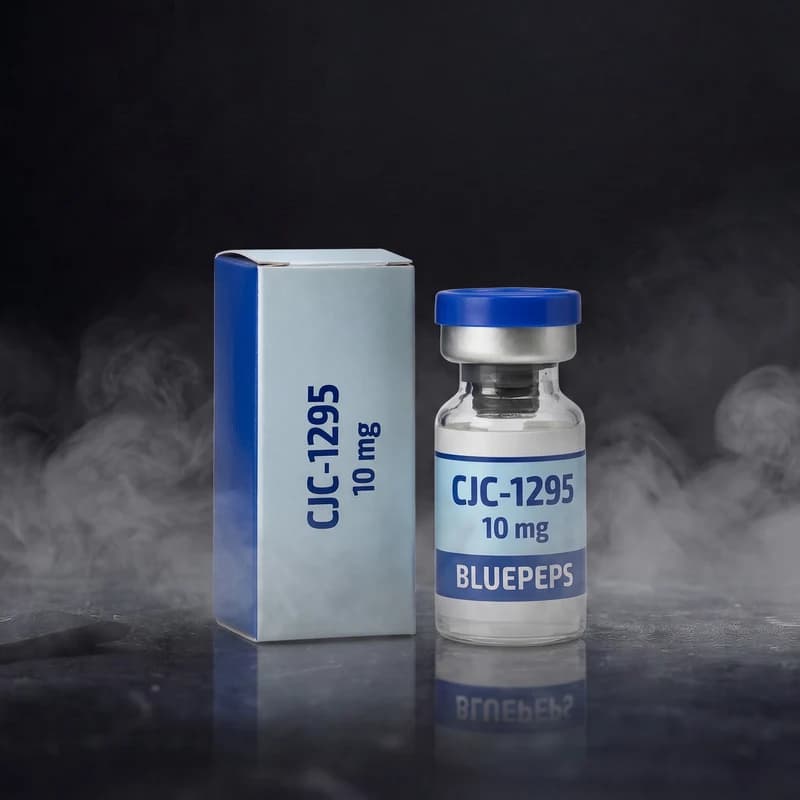
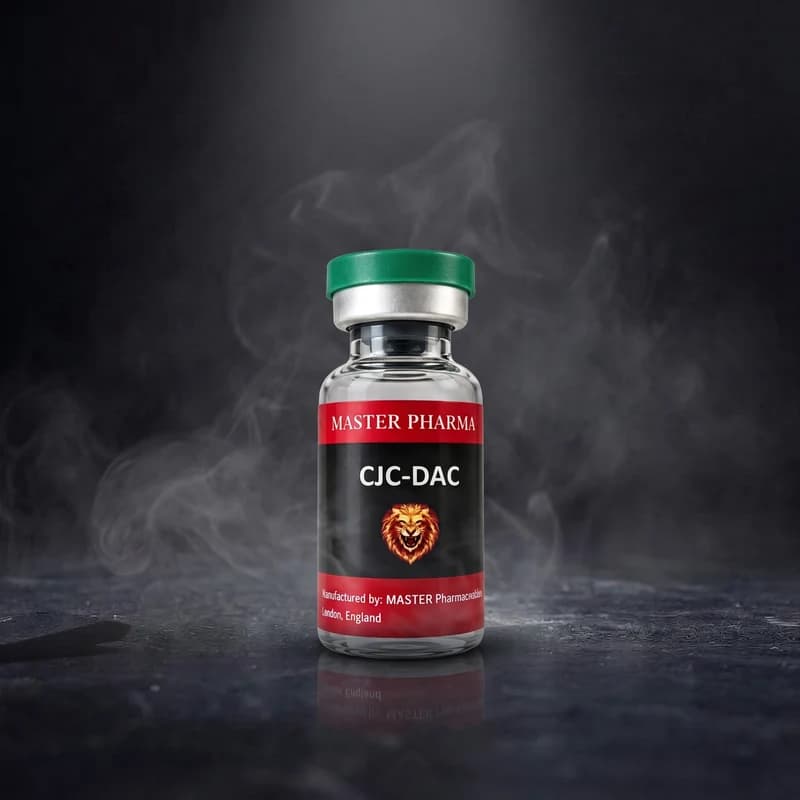
CJC-1295 DAC: Mechanism and Pharmacology
CJC-1295 DAC is a synthetic, Drug Affinity Complex-modified analogue of growth hormone-releasing hormone (GHRH), engineered to dramatically extend circulating half-life while preserving the biological signalling activity of the endogenous GHRH(1–29) sequence. The defining structural feature of this compound is the addition of a lysine-based DAC linker — a maleimidoproprionic acid moiety — that forms a covalent bond with circulating serum albumin. This albumin-binding mechanism protects the peptide chain from enzymatic cleavage by dipeptidyl peptidase IV (DPP-IV) and other serum proteases that would ordinarily degrade unmodified GHRH fragments within minutes.
The pharmacokinetic consequence of this modification is substantial. Whereas native GHRH(1–29) carries a plasma half-life of fewer than 10 minutes, CJC-1295 DAC achieves a mean half-life estimated between 6 and 8 days in human studies, with detectable serum levels persisting for up to 14 days following a single subcutaneous injection. Peak plasma concentrations typically occur within 2–4 hours post-injection, followed by a prolonged plateau phase that generates sustained elevation in both growth hormone (GH) and insulin-like growth factor 1 (IGF-1) levels.
At the receptor level, CJC-1295 DAC binds the growth hormone-releasing hormone receptor (GHRHR), a G-protein-coupled receptor expressed predominantly on somatotroph cells within the anterior pituitary gland. Receptor binding activates adenylyl cyclase via Gsα coupling, increasing intracellular cyclic AMP (cAMP) concentrations. Elevated cAMP subsequently activates protein kinase A (PKA), which phosphorylates transcription factors responsible for stimulating GH gene expression and promoting the exocytosis of pre-formed GH secretory granules. The result is a dose-dependent amplification of pulsatile GH release, a pattern that remains broadly consistent with physiological secretory rhythms rather than inducing the supraphysiological single-peak surges associated with direct GH injections.
Subcutaneous bioavailability is high relative to peptides of comparable molecular weight, with studies indicating consistent systemic absorption from abdominal and deltoid injection sites. The slow-release albumin-binding model also provides a degree of inter-individual pharmacokinetic consistency, reducing the sensitivity of plasma GH profiles to minor variations in injection site or timing — a practical advantage for users managing protocols across irregular schedules.
Application Context and User Groups
CJC-1295 DAC occupies a specific and well-defined position within the peptide strategies employed by competitive bodybuilders, physique athletes, and performance-focused individuals. Its prolonged half-life differentiates it clearly from shorter-acting GHRH analogues such as Mod GRF(1–29) (CJC-1295 without DAC), which requires multiple daily injections timed around natural GH pulses to achieve cumulative effect.
The sustained elevation of IGF-1 that CJC-1295 DAC produces is of particular relevance to individuals in anabolic or recovery-focused phases. IGF-1 mediates much of GH's anabolic signalling at the tissue level — including skeletal muscle hypertrophy via mTOR pathway activation, satellite cell proliferation, and collagen synthesis in connective tissue. A 2006 clinical study published in the Journal of Clinical Endocrinology & Metabolism demonstrated that CJC-1295 produced dose-dependent increases in mean plasma GH levels of 2 to 10-fold and IGF-1 levels of 1.5 to 3-fold, with effects sustained across multiple days from a single injection. These figures place CJC-1295 DAC among the most potent GHRH-based tools available in its class.
User groups who engage with this category most consistently include advanced physique athletes seeking improved recovery between training cycles, individuals targeting body composition shifts during extended lower-calorie phases, and those focused on connective tissue resilience and sleep architecture improvements — both functions closely associated with elevated nocturnal GH secretion. Some users also explore CJC-1295 DAC as part of a broader peptide stack; it is frequently combined with GHRP-class peptides such as Ipamorelin or GHRP-2, which act on the ghrelin receptor (GHS-R1a) to amplify pituitary GH release through a complementary and synergistic pathway. This combination leverages both the GHRH axis and the ghrelin axis simultaneously, producing additive increases in GH pulse amplitude without proportional increases in cortisol or prolactin at moderate doses.
CJC-1295 DAC is not a compound for beginners to peptide protocols. Its week-long activity window means that dosing errors are not rapidly correctable, and users unfamiliar with the nuanced relationship between GHRH signalling, insulin sensitivity, and carbohydrate metabolism should approach this compound after developing experience with shorter-acting peptides. It is handled, stored, and used strictly for research and advanced physique applications. All use should align with applicable regulations in the user's jurisdiction.
Range and Selection by Concentration and Pack Size
The CJC-1295 DAC products available in this category are standardised at a single concentration — 5mg per vial — reflecting the established clinical and research dosing framework for this compound. Both offerings arrive as lyophilised (freeze-dried) powder in single-vial presentation, requiring reconstitution with bacteriostatic water prior to use. The consistency of concentration across the range simplifies selection and ensures comparability between manufacturers.
CJC-1295 5mg/vial 1 Vial by Bio-Peptide represents the entry point for researchers and physique athletes seeking a reliably sourced, single-dose unit of this compound. Bio-Peptide has established a consistent product profile across its peptide catalogue, and this vial is suited to users initiating a CJC-1295 DAC protocol who wish to assess individual response before committing to larger volume orders.
CJC-1295 5mg/vial 1 Vial by Knoll Pharmaceuticals offers an alternative manufacturing source at the same specification, useful for those who have preferences relating to synthesis standards, excipient profiles, or simply wish to have a second-manufacturer comparison point available. Knoll Pharmaceuticals brings pharmaceutical-sector manufacturing discipline to its peptide output, which appeals to users for whom production provenance is a selection criterion.
At 5mg per vial, both products align with research-established dosing ranges. Single vials suit individuals running shorter assessment cycles, or those who prefer to source on a per-protocol basis rather than holding stock. Users running longer structured cycles may choose to order multiple units; both products are available individually, allowing flexible procurement without requiring bulk commitment. For stack-based protocols combining CJC-1295 DAC with a complementary GHRP, pairing one of these vials with a separately listed Ipamorelin or GHRP-2 product is the most common approach observed in advanced research communities.
Frequently Asked Questions
What makes CJC-1295 DAC different from CJC-1295 without DAC?
The DAC (Drug Affinity Complex) modification causes CJC-1295 to bind covalently to serum albumin in the bloodstream, extending its half-life to approximately 6–8 days. CJC-1295 without DAC (Mod GRF 1–29) has a half-life of around 30 minutes and requires multiple daily injections, whereas the DAC version sustains GH and IGF-1 elevation from a single weekly dose.
How should CJC-1295 DAC vials be stored before and after reconstitution?
Lyophilised CJC-1295 DAC should be stored refrigerated at 2–8°C and kept away from light and moisture. Once reconstituted with bacteriostatic water, the solution should be kept refrigerated and used within 28 days. Repeated freeze-thaw cycles after reconstitution degrade peptide integrity and should be avoided.
Is CJC-1295 DAC typically used alone or stacked with other peptides?
CJC-1295 DAC is frequently combined with GHRP-class peptides such as Ipamorelin or GHRP-2. These act on the ghrelin receptor, a distinct pathway from the GHRHR targeted by CJC-1295 DAC, producing synergistic amplification of GH pulse amplitude. The combination is widely referenced in research contexts as producing greater GH output than either compound used in isolation.


 Lab Tested