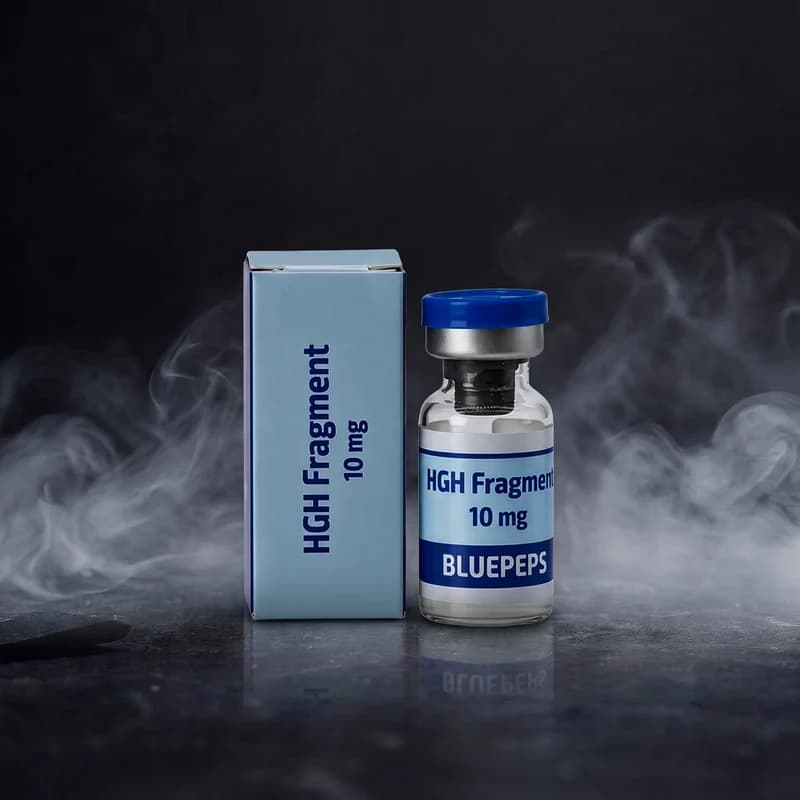
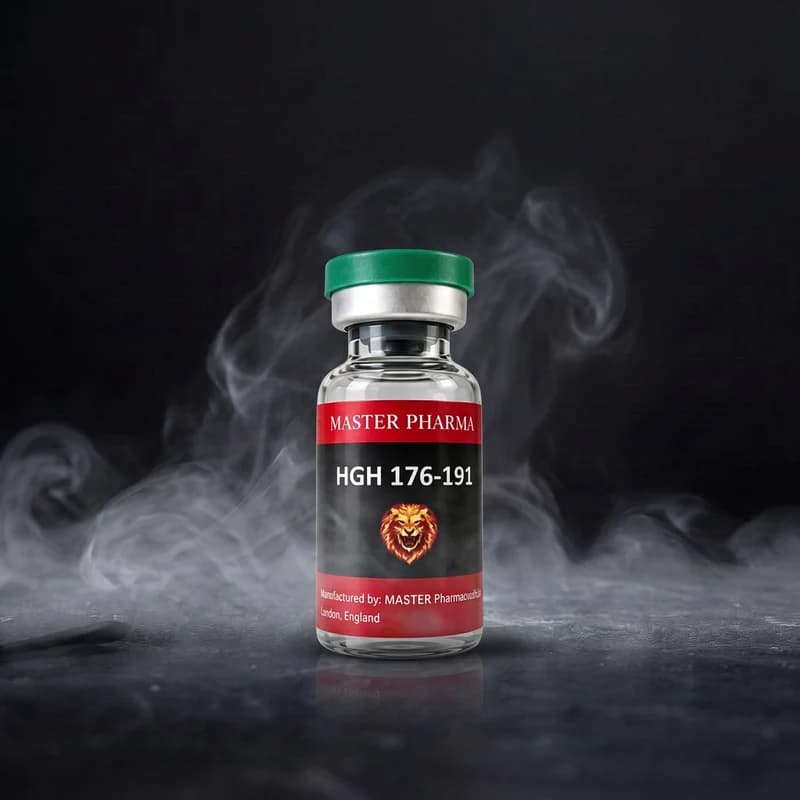
Mechanism & Pharmacology of HGH Fragment 176-191
HGH Fragment 176-191 is a synthetic, stabilised peptide derived from the C-terminal region of human growth hormone, specifically encompassing amino acids 176 through 191. Unlike full-spectrum recombinant HGH, this truncated sequence retains the lipolytic activity associated with growth hormone whilst eliminating the anabolic and diabetogenic properties linked to the full 191-amino-acid chain. The result is a highly selective compound with a remarkably narrow pharmacological profile — one that has attracted sustained interest from researchers and bodybuilders focused on body-composition management.
At the molecular level, HGH Fragment 176-191 interacts with β-3 adrenergic receptors located on adipocytes, stimulating the breakdown of stored triglycerides through a process known as lipolysis. Unlike full GH, the fragment does not significantly bind to or activate the IGF-1 signalling axis, meaning it does not promote the IGF-1–mediated tissue growth, insulin resistance, or glucose dysregulation that can accompany therapeutic GH administration. Research in rodent models has demonstrated that the fragment produces up to three times the fat-reducing effect of an equivalent dose of full GH, which has driven its popularity as a more targeted alternative.
In terms of pharmacokinetics, the peptide displays a half-life of approximately 30 minutes when administered subcutaneously, necessitating two or more daily injections to maintain sustained receptor engagement. Bioavailability via subcutaneous injection is considered high relative to orally administered growth-hormone secretagogues, as it bypasses first-pass hepatic metabolism. The fragment is not orally bioavailable in its native form. Binding to plasma proteins is relatively limited, which contributes to its comparatively short active window but also reduces the likelihood of accumulation-related side effects over extended protocols. Water reconstitution with bacteriostatic water is standard for lyophilised preparations, and reconstituted solutions are typically stable for up to 28 days under refrigeration at 2–8 °C.
Application Context & User Groups
Within the bodybuilding and fitness community, HGH Fragment 176-191 has become a staple component of pre-competition protocols and caloric-restriction phases where the preservation of lean muscle mass alongside maximal fat oxidation is the primary objective. Because the compound does not stimulate insulin-like growth factor production, users who are concerned about unwanted tissue growth, elevated blood glucose, or joint fluid retention often favour it over conventional GH cycles.
Experienced athletes typically incorporate the fragment during cutting cycles, pairing it with peptide hormones such as CJC-1295 or Ipamorelin to create a synergistic environment in which endogenous GH release is amplified whilst the fragment directly addresses peripheral fat stores. This stacking approach is well-documented in community-based research logs and supported by mechanistic reasoning: GHRH analogues promote GH pulse amplitude, whilst HGH Fragment 176-191 acts independently on adipocytes without relying on pituitary output. The compound is also used as a standalone agent by individuals who wish to avoid the more pronounced hormonal disruption associated with full GHRH-GHRP combinations.
From a research perspective, HGH Fragment 176-191 has been investigated in the context of obesity pharmacotherapy. Early human clinical trials conducted by Metabolic Pharmaceuticals in Australia demonstrated statistically significant reductions in body fat in overweight subjects, with a favourable safety profile at doses of 500 mcg per day administered subcutaneously. This clinical grounding distinguishes HGH Fragment 176-191 from many research peptides that lack any human-phase trial data, lending additional confidence to users who value compounds with at least some evidence base.
Typical user groups include competitive bodybuilders in the final eight to twelve weeks before a physique competition, recreational athletes managing recomposition phases, and older male users who have experienced age-related adiposity in the abdominal region — a tissue distribution that β-3 adrenergic receptor-mediated lipolysis appears to address with particular efficacy. Users range from intermediate to advanced, given the requirement for precise reconstitution, correct injection technique, and an understanding of how to time administrations relative to fasting and training windows for optimal results.
Range & Selection by Concentration and Pack Size
The current catalogue for HGH Fragment 176-191 comprises two products, both standardised at the widely adopted 5 mg per vial concentration and presented as single-vial packs — a format that aligns with the practical requirements of a typical research or personal-use cycle.
HGH Fragment (176-191) 5mg/vial 1 Vial by Bio-Peptide represents the entry point for those seeking a rigorously lyophilised preparation from a manufacturer with an established track record in research-grade peptide production. Bio-Peptide's quality-control processes include HPLC purity verification, which provides reassurance that the active sequence has not been degraded or contaminated during synthesis. A single 5 mg vial, when reconstituted into a 2 ml solution, yields a working concentration of 2.5 mg/ml, supporting precise dosing at the commonly referenced research dose of 250–500 mcg per injection.
HGH Fragment 176-191 5mg/vial 1 Vial by Knoll Pharmaceuticals offers an alternative option for users who prefer supply diversity or have a prior preference for Knoll's manufacturing standards. Knoll Pharmaceuticals maintains pharmaceutical-grade production environments, and their peptide line is positioned towards users who prioritise consistency across batches — particularly relevant for those running multi-week protocols where vial-to-vial potency variation would affect observed outcomes.
At the 5 mg concentration tier, both products are suited to protocols ranging from two to four weeks at moderate daily doses (500 mcg/day split across two administrations), or extended up to eight weeks at conservative doses (250 mcg/day). Users conducting longer-duration research would be advised to source multiple vials to avoid protocol interruption. The single-vial format is ideal for first-time users assessing individual response before committing to a full cycle, and for experienced users who rotate peptide compounds frequently and prefer to purchase in smaller, fresher batches rather than stockpiling reconstituted solutions.
Frequently Asked Questions
What is the difference between HGH Fragment 176-191 and full-length human growth hormone?
HGH Fragment 176-191 is a truncated peptide covering only amino acids 176–191 of the full GH chain. It retains GH's lipolytic activity by activating β-3 adrenergic receptors on fat cells but does not stimulate IGF-1 production, meaning it avoids associated effects such as insulin resistance, joint fluid retention, and anabolic tissue growth seen with full GH protocols.
How should HGH Fragment 176-191 be reconstituted and stored?
Lyophilised HGH Fragment 176-191 should be reconstituted using bacteriostatic water, injected slowly down the vial wall to avoid peptide degradation. Once reconstituted, store at 2–8 °C and use within 28 days. Avoid freezing the liquid solution, shaking the vial vigorously, or exposing it to direct light, as each degrades peptide integrity and reduces effective potency.
When is the optimal time to administer HGH Fragment 176-191 for fat loss?
Research protocols and community experience consistently indicate that HGH Fragment 176-191 is most effective when injected in a fasted state — typically upon waking or 30–60 minutes before fasted cardio. A second injection before sleep, when insulin levels are low, is also commonly used. Elevated insulin blunts the compound's lipolytic signalling, making carbohydrate timing a key variable.


 Lab Tested