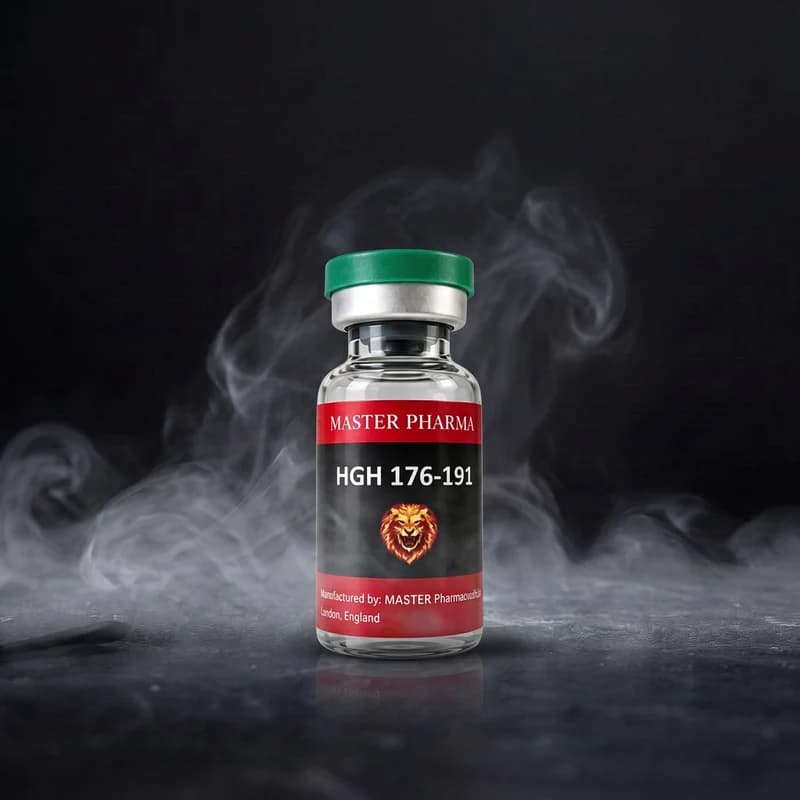
What Is HGH Fragment 176-191 and Why Does Handling Technique Matter?
HGH Fragment 176-191 is a 16-amino-acid peptide corresponding to the C-terminal tail of human growth hormone, and its lipolytic activity is preserved entirely within that short sequence — making correct handling from vial to injection site the single most controllable variable in any research protocol. Compared to longer peptide analogues that tolerate room-temperature exposure for short periods, Fragment 176-191's relatively small molecular weight makes it especially susceptible to degradation through heat, mechanical agitation, and contaminated diluents. Bluepeps supplies this compound in a 10 mg lyophilised cake, a format that maximises shelf stability until the moment of reconstitution.
Reconstitution: Diluent Choice and Injection Volume
Bacteriostatic water (0.9 % benzyl alcohol) is the recommended diluent for HGH Fragment 176-191 because its antimicrobial properties extend in-use vial life to approximately 30 days when refrigerated at 2–8 °C. Sterile water for injection is acceptable for single-use preparation but supports no meaningful multi-dose window. Adding 2 mL of bacteriostatic water to a 10 mg vial yields a 5 mg/mL (5,000 mcg/mL) stock solution; researchers targeting a 250 mcg dose then draw 0.05 mL per injection on a standard U-100 insulin syringe. Diluent should be directed against the vial wall — never jet-streamed onto the lyophilised cake — and the vial rolled gently rather than shaken to avoid peptide aggregation.
Storage, Cold-Chain and In-Use Refrigeration
Unreconstituted vials remain stable for up to 24 months when stored at −20 °C and for approximately 90 days at 2–8 °C, according to lyophilised peptide stability data routinely cited in pharmaceutical cold-chain literature. Once reconstituted, the solution must be held continuously at 2–8 °C and used within 28–30 days; a single freeze-thaw cycle after reconstitution is sufficient to cause irreversible aggregation. Bluepeps dispatches each lot with cold-chain packaging validated to maintain the 2–8 °C envelope during transit, and a lot-specific certificate of analysis confirms HPLC-verified active content before goods leave the facility.
Subcutaneous Injection Technique
Subcutaneous administration into the abdominal pinch — the standard site for Fragment 176-191 — delivers the peptide into loose connective tissue where absorption into systemic circulation occurs over 15–30 minutes, a window consistent with published subcutaneous pharmacokinetic data for small peptides. A 27–31 gauge, 6–8 mm needle inserted at a 45-degree angle minimises injection discomfort and reduces the risk of inadvertent intramuscular delivery. The injection site should be swabbed with 70 % isopropyl alcohol and allowed to air-dry before puncture; rotating sites across four abdominal quadrants prevents localised tissue irritation across multi-week protocols.

 Lab Tested