Ipamorelin: Mechanism and Pharmacological Profile
Ipamorelin is a synthetic pentapeptide growth hormone secretagogue that selectively stimulates the pituitary gland to release endogenous growth hormone without meaningfully elevating cortisol, prolactin, or ACTH. This selectivity sets it apart from older GH-releasing peptides and makes it one of the more pharmacologically precise tools in the secretagogue class.
At the molecular level, ipamorelin binds the ghrelin receptor — formally designated the growth hormone secretagogue receptor type 1a (GHS-R1a) — which is expressed in both the hypothalamus and the anterior pituitary. Ipamorelin activates GHS-R1a and thereby triggers a downstream signalling cascade involving phospholipase C and intracellular calcium mobilisation, ultimately driving the release of stored growth hormone from somatotroph cells. Importantly, ipamorelin does not significantly suppress somatostatin tone in the way that some other peptides do, meaning the body's natural feedback rhythms remain comparatively intact.
The half-life of ipamorelin following subcutaneous administration is approximately two hours, placing it in the short-acting category among peptide secretagogues. Peak plasma GH elevation typically occurs within 15 to 30 minutes post-injection, which allows for precise timing around training, sleep, or fasting windows. Bioavailability via the subcutaneous route is moderate and consistent, making subcutaneous administration the dominant delivery method in clinical and research contexts. Because ipamorelin exerts a pulsatile rather than sustained stimulation of GH secretion, it broadly mimics the body's natural ultradian GH pulse pattern — a property regarded as an advantage from a receptor-sensitivity standpoint.
The peptide is composed of five amino acids: Aib-His-D-2-Nal-D-Phe-Lys-NH2, a structure engineered specifically to confer GHS-R1a selectivity while minimising off-target receptor interactions. This structural design is the primary reason that ipamorelin lacks the appetite-stimulating side effects commonly associated with ghrelin and certain other GH secretagogues such as GHRP-6.
Application Context and Relevant User Groups
Ipamorelin occupies a well-defined niche within the broader landscape of performance and physique-focused peptide use. Its profile — meaningful GH release, low cortisol impact, minimal appetite stimulation, and a clean side-effect window — makes it attractive to a specific range of user groups whose goals vary considerably.
Bodybuilders and physique athletes represent a substantial segment of those researching ipamorelin. Within this group, the peptide is commonly employed during phases where lean tissue preservation and recovery enhancement are priorities. Growth hormone promotes lipolysis (the breakdown of stored fat for energy) and stimulates IGF-1 production in the liver; ipamorelin drives both of these indirectly by elevating endogenous GH pulses. Users in contest preparation phases are particularly interested in ipamorelin's capacity to support lean mass retention during caloric restriction without the water-retention profile associated with exogenous GH at higher doses.
Athletes engaged in strength and power sports often approach ipamorelin from a recovery and connective tissue standpoint. GH plays a well-documented role in collagen synthesis and joint tissue maintenance — areas of direct relevance to those training at high intensities over prolonged periods. Ipamorelin provides a targeted mechanism for supporting these processes without necessitating exogenous hormone administration.
Older athletes and health-conscious individuals with an interest in longevity protocols also form a meaningful user group. Endogenous GH secretion declines significantly with age — a phenomenon sometimes referred to as somatopause — and secretagogue peptides such as ipamorelin represent a research-supported avenue for partially restoring youthful GH pulse amplitude. Studies have demonstrated measurable increases in serum IGF-1 following sustained ipamorelin administration, which serves as a practical surrogate marker for GH activity.
Ipamorelin is frequently combined with a growth hormone-releasing hormone analogue — such as CJC-1295 — to produce a synergistic effect that amplifies GH release beyond what either peptide achieves alone. This combination exploits two distinct mechanisms: GHS-R1a activation via ipamorelin and GHRH receptor stimulation via CJC-1295, resulting in a substantially amplified pulsatile GH response. This stacking approach is among the most cited in the peptide research literature and is widely referenced in bodybuilding communities.
Ipamorelin is considered a research chemical in most jurisdictions and is not approved for human therapeutic use in standard clinical practice. It is sold for research purposes, and prospective purchasers should be aware of applicable regulations in their region.
Range & Selection by Concentration and Pack Size
The ipamorelin category on this site includes two products across two concentration tiers, both presented in a single-vial format — a practical and flexible arrangement suited to both newcomers evaluating the compound and experienced users managing precise dosing protocols.
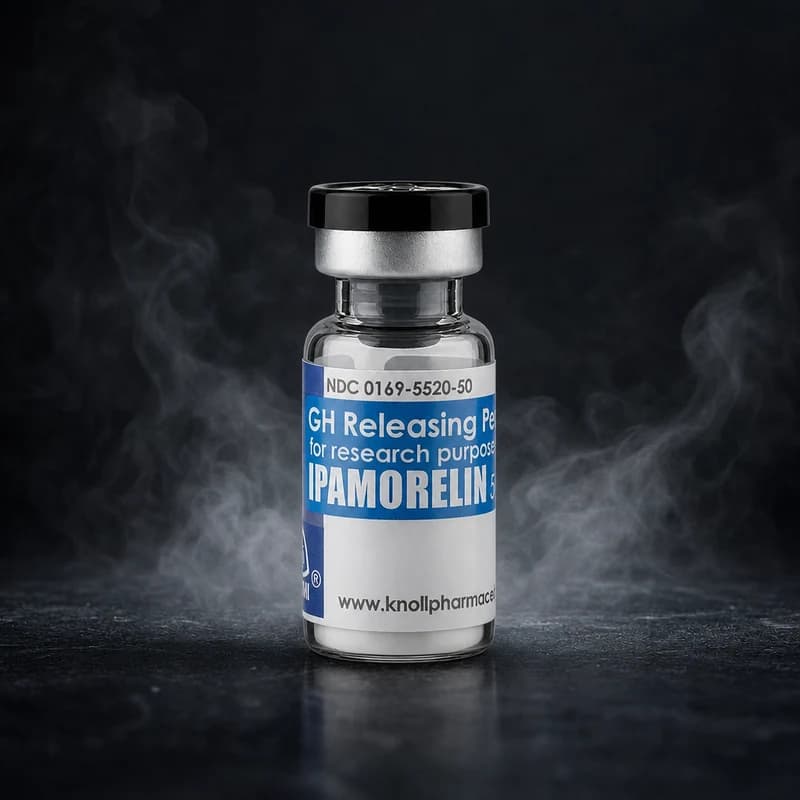
Ipamorelin 5mg/vial by Knoll Pharmaceuticals represents the lower concentration tier. A 5mg vial is well-suited to individuals who are beginning their exploration of ipamorelin, particularly those running conservative dose protocols in the 200–300 mcg per injection range. At these lower doses, a 5mg vial provides approximately 16 to 25 individual administrations, offering solid utility without overcommitting to a large upfront volume. Knoll Pharmaceuticals is a recognised name in the peptide manufacturing space, and their 5mg format is frequently chosen by those approaching ipamorelin for the first time or those who prefer to cycle shorter experimental runs.
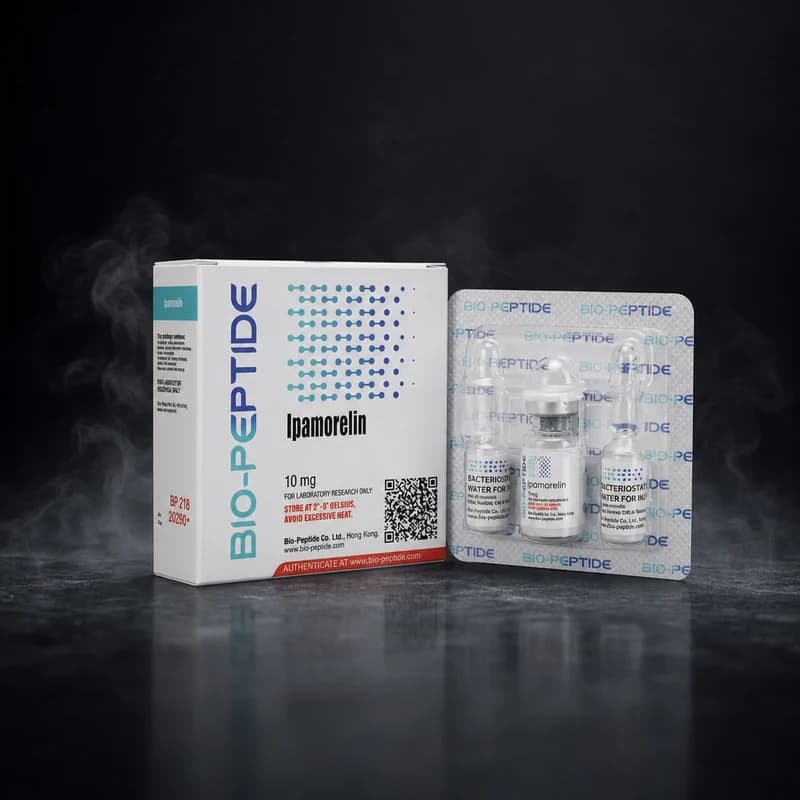
Ipamorelin 10mg/vial by Bio-Peptide occupies the higher concentration tier and is the more economical option per-milligram for users who have established their preferred dose and intend to run a sustained protocol. A 10mg vial allows for extended use — at 300 mcg per injection, three times daily, a single vial covers approximately 11 days of continuous use. Bio-Peptide is a well-regarded peptide manufacturer with a strong presence in the European and international research peptide market, and their 10mg ipamorelin vial is a popular choice among intermediate and advanced users who have moved beyond trial-phase dosing. The higher concentration also benefits users who are combining ipamorelin with a GHRH peptide and wish to maintain consistent supply across both compounds simultaneously.
Both vials require reconstitution with bacteriostatic water prior to use — standard practice for lyophilised peptides. The 5mg tier is the natural starting point for dose titration, while the 10mg tier offers the flexibility and longevity of supply that sustained protocols demand.
Frequently Asked Questions
What makes ipamorelin different from other GHRP peptides like GHRP-6 or GHRP-2?
Ipamorelin is notably more selective at GHS-R1a, producing growth hormone release without the significant cortisol, prolactin, or appetite-stimulating effects associated with GHRP-6 and GHRP-2. This cleaner hormonal profile makes ipamorelin a preferred choice for users who want targeted GH stimulation with fewer hormonal side effects across a sustained protocol.
How should ipamorelin vials be stored to maintain peptide integrity?
Lyophilised (freeze-dried) ipamorelin vials should be stored refrigerated at 2–8°C and kept away from direct light. Once reconstituted with bacteriostatic water, the solution should remain refrigerated and is typically stable for approximately 30 days. Avoid repeated freeze-thaw cycles, as these degrade peptide structure and reduce potency over time.
Is ipamorelin typically used alone or combined with other peptides?
Ipamorelin is frequently combined with a GHRH analogue — most commonly CJC-1295 — to synergistically amplify GH pulse magnitude. Ipamorelin activates the ghrelin receptor while CJC-1295 stimulates the GHRH receptor, engaging two complementary pathways simultaneously. This combination is among the most widely researched and discussed pairings in the peptide community for maximising GH secretion.


 Lab Tested