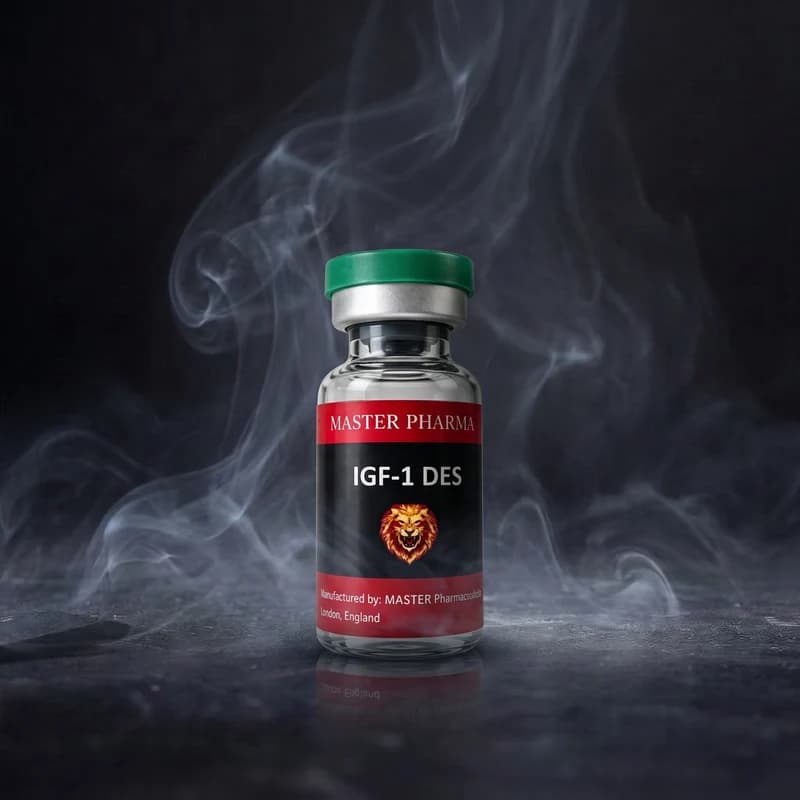
Contraindications: Do not use Des (1-3) IGF-1 if you have an active or suspected malignancy — IGF-1R signalling promotes cell proliferation and may accelerate tumour progression. Contraindicated in individuals with diabetic retinopathy, known hypersensitivity to IGF-1 analogues, or clinically significant hypoglycaemia history. Not approved for human therapeutic use; intended for research purposes only.
Side Effects: Peri-workout hypoglycaemia is the most commonly reported adverse effect — consume fast-acting carbohydrates within reach during sessions. Localized injection-site discomfort, transient oedema, or erythema may occur with repeated intramuscular administration. Elevated IGF-1 signalling over prolonged cycles has been associated with acromegalic tissue changes (jaw, hands, feet) and potential changes in insulin sensitivity.
Monitoring: Monitor fasting blood glucose and peri-workout glucose levels throughout the protocol. Assess injection sites regularly for signs of lipohypertrophy or fibrotic tissue from repeated administration. Consider periodic evaluation of circulating IGF-1 levels if extended or stacked protocols are employed, and track any changes in joint fluid retention or soft-tissue swelling.
PCT: Des (1-3) IGF-1 does not directly suppress hypothalamic-pituitary-gonadal (HPG) axis function; therefore, standard anabolic-steroid PCT agents (SERMs such as tamoxifen or clomiphene) are not required as a consequence of IGF-1 DES use alone. However, if Des IGF-1 is run alongside androgens or GH secretagogues, address the suppressive compounds in post-cycle planning accordingly and allow a minimum 4-week washout from Des IGF-1 before re-initiating.

 HPLC Verified