What GHRP-6 Is and Why Correct Handling Defines Its Effectiveness
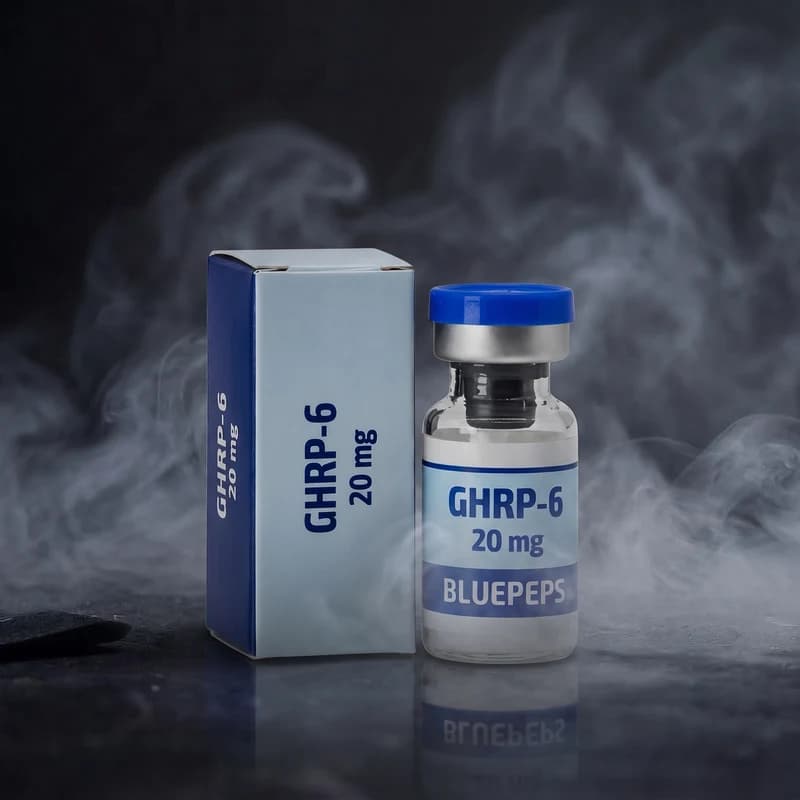
GHRP-6 is a six-amino-acid synthetic peptide that activates the ghrelin receptor (GHS-R1a) to stimulate endogenous growth hormone pulses from the anterior pituitary, supplied by Knoll Pharmaceuticals as a lyophilised 5 mg/vial powder whose stability and potency depend entirely on proper reconstitution, cold-chain storage and precise subcutaneous injection technique. Unlike oral or transdermal compounds, lyophilised peptides degrade irreversibly if exposed to incorrect solvents, heat or repeated freeze-thaw cycles — making handling knowledge as critical as the molecule itself. Compared to pre-mixed liquid peptide formulations, lyophilised powder vials like this 5 mg unit retain potency far longer when kept sealed and refrigerated before reconstitution.
Reconstitution: Solvent, Volume and Technique
Bacteriostatic water (0.9 % benzyl alcohol) is the correct reconstitution solvent for GHRP-6, as it inhibits microbial growth across multiple draw sessions and maintains peptide integrity. Sterile water for injection is a viable single-use alternative but should not be used if the vial will be accessed more than once. To reconstitute, direct the solvent stream down the inside wall of the vial — never jet it directly onto the lyophilised cake — then swirl gently rather than shaking to avoid mechanical degradation of the peptide chain. A standard 2 mL volume of bacteriostatic water added to a 5 mg vial yields a 2.5 mg/mL (2500 mcg/mL) solution; a 100 mcg dose then occupies exactly 0.04 mL, measured on a U-100 insulin syringe.
Cold-Chain Storage and Post-Reconstitution Shelf Life
Knoll Pharmaceuticals' GHRP-6 vials must be stored dry and sealed at 2–8 °C (standard refrigerator range) or kept frozen (−20 °C) for longer pre-use periods. Once reconstituted with bacteriostatic water, the solution remains stable for up to 30 days when refrigerated continuously and protected from light — data consistent with peptide stability studies using HPLC re-assay at day 30. Reconstituted vials should never be frozen, as ice crystal formation disrupts peptide conformation. Each vial should be inspected visually before each draw: discard if cloudiness, particulate matter or colour change is present.
Subcutaneous Injection Protocol
Subcutaneous (SC) administration into the abdominal pinch fold is the standard route for GHRP-6, delivering peptide into the adipose layer where absorption into systemic circulation is consistent and predictable. A 29- or 31-gauge, 8 mm insulin syringe allows precise volumetric dosing of the small volumes required (typically 0.02–0.06 mL per injection) and minimises injection-site trauma. Injection sites should be rotated systematically to prevent lipohypertrophy; a clockwise rotation pattern around the navel is a practical approach used in clinical peptide research settings.

 Lab Tested