Hexarelin as a Benchmark in the GHRP Appetite Comparison
Hexarelin is a synthetic hexapeptide secretagogue whose appetite-signal profile places it at a distinct point on the hunger-stimulation spectrum defined by GHRP-6 at one extreme and GHRP-2 at the other. Compared to GHRP-6, which engages ghrelin receptors (GHS-R1a) with sufficient affinity to trigger clinically meaningful orexigenic signalling, Hexarelin produces a comparatively muted hunger response — a consequence of its modified peptide sequence reducing peripheral ghrelin-mimetic activity. GHRP-2 sits at the opposite end: it delivers strong GH pulses with even less appetite stimulation than Hexarelin. Understanding where Hexarelin falls in this appetite hierarchy is essential for users selecting a GHRP based on body-composition goals and tolerance of hunger-driven caloric intake.
GH Output vs. Appetite: How GHRP-6, Hexarelin, and GHRP-2 Differ
GHRP-6 stimulates hunger intensely because its receptor binding closely mirrors endogenous ghrelin's orexigenic mechanism, making it advantageous for users in a deliberate caloric surplus or hardgainers seeking appetite support. Hexarelin delivers a comparable — in some protocols superior — GH pulse amplitude without driving the pronounced hunger response characteristic of GHRP-6; published in-vitro binding studies identify Hexarelin's GHS-R1a affinity (IC₅₀ values measured by competitive radioligand assay) as high, yet its peripheral ghrelin-mimetic potency remains lower. GHRP-2 produces the leanest appetite profile of the three, making it the preferred choice during caloric restriction, while Hexarelin occupies the middle ground — moderate appetite impact, strong GH secretion.
Dosing Precision and HPLC-Verified Quality from Knoll Pharmaceuticals
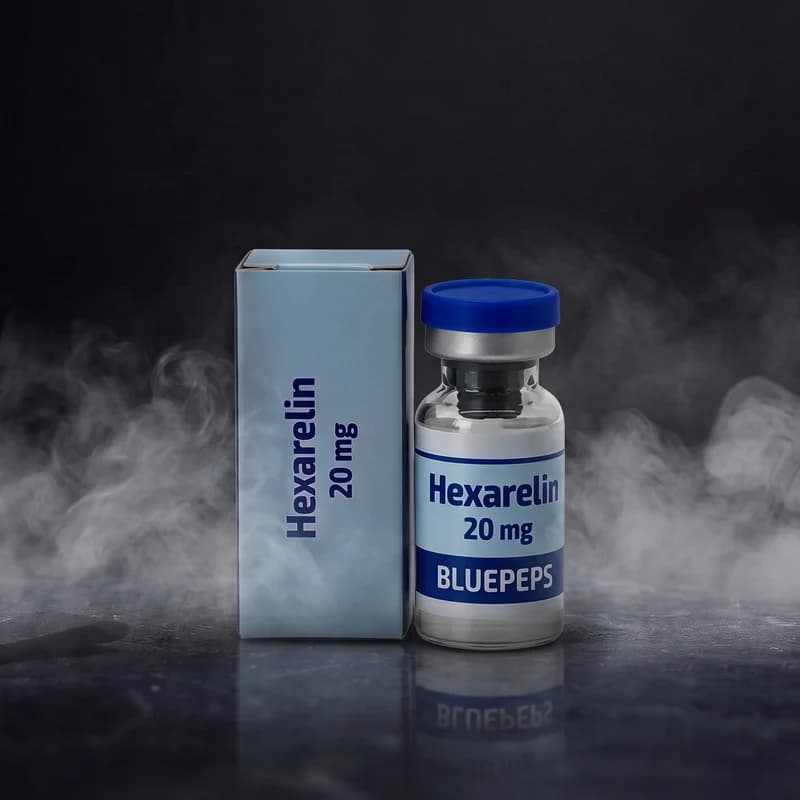
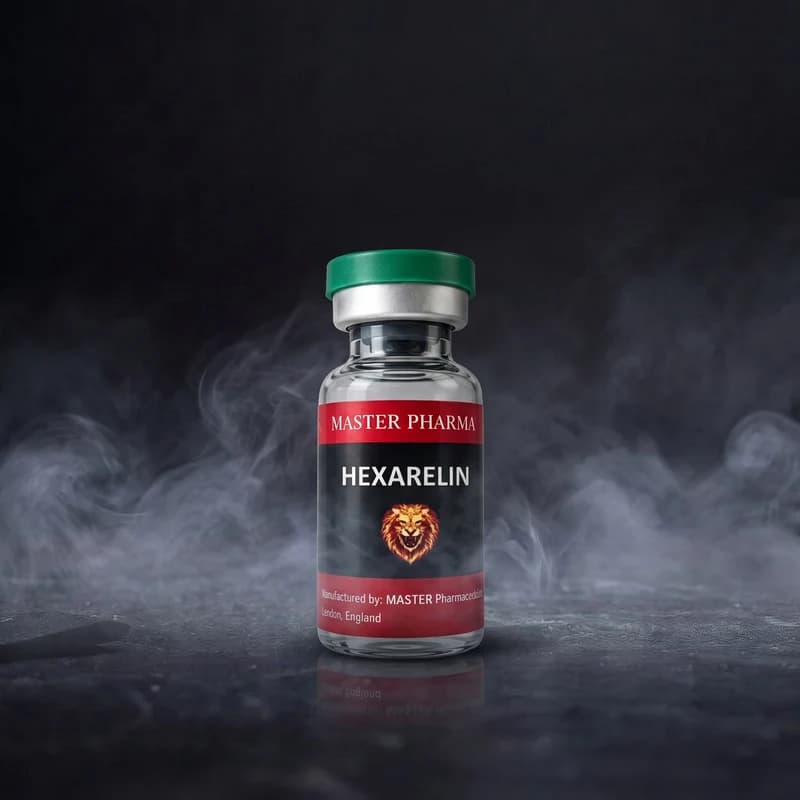
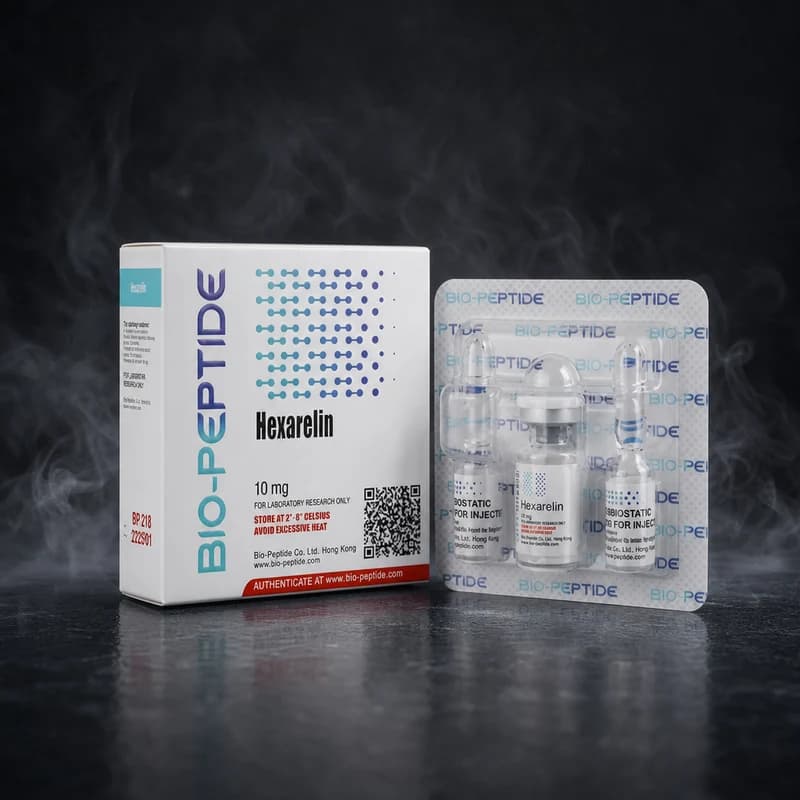
Knoll Pharmaceuticals' Hexarelin vials at 5 mg represent the entry concentration in the group, making accurate reconstitution and measured dosing critical. A standard research dose of 100–200 mcg per injection, administered subcutaneously two to three times daily, is derived from literature examining pulsatile GH release patterns confirmed via ELISA-based serum GH assays. Each vial is lyophilised for ambient-temperature transport stability; once reconstituted with bacteriostatic water, refrigeration at 2–8 °C is required and the solution should be used within 28 days. Knoll Pharmaceuticals verifies peptide purity and sequence fidelity through HPLC (High-Performance Liquid Chromatography) and screens for biological contamination using LAL (Limulus Amebocyte Lysate) endotoxin assay — both gates must pass independently before distribution clearance is granted.

 Lab Tested