Testosterone Enanthate is a long-chain esterified form of testosterone attached at the 17-beta hydroxyl position, designed to extend the hormone's release profile and reduce injection frequency compared with unesterified testosterone or shorter esters.
Mechanism & Pharmacology
Testosterone enanthate exerts its effects primarily through androgen receptor activation. The parent compound binds the androgen receptor (AR) with high affinity, triggering transcriptional changes in muscle, bone, and neural tissue that underpin the anabolic and androgenic responses observed in clinical and performance contexts. The enanthate ester itself is pharmacologically inert; it is cleaved by non-specific plasma esterases following intramuscular injection, liberating free testosterone into systemic circulation in a controlled, sustained manner.
The pharmacokinetic profile of testosterone enanthate is well characterised. Following a single intramuscular injection, peak serum testosterone concentrations are typically reached within 24–72 hours, after which levels decline with an effective half-life of approximately 4.5 to 5 days. This release curve means that with twice-weekly dosing, blood levels remain comparatively stable across the week, minimising the trough-to-peak oscillation that can accompany once-weekly administration. Full clearance from the system generally occurs within 21–28 days of the final injection, a detail relevant to post-cycle planning.
Testosterone undergoes two principal biotransformation pathways relevant to bodybuilders. Aromatase (CYP19A1), concentrated in adipose tissue, converts a portion of circulating testosterone to oestradiol — an outcome that supports joint lubrication and bone density but necessitates oestrogen management at higher doses. Simultaneously, 5-alpha reductase converts testosterone to dihydrotestosterone (DHT) in peripheral tissues, amplifying androgenic signalling in the scalp, skin, and prostate. The ratio of anabolic-to-androgenic activity for testosterone itself is defined as 100:100, making it the universal reference compound against which all other anabolic-androgenic steroids are benchmarked.
Bioavailability following intramuscular injection approaches 100%, as the first-pass hepatic metabolism that limits oral testosterone is entirely bypassed. Oil-based formulations — sesame, grapeseed, or cottonseed oil being the most common carrier vehicles — further slow diffusion from the injection depot into surrounding vasculature, reinforcing the ester's extended-release characteristics.
Application Context & User Groups
Testosterone enanthate occupies a foundational position in performance pharmacology for well-documented reasons: it is one of the most extensively studied synthetic androgens in existence, with a clinical safety and efficacy record spanning more than six decades. Medically, it has been used in hypogonadism management, delayed puberty, and — in some countries — as a component of gender-affirming hormone therapy, giving it a regulatory history that makes its pharmacology unusually transparent compared with many research compounds.
In a performance context, testosterone enanthate is most commonly employed in two broad scenarios. The first is as a standalone bulking agent, where weekly doses (typically divided across two injections for stability) are selected to drive progressive muscle protein synthesis, strength accrual, and recovery capacity above natural physiological ceilings. Nitrogen retention improves measurably within the first two to three weeks, and users typically report noticeable changes in training output before visible body composition shifts emerge. The second common application is as a testosterone base within a multi-compound cycle, where it maintains physiological androgen levels while other anabolic agents contribute specific effects — a practice designed to prevent the libido impairment and lethargy associated with low-testosterone states caused by exogenous suppression of the hypothalamic-pituitary-gonadal (HPG) axis.
Experienced compound cycles frequently pair testosterone enanthate with nandrolone decanoate, boldenone undecylenate, or oral agents such as methandienone or oxandrolone, with the enanthate ester's long half-life aligning well with the dosing schedules of other long-acting injectables. For those in a body-recomposition or strength-focused phase rather than a mass-building one, lower doses maintaining supraphysiological-but-moderate testosterone levels can preserve lean tissue while supporting the caloric deficit required for fat loss.
User groups broadly range from intermediate recreational bodybuilders undertaking their first injectable cycle, to competitive physique athletes requiring precise hormonal management in the weeks before a contest, to older strength athletes using testosterone enanthate as part of a monitored wellness protocol. Because the ester's long activity window makes rapid mid-cycle dose adjustments difficult, it is generally considered more appropriate for users who have established their individual response to exogenous testosterone rather than complete beginners.
Range & Selection by Concentration and Pack Size
Our testosterone enanthate category spans four concentration tiers — 250 mg/ml, 300 mg/ml, 350 mg/ml, and 400 mg/ml — across vial and ampoule formats, giving users meaningful flexibility in matching product to protocol.
250 mg/ml — Standard Concentration, Widest Selection
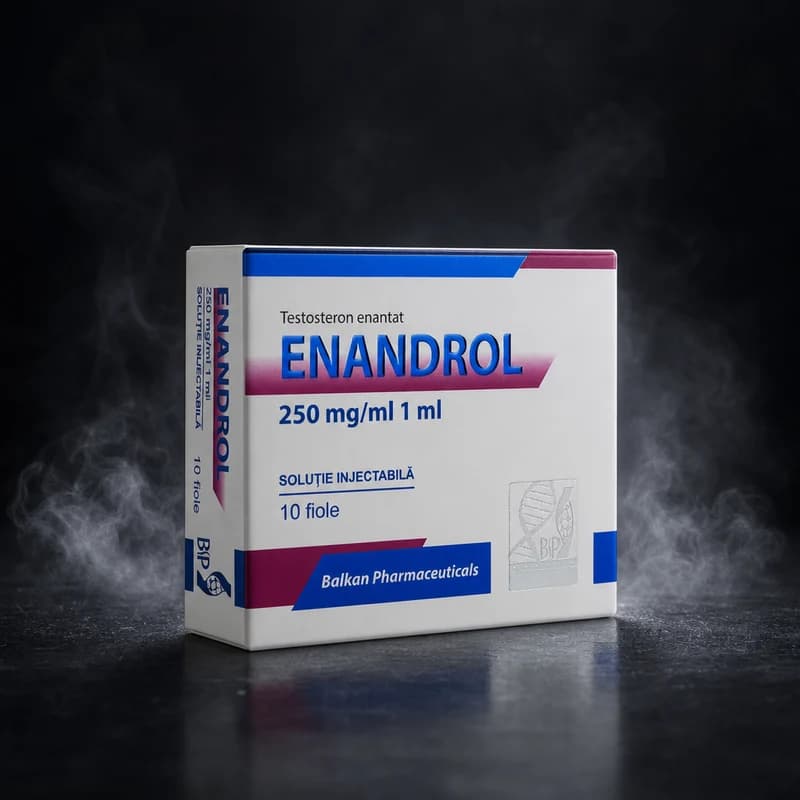
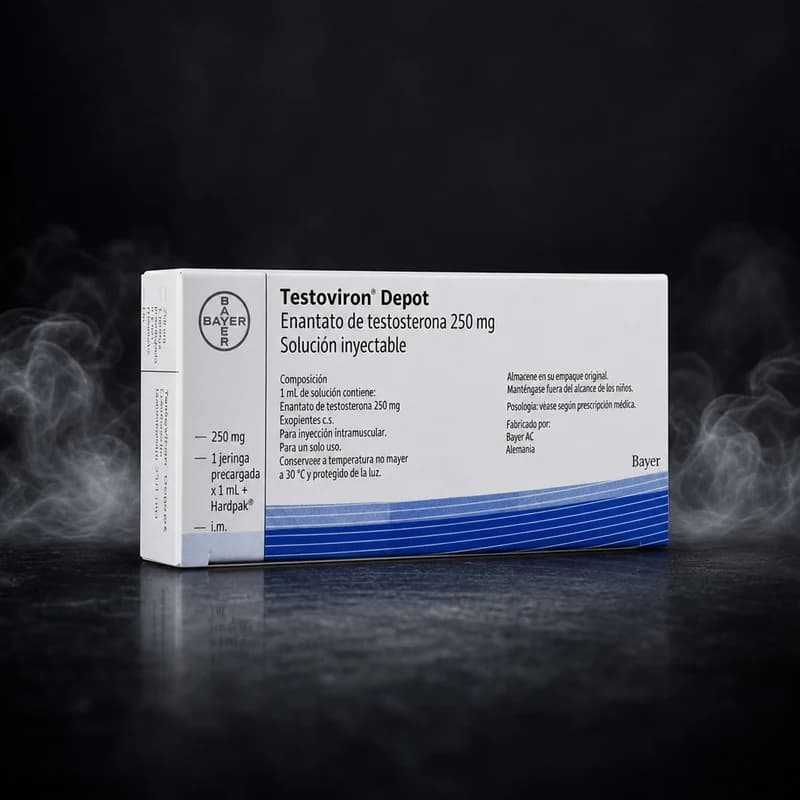
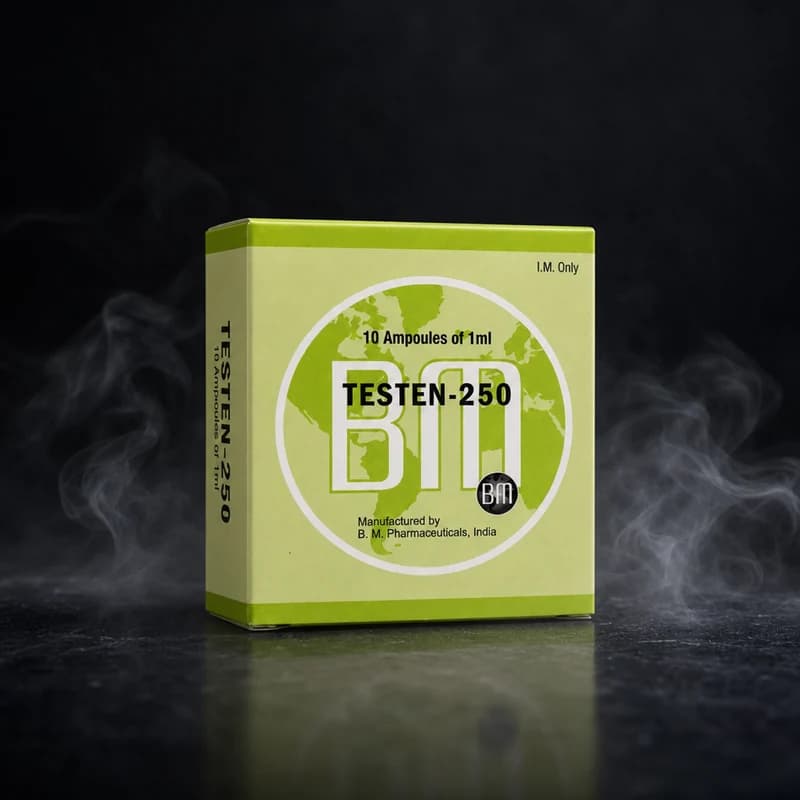
The 250 mg/ml tier represents the industry-standard concentration and carries the broadest manufacturer coverage in this category. Testosterone Enanthate 250 mg/ml 10×1 ml Ampoules by Aburaihan Iran is among the most widely recognised pharmaceutical-grade presentations globally, produced under Iranian GMP standards and supplied in individually sealed ampoules that offer single-use sterility assurance. Testen-250 by BM Pharmaceuticals and Enandrol 250 mg/ml by Balkan Pharmaceuticals offer similarly practical 10-ampoule configurations, well-suited to a standard 10-week cycle without the need to reorder mid-way. For users who prefer the prestige of a long-established European pharmaceutical manufacturer, Testoviron Depot 250 mg/ml 1×1 ml Ampoules by Schering provides single ampoules — ideal for those wanting precise dose control or running testosterone enanthate as a base at modest weekly volumes alongside other compounds.
The 250 mg/ml concentration is particularly appropriate for first-time injectable users, as it allows straightforward volume calculations and reduces the risk of dosing errors. A 1 ml injection delivers exactly 250 mg, a clean figure for building and adjusting weekly totals.
300 mg/ml — Balanced Potency for Regular Users
The 300 mg/ml tier suits experienced users looking to reduce injection volume while maintaining established dose ranges. A 1 ml injection delivers 300 mg, enabling a two-injection weekly protocol to deliver 600 mg total within a manageable volume per site.
350 mg/ml — Higher Concentration for Volume-Sensitive Users
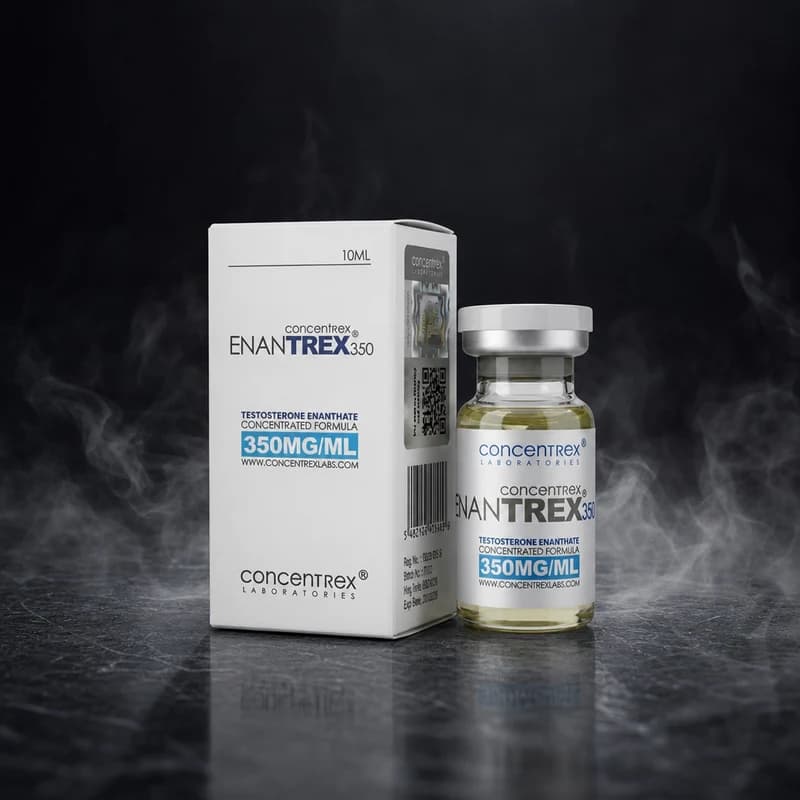
EnanTrex 350 mg/ml 10 ml Vial by Concentrex Labs represents the 350 mg/ml tier and appeals to athletes who have refined their response to testosterone enanthate and wish to minimise total injection volume — particularly relevant when stacking multiple oil-based compounds simultaneously. Vial format supports flexible dosing across a cycle's duration.
400 mg/ml — Maximum Concentration
Etho-Testosterone 300 mg/ml 10 ml Vial by Beligas Pharmaceuticals anchors the upper-concentration segment. At 400 mg/ml, each millilitre delivers a substantial dose, making this tier most practical for advanced users with established injection experience and protocols that demand high weekly totals without increasing the number of injection events. Vial format at this tier provides cost-efficient volume for longer cycles.
Pack format selection should reflect cycle length and storage preferences: ampoule formats guarantee single-use sterility and suit shorter or lower-dose protocols, while multi-dose vials offer flexibility across longer cycles when opened and stored correctly under refrigeration.
Frequently Asked Questions
What is the half-life of testosterone enanthate and how does it affect injection frequency?
Testosterone enanthate has an effective half-life of approximately 4.5 to 5 days. This means injecting twice weekly — for example, Monday and Thursday — produces more stable serum testosterone levels than a single weekly injection, reducing the hormonal peaks and troughs that can affect mood, libido, and energy between doses.
What is the difference between 250 mg/ml and 400 mg/ml testosterone enanthate?
The active compound is identical; only the concentration differs. A higher mg/ml means less oil volume is needed per injection to deliver the same dose. Users sensitive to injection site volume, or those running multiple injectables simultaneously, may prefer 350–400 mg/ml formulations, while 250 mg/ml remains the most widely available and straightforward option for standard protocols.
How does testosterone enanthate compare to testosterone cypionate?
Both are long-chain testosterone esters with near-identical pharmacological effects. Testosterone cypionate has a slightly longer half-life (approximately 8 days versus 4.5–5 days for enanthate), though in practice the clinical difference is minimal. Enanthate is more commonly available from European and international pharmaceutical manufacturers, while cypionate is predominant in North American markets.


 Established Brand