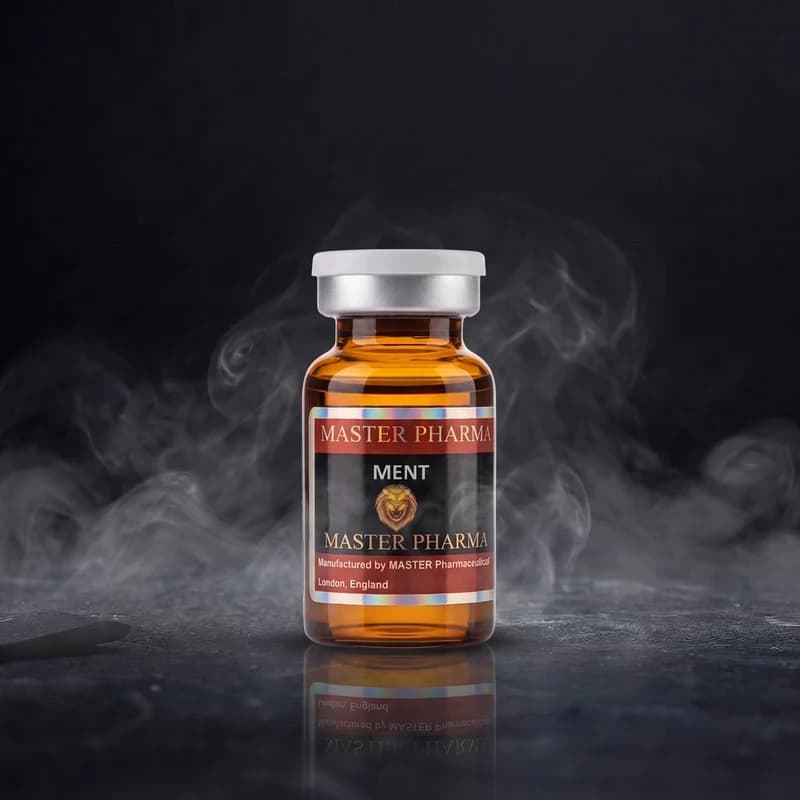
Trestolone acetate is a synthetic 19-nor androgen-progestogen with exceptional anabolic potency, originally developed as a male contraceptive and now widely researched for its extraordinary receptor affinity and capacity to fully suppress endogenous testosterone even at low doses.
Mechanism & Pharmacology of Trestolone Acetate
Trestolone acetate binds the androgen receptor with roughly ten times the affinity of testosterone, making it one of the most potent anabolic-androgenic steroids characterised by researchers to date. Unlike most 19-nor compounds, trestolone does not require 5α-reductase conversion to an active metabolite; it is already highly active in native form. The acetate ester confers a short half-life of approximately 8–12 hours, necessitating frequent administration — typically every 12 hours — for stable plasma levels.
A particularly unusual pharmacological trait is trestolone's interaction with aromatase. Trestolone converts via aromatase to 7α-methyl-oestradiol (7α-Me-E2), a novel oestrogen distinct from standard oestradiol. Crucially, 7α-Me-E2 does not bind sex-hormone-binding globulin (SHBG) with high affinity, meaning circulating free levels may behave differently from conventional oestrogen. Standard aromatase inhibitors remain effective against this conversion pathway, which is an important consideration for oestrogen management.
Trestolone acetate strongly suppresses the hypothalamic-pituitary-gonadal (HPG) axis through both androgenic and progestogenic mechanisms. The compound binds the progesterone receptor at measurable affinity, amplifying LH and FSH suppression beyond what androgenic activity alone would achieve. Recovery of endogenous testosterone production post-cycle therefore requires careful, structured post-cycle therapy. Bioavailability when administered intramuscularly is near-complete, with peak plasma concentrations typically reached within one to two hours of injection, owing to the short acetate ester chain. Liver enzyme elevation is generally modest compared with C-17 alpha-alkylated orals, as trestolone is not alkylated and undergoes first-pass hepatic metabolism only to a negligible extent via intramuscular administration.
Research published in clinical andrology contexts notes that trestolone acetate at doses as low as 400 µg per day when combined with exogenous testosterone can achieve full azoospermia, underscoring its profound suppression of spermatogenesis. Within performance and physique contexts, this suppressive potency is a central consideration for anyone planning ancillary support.
Application Context & User Groups
Trestolone acetate occupies a specific niche among advanced-level athletes and experienced physique competitors who have prior familiarity with suppressive 19-nor compounds. Its extremely high anabolic rating — estimated at 2,300 relative to testosterone's baseline of 100 on standardised myotrophic assays — makes it a compound selected for aggressive lean-mass phases rather than introductory cycles.
The short acetate ester makes trestolone acetate particularly suitable for structured short-duration cycles where rapid onset and equally rapid clearance are priorities. Practitioners who prefer frequent-injection protocols often appreciate the ability to titrate dose adjustments quickly; any unwanted response can be addressed within a 48–72-hour window as blood levels normalise. This contrasts with longer-esterified androgens where adjustment timelines extend across multiple weeks.
Trestolone acetate is almost exclusively employed by individuals with well-established experience managing aromatase inhibitors and progestogenic compounds simultaneously. Given the dual androgenic and progestogenic receptor activity, the compound can potentiate progestogen-related side effects such as lactation sensitivity in susceptible individuals, and co-administration of a prolactin-modulating agent such as cabergoline is a common adjunct protocol reported in community literature.
In clinical research settings, trestolone has been studied for application in male hormonal contraception, and early-phase human trials demonstrated consistent spermatogenic suppression. This research basis gives trestolone acetate an unusually rich pharmacokinetic data set compared with many performance-oriented androgens that exist almost entirely outside published literature.
Athletes in strength sports who require the highest possible anabolic stimulus over a compressed timeframe represent the most typical end-user profile in performance contexts. Water retention and oestrogen-related fullness must be anticipated and managed, as aromatisation to 7α-Me-E2 occurs at rates broadly comparable to testosterone's aromatisation to conventional oestradiol.
Range & Selection by Concentration and Pack Size
Every product in this category is formulated at the single-tier concentration of 50 mg/ml, which has emerged as the practical standard for injectable trestolone acetate. Given the compound's typical dose range of 25–50 mg per administration, the 50 mg/ml concentration allows straightforward measurement in increments of 0.5 ml or 1 ml without the calculation burden that higher concentrations introduce.
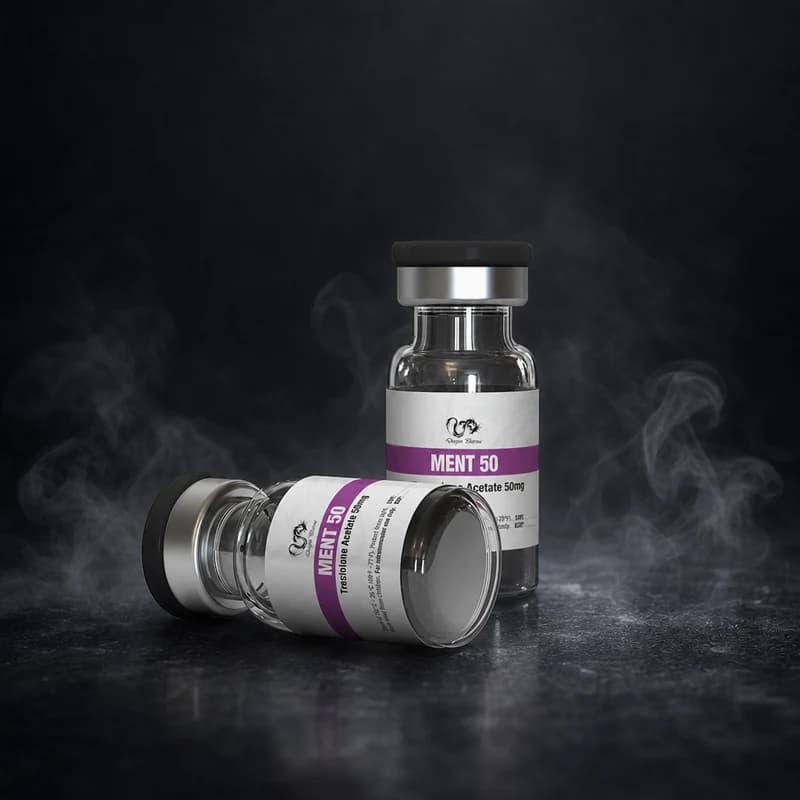
For users who prefer multi-dose vials with flexible draw volumes, Ment 50 50mg/ml 10ml Vial by Dragon Pharma offers a 10 ml format that provides approximately 20 full 25 mg doses or 10 full 50 mg doses per vial. Dragon Pharma's established manufacturing infrastructure and broad market presence make this an accessible choice for those running multiple weeks at moderate dose ranges.
Trestolone Acetate 50mg/ml 10ml Vial by Magnus Pharmaceuticals mirrors the same 10 ml vial format and concentration, providing a comparable volumetric yield. Magnus Pharmaceuticals maintains a reputation for consistent particulate-free oil-based preparations, which is a practical consideration given trestolone acetate's reputation for occasionally crystallising in certain carrier oil compositions at lower temperatures. Users should ensure vials are gently warmed before drawing in cooler ambient conditions.
For those who prefer single-use sterile ampulles — which eliminate the rubber septum degradation risk inherent to multi-use vials over extended periods — MENT 50mg/ml 10x1ml Ampulles by Imperia Laboratories provides ten individually sealed 1 ml units. Each ampule delivers exactly 50 mg per unit, suiting a twice-daily protocol cleanly. The ampule format also reduces the risk of contamination across a multi-week cycle since no single container is punctured repeatedly.
Guidance by use case: users running aggressive daily or twice-daily short-ester protocols at 50 mg per injection will deplete a 10 ml vial within ten days, making the 10 ml vials appropriate for shorter cycles or those stacking trestolone as a secondary compound. The ampule format suits users who prioritise per-dose sterility assurance and are comfortable with higher individual-unit cost amortised against this benefit.
Frequently Asked Questions
How does trestolone acetate differ from nandrolone or trenbolone as a 19-nor compound?
Trestolone acetate shares the 19-nor backbone with nandrolone and trenbolone but is distinguished by its 7α-methyl group, which prevents 5α-reduction and dramatically increases androgen receptor binding affinity. Unlike trenbolone, trestolone does aromatise — albeit to a novel oestrogen — and unlike nandrolone, its aromatisation product does not significantly bind SHBG, altering oestrogen dynamics considerably.
Why is frequent injection necessary with trestolone acetate at 50mg/ml?
The acetate ester gives trestolone a biological half-life of approximately 8–12 hours. To maintain stable anabolic plasma concentrations and avoid pronounced peak-to-trough fluctuations that may increase side-effect variability, injections every 12 hours are standard practice. The 50 mg/ml concentration facilitates twice-daily 0.5–1 ml injections without excessive injection volume discomfort.
Can trestolone acetate be stacked with testosterone, and how does SHBG factor in?
Trestolone acetate is often used alongside a testosterone base, though its own suppressive potency means exogenous testosterone is more a physiological support measure than a primary anabolic. Trestolone strongly displaces testosterone from SHBG, increasing free testosterone fractions transiently. Any stack should account for additive suppression of the HPG axis and plan PCT accordingly.


 Fast Acting