Mechanism & Pharmacology of Trenbolone Enanthate
Trenbolone Enanthate is a 19-nor anabolic–androgenic steroid in which the potent trenbolone base is esterified with enanthate to extend its release profile to approximately 7–10 days per injection. This long ester differentiates it fundamentally from Trenbolone Acetate, which requires every-other-day dosing, and makes it one of the most pharmacokinetically stable trenbolone esters available for structured cycles. The compound carries an anabolic-to-androgenic ratio of roughly 500:500 relative to testosterone (scored at 100:100), making it five times as anabolic and five times as androgenic on paper, yet its tissue selectivity — owing to the absence of the C-19 methyl group — gives it a distinct receptor-binding profile in practice.
Trenbolone Enanthate binds the androgen receptor with an affinity approximately three times greater than testosterone itself. Unlike many androgens, trenbolone does not undergo meaningful aromatisation into oestrogen because the C-17 ketone and the double bonds at C-9 and C-11 prevent aromatase from acting on the molecule. This means oestrogen-mediated side effects such as gynaecomastia or significant water retention are not driven by the compound itself, although progestin activity at the progesterone receptor can still contribute to tissue sensitivity in susceptible individuals. Trenbolone also binds the glucocorticoid receptor and inhibits cortisol action, which is one of the mechanisms through which it promotes net nitrogen retention and an anticatabolic state during caloric restriction.
Bioavailability after intramuscular injection is effectively 100%, with peak plasma concentrations typically reached within 24–48 hours post-injection and a clinically meaningful half-life of approximately 7 days for the enanthate ester. The compound undergoes hepatic metabolism via phase I oxidation and conjugation, with metabolites detectable in urine for extended periods — a relevant consideration for competitive athletes subject to testing. Binding to sex-hormone-binding globulin (SHBG) is notably high, though trenbolone's affinity for SHBG is lower than that of some DHT derivatives, leaving a functionally active free fraction in circulation.
Application Context & User Groups
Trenbolone Enanthate is used almost exclusively by experienced anabolic steroid users who have already completed several cycles with testosterone and intermediate compounds. It is not regarded as a beginner-appropriate compound under any credible bodybuilding framework, because managing its side-effect profile — which includes dose-dependent cardiovascular stress, night sweats, suppression of the hypothalamic–pituitary–gonadal axis, and elevated haematocrit — requires familiarity with hormonal management and cycle support protocols.
In competitive bodybuilding, Trenbolone Enanthate is most frequently incorporated during either lean-bulk phases, where its superior nitrogen retention supports muscle accrual without the accompanying water retention seen with aromatising androgens, or during pre-competition preparation, where its nutrient-partitioning and anticatabolic properties are particularly valued during caloric deficit. The compound's ability to simultaneously enhance lean tissue preservation while promoting fat oxidation — partly through its effects on IGF-1 upregulation and its interference with cortisol — makes it a favoured tool when physique quality is the primary goal.
Powerlifters and strength athletes also use Trenbolone Enanthate for its pronounced effects on myofibrillar hypertrophy and strength without the significant weight increases caused by wet compounds. The once- or twice-weekly injection schedule offered by the enanthate ester suits this group, who may prefer a lower-frequency protocol. Typical weekly doses reported in the community range from 200mg to 600mg, commonly stacked with a testosterone base to maintain physiological hormone function during suppression. Because endogenous testosterone production is substantially suppressed by trenbolone, exogenous testosterone is considered non-optional by most advanced users throughout the cycle.
Post-cycle therapy (PCT) following a Trenbolone Enanthate cycle is a more extended process than after shorter-ester cycles, both because the ester itself takes longer to clear and because trenbolone's suppression is particularly deep. Standard wait periods before initiating SERMs such as Nolvadex or Clomid are typically 2–3 weeks after the last injection.
Range & Selection by Concentration and Pack Size
The Trenbolone Enanthate category here comprises 24 products from 24 distinct manufacturers, spanning two concentration tiers — 150mg/ml and 200mg/ml — and two primary formats: 10ml vials and 10×1ml ampule presentations. This breadth gives users meaningful choice based on dosing precision, injection frequency, and preference for single-use versus multi-draw formats.
150mg/ml offerings represent the lower concentration tier and are a logical entry point for users new to Trenbolone Enanthate who wish to titrate dose with finer control. A 1ml injection at this concentration delivers exactly 150mg, which aligns conveniently with lower-end weekly protocols of 300mg divided across two injections. This tier tends to suit users who prioritise dosing flexibility over volume efficiency.
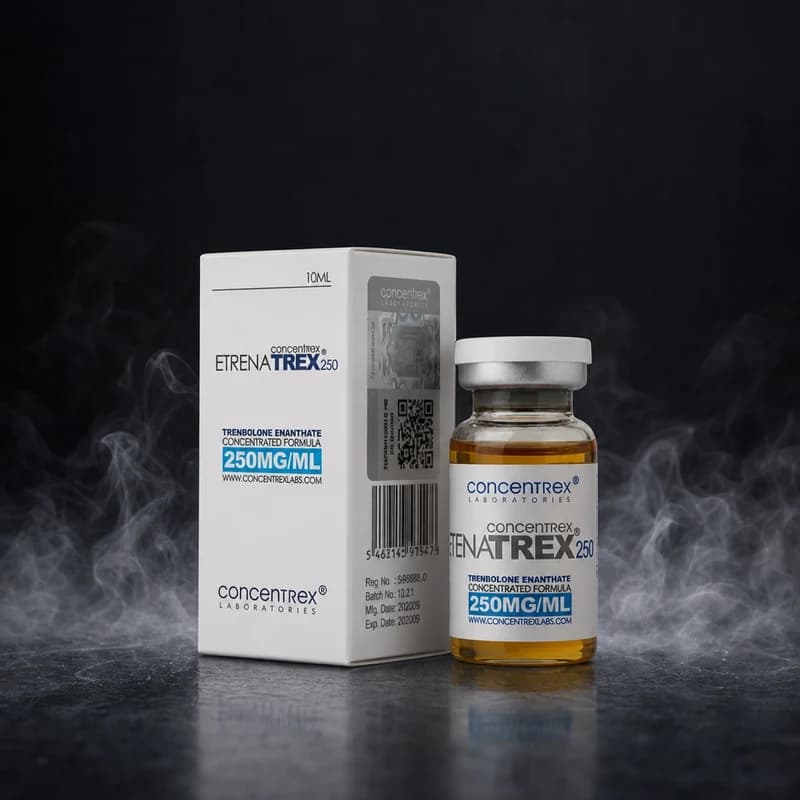
200mg/ml offerings are the dominant tier in this category and are available from the majority of the 24 manufacturers represented. Products such as Etho-Trenbolone 200mg/ml 10ml Vial by Beligas Pharmaceuticals and ETrenaTrex 200mg/ml 10ml Vial by Concentrex Labs represent well-regarded multi-draw vial options at this concentration. The 10ml vial format is economical for users running extended cycles, as a single vial provides ten full 1ml doses and reduces the number of unit transactions across a 10–12 week protocol.
For users who prefer single-use ampule formats — which eliminate any risk of vial contamination across multiple draws — Trenbolin-200 200mg/ml 10×1ml Ampoules by BM Pharmaceuticals and Trenbolone Enanthate 200mg/ml 10×1ml Ampoules by Elbrus Pharmaceuticals offer factory-sealed individual dosing. This format is particularly popular in European markets and among users who prioritise sterility assurance for each injection. Both the BM Pharmaceuticals and Elbrus Pharmaceuticals ampule formats deliver equivalent doses per unit to their vial counterparts and integrate identically into twice-weekly dosing schedules.
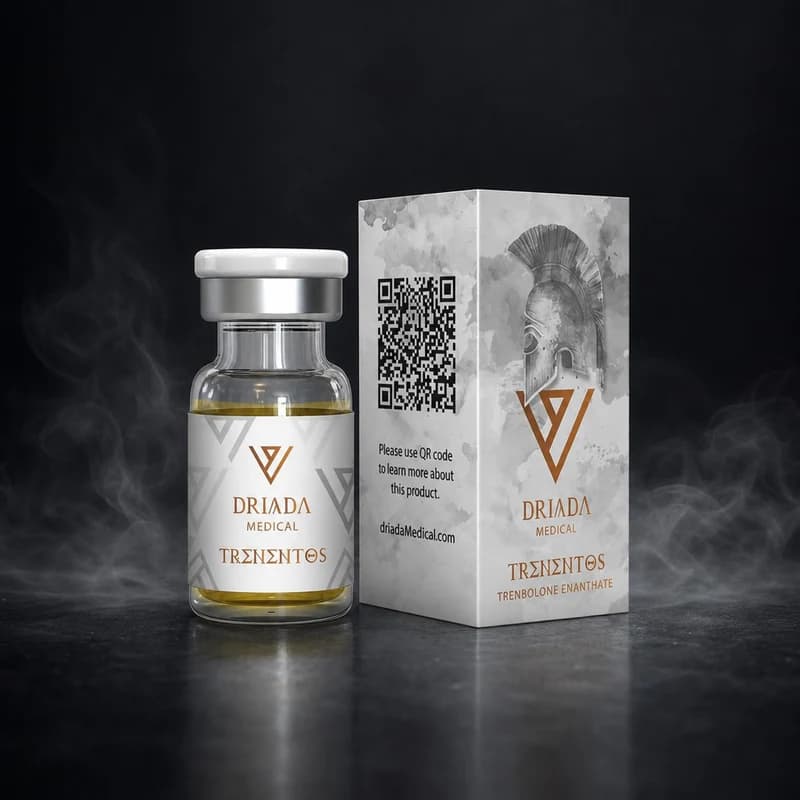
Additional well-regarded options in the 200mg/ml vial segment include Trenbolone 200 200mg/ml 10ml Vial by Dragon-Pharma and Trenentos 200mg/ml 10ml Vial by Driada Medical, both sourced from manufacturers with established presence across the international performance bodybuilding market. Users selecting between vial and ampule presentations should consider cycle duration, injection frequency, and personal sterility protocols rather than concentration alone, as both tiers can accommodate the full practical dosing range for this compound.
Frequently Asked Questions
What is the half-life of Trenbolone Enanthate and how does it affect injection frequency?
Trenbolone Enanthate carries an estimated half-life of approximately 7–10 days due to its long enanthate ester. This allows stable plasma levels to be maintained with just one or two injections per week, making it significantly more convenient than Trenbolone Acetate, which requires every-other-day administration to sustain consistent blood concentration levels.
Does Trenbolone Enanthate convert to oestrogen and is aromatase inhibitor use necessary?
Trenbolone Enanthate does not aromatise into oestrogen because its molecular structure — specifically the C-9 and C-11 double bonds — prevents aromatase from acting on it. However, if the compound is stacked with a testosterone base (which is standard practice), an aromatase inhibitor may still be required to manage oestrogen produced by the testosterone component of the cycle.
What is the difference between the 150mg/ml and 200mg/ml concentrations available in this category?
The primary practical difference is dosing arithmetic and injection volume. At 150mg/ml, users inject a larger volume to reach a given weekly dose, which offers finer titration increments. At 200mg/ml — the dominant tier across this 24-product range — each millilitre delivers a higher payload, reducing injection volume for equivalent doses and offering better efficiency for users running moderate-to-higher weekly protocols.


 High Concentration