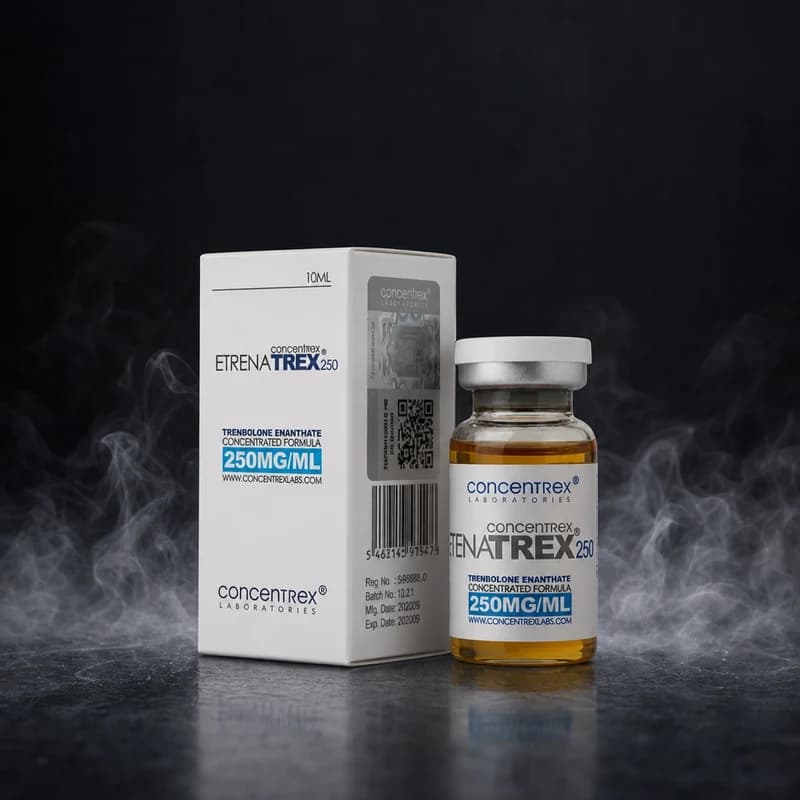
Contraindications: Trenanthate is contraindicated in individuals with prostate or breast carcinoma, existing hepatic impairment, uncontrolled hyperlipidaemia, or known hypersensitivity to Trenbolone Enanthate or any excipient in the formulation. Women of childbearing potential must not administer this compound. Pre-existing cardiovascular disease — including left ventricular hypertrophy or documented arrhythmia — constitutes a relative contraindication requiring specialist evaluation before any androgenic cycle.
Side Effects: Adverse effects associated with Trenbolone Enanthate include elevated prolactin (not oestrogen-mediated gynaecomastia), night sweats, reduced aerobic capacity, androgenic alopecia in genetically predisposed individuals, aggressive mood shifts, and suppression of the hypothalamic-pituitary-gonadal axis. SARM co-administration does not meaningfully attenuate these effects and may contribute additive HPG suppression at higher SARM doses. Serum lipid disruption — particularly HDL reduction — is dose-dependent and measurable within the first four weeks of use.
Monitoring: Prolactin, LH, FSH, full lipid panel, haematocrit, and blood pressure should be assessed at baseline and at a mid-cycle interval. Trenbolone Enanthate produces measurable HDL suppression that is additive with the lipid effects of some SARMs, making lipid panels more clinically meaningful in combination protocols than in single-compound use. Haematocrit elevation above 54% warrants dose reduction or cycle interruption.
PCT: Post-cycle therapy should commence 14–18 days after the final Trenanthate ampoule to allow enanthate ester clearance. Standard PCT frameworks use a SERM — clomiphene citrate 50mg/day or tamoxifen 20mg/day — for four weeks minimum. Prolactin normalisation should be confirmed by bloodwork before PCT is considered complete; elevated prolactin persisting into PCT requires continued cabergoline alongside SERM administration.

 High Concentration