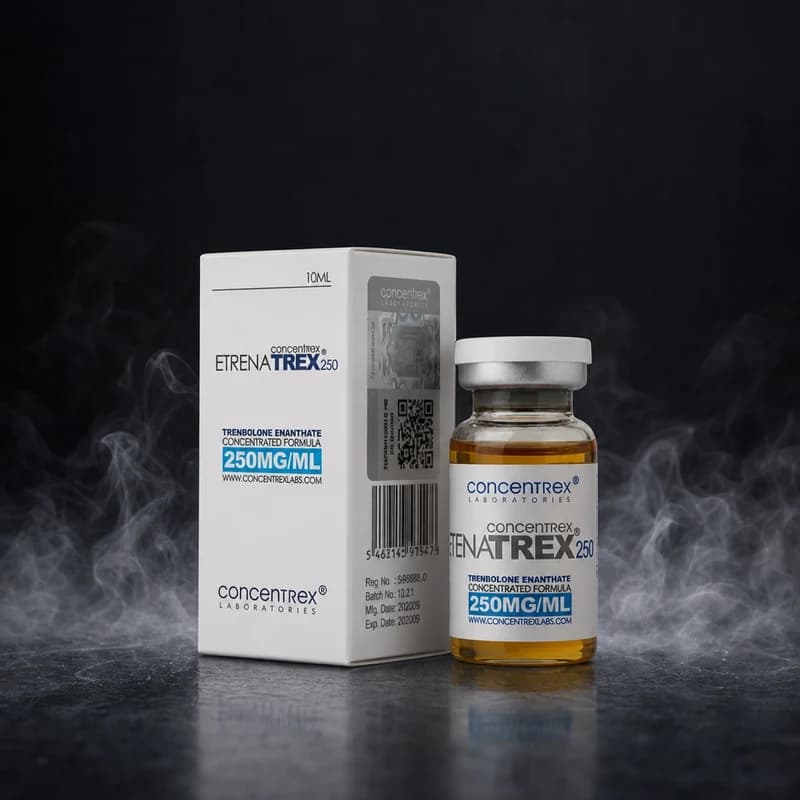
Androgen Receptor Binding: The Core Mechanism of Trenbolone Enanthate
Trenbolone Enanthate is a 19-nor-androstane compound whose biological activity is governed primarily by direct, high-affinity engagement with the androgen receptor (AR), a ligand-activated transcription factor belonging to the nuclear receptor superfamily. Unlike testosterone, which exerts a significant fraction of its androgenic effect after 5α-reduction to dihydrotestosterone, Trenbolone itself is the active ligand: it binds the AR with an affinity approximately five times greater than testosterone as measured in competitive radioligand displacement assays, making downstream 5α-reduction irrelevant to its potency profile. This receptor-level distinction is the biochemical foundation of every practical effect attributed to the compound.
DHT Lineage and Structural Consequences
Trenbolone's chemical lineage traces directly to the 19-nor androstane scaffold — the same structural family as Nandrolone — but its Δ9,11 double bond configuration fundamentally alters receptor interaction kinetics compared to other 19-nor derivatives. That additional degree of unsaturation in the A-ring region stiffens the molecular geometry, producing a receptor-ligand complex with slower dissociation kinetics than testosterone-AR complexes measured under equivalent assay conditions. Because Trenbolone lacks the C17-hydroxyl group susceptible to aromatase, it does not convert to oestrogen; its progestogenic activity — mediated through progesterone receptor partial agonism — is the ancillary endocrine consideration relevant to cycle support rather than oestrogen management. Compared to Nandrolone, which shares the 19-nor scaffold, Trenbolone's Δ9,11 modification produces markedly higher AR selectivity, a distinction consistently reproduced across in-vitro binding studies.
Genomic Signalling Downstream of AR Activation
Once the Trenbolone-AR complex translocates to the nucleus, it drives transcription of androgen-response element (ARE)-regulated genes governing nitrogen retention, satellite cell recruitment, and IGF-1 local expression in muscle tissue. Trenbolone Enanthate activates androgen-responsive gene programmes that promote skeletal muscle hypertrophy through both anabolic and anti-catabolic pathways, with glucocorticoid receptor competition providing an additional anti-catabolic axis documented in in-vitro displacement studies. The enanthate ester controls the rate of hydrolysis in the injection depot, extending systemic availability without altering the receptor-binding pharmacology of the liberated parent compound. Each 200mg/ml ampoule provides a concentrated, single-dose unit — verified by RP-HPLC — ensuring that the milligram quantity reaching androgen receptors corresponds precisely to the labelled dose.

 High Concentration