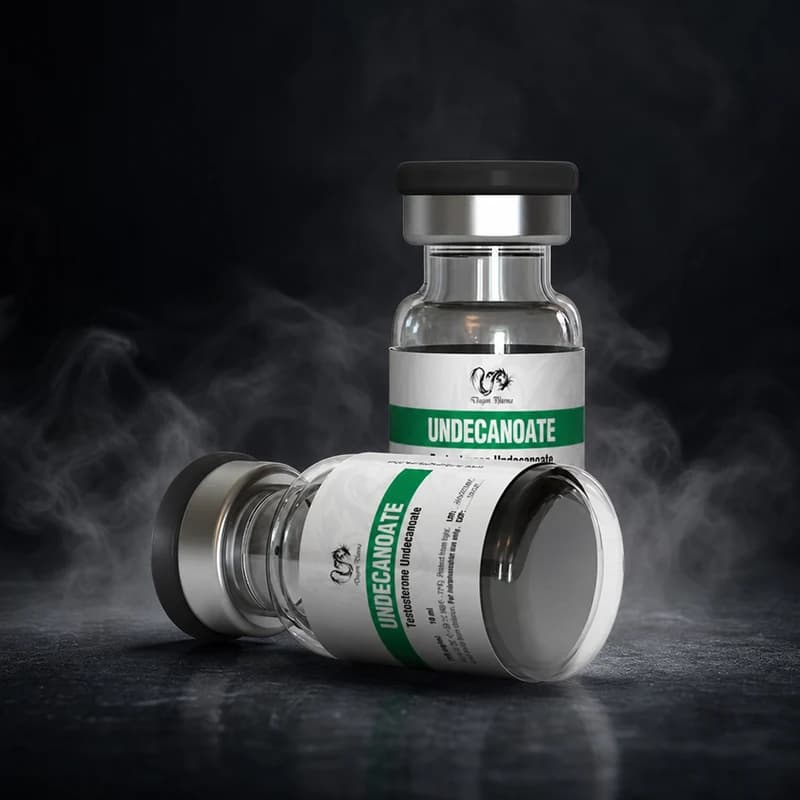
Testosterone undecanoate injection is a long-chain fatty-acid esterified form of testosterone designed for intramuscular depot administration, releasing endogenous-equivalent testosterone over an exceptionally extended pharmacokinetic window.
Mechanism & Pharmacology of Testosterone Undecanoate
Testosterone undecanoate is the undecanoic acid ester of testosterone, characterised by an 11-carbon fatty-acid side chain that dramatically retards hydrolysis at the injection site. Once administered intramuscularly — typically into the gluteal muscle with a castor-oil or tea-seed-oil vehicle — the ester is cleaved by nonspecific esterases, liberating free testosterone into systemic circulation. That free testosterone then binds the androgen receptor, a nuclear transcription factor belonging to the steroid hormone receptor superfamily, initiating downstream anabolic and androgenic gene expression.
The defining pharmacological feature of this compound is its terminal half-life. Depending on the vehicle and concentration, the plasma half-life of testosterone undecanoate injection ranges from approximately 33 to 70 days, making it the longest-acting injectable testosterone ester in clinical and performance use. In clinical dosing protocols, a single 1000 mg dose achieves physiological testosterone levels within days of injection and sustains them for up to 14 weeks with a loading strategy — a profile that stands in stark contrast to testosterone enanthate (half-life ~4.5 days) or testosterone propionate (half-life ~0.8–2 days).
Bioavailability via the intramuscular route approaches 100% for the ester dose, though peak serum testosterone concentrations (Cmax) are notably blunted relative to shorter esters at equivalent mass doses, which confers a smoother hormonal curve. The oil vehicle itself — castor oil in the pharmaceutical Nebido formulation — slows diffusion from the depot by increasing local viscosity and reducing aqueous solubility of the ester. Aromatisation to oestradiol proceeds via the cytochrome P450 enzyme CYP19A1 (aromatase), and 5α-reduction to dihydrotestosterone occurs via SRD5A1 and SRD5A2, consistent with all testosterone esters. Hepatic first-pass metabolism is circumvented by the intramuscular route, preserving the active fraction.
Protein binding is extensive: approximately 44% binds to sex hormone-binding globulin (SHBG) and roughly 54% to albumin, leaving approximately 2–3% as biologically free testosterone. Suppression of the hypothalamic-pituitary-gonadal (HPG) axis — via negative feedback on gonadotropin-releasing hormone (GnRH), luteinising hormone (LH), and follicle-stimulating hormone (FSH) — is complete and sustained throughout the dosing interval, as expected of all exogenous androgen preparations.
Application Context & User Groups
The unusually long pharmacokinetic profile of testosterone undecanoate injection makes it uniquely suited to contexts where injection frequency is a primary concern. In clinical testosterone replacement therapy (TRT), Nebido — the 1000 mg/4 ml pharmaceutical product by Schering — is the market reference and is licensed in over 80 countries as a 10–14 week injection interval protocol for hypogonadal men. This dramatically reduces clinic visits and improves compliance compared to weekly or biweekly protocols.
Within the bodybuilding and performance community, testosterone undecanoate injection occupies a somewhat different niche from most anabolic agents. Its slow-release kinetics mean that it is rarely chosen for short-cycle bulking or cutting phases, where fine hormonal control and rapid washout are valued. Instead, it is favoured in extended off-season programmes, cruise protocols between blast cycles, or by athletes who prioritise hormonal stability and low injection burden over rapid tissue accrual. The sustained, relatively flat testosterone curve it produces is associated with stable mood, libido, and haematological parameters compared to the peaks and troughs seen with shorter ester injections on inconsistent schedules.
Users converting from oral testosterone undecanoate (Andriol capsules) to the injectable form report a markedly superior bioavailability profile: the injectable does not depend on dietary fat for lymphatic absorption and does not suffer the erratic gastrointestinal uptake that limits oral efficacy. For experienced users undertaking year-round hormonal protocols, this consistency is a practical advantage.
The 1000 mg/4 ml concentration is specifically matched to the pharmaceutical Nebido protocol: a single vial constitutes one full clinical dose. The 250 mg/ml vials (available in 10 ml, providing 2500 mg per vial) lend themselves to more granular dosing flexibility — relevant for users titrating their own protocols or those bridging between cycles. Individuals in jurisdictions where pharmaceutical-grade testosterone undecanoate is prescription-restricted often select research-grade preparations from specialist manufacturers as an alternative. A brief clinical note: as with all exogenous androgens, bloodwork monitoring (haematocrit, PSA, lipid panel, liver enzymes) remains standard practice.
Range & Selection by Concentration and Pack Size
The current category offers two distinct concentration tiers and two pack formats across four manufacturers, giving users meaningful flexibility depending on their dosing strategy and experience level.
1000 mg/ml — Pharmaceutical Ampulles
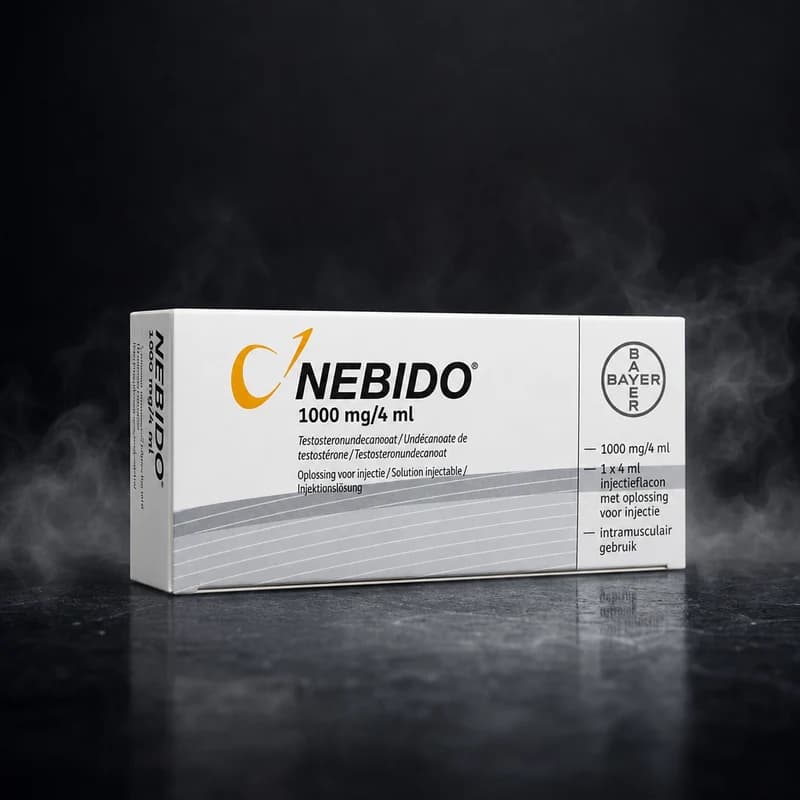
Nebido 1000 mg/ml 1×4 ml Ampoules by Schering is the flagship pharmaceutical entry in this category and the global clinical reference for injectable testosterone undecanoate. Each ampule delivers 1000 mg of testosterone undecanoate in a castor-oil vehicle, consistent with the licensed TRT protocol. Its pharmaceutical provenance means GMP manufacture, consistent potency, and sterile production to European Medicines Agency standards. This product is the natural selection for users following a medically supervised 10–14 week injection protocol or those who place exceptional weight on pharmaceutical-grade assurance.
250 mg/ml — Multi-Use Vials (10 ml)
The 250 mg/ml concentration across a 10 ml vial yields 2500 mg of testosterone undecanoate per vial — enough for multiple injections depending on individual protocols. This tier is represented by three research-grade manufacturers:
Undecanoate 250 mg/ml 10 ml Vial by Dragon-Pharma is produced by one of the more established names in the third-party verified research-grade market, offering the 250 mg/ml concentration for users building customised protocols. Testosterone Undecanoate 250 mg/ml 10 ml Vial by Hilma Biocare and Testosterone Undecanoate 250 mg/ml 10 ml Vial by Nassa Labs round out this tier, each catering to users who prefer a multi-dose format and greater per-milligram economy over the single-use ampule structure.
For those following a classic Nebido-style protocol, the 1000 mg/ml ampule tier simplifies dosing to one full vial per administration. For users preferring dose control — for example, an 800 mg loading injection followed by 1000 mg maintenance — the 250 mg/ml vials allow precise volume-based titration. Needle gauge and injection site selection (gluteal preferred for volume tolerance) are practical considerations given the oil-based vehicle.
Frequently Asked Questions
How often do you inject testosterone undecanoate 1000 mg?
The standard clinical protocol for Nebido 1000 mg/ml involves an initial injection followed by a second after six weeks, then subsequent injections every 10–14 weeks. This extended interval reflects the compound's exceptionally long half-life of 33–70 days. Individual protocols in performance contexts may vary, and bloodwork should guide interval adjustments.
What is the difference between testosterone undecanoate 1000 mg/ml and 250 mg/ml vials?
The 1000 mg/ml concentration is matched to the pharmaceutical Nebido single-dose ampule format — one ampule equals one full clinical dose. The 250 mg/ml vials offer the same active ester at a lower concentration across a larger multi-use volume, enabling flexible dosing increments. Both deliver testosterone undecanoate; the choice depends on dosing protocol and format preference.
Is testosterone undecanoate injection suitable for bulking cycles?
Due to its very long half-life and slow build-up to stable plasma levels, testosterone undecanoate injection is not typically selected for short bulking phases where hormonal peaks and rapid response are desired. It is better suited to extended off-season programmes, cruise protocols, or TRT-style maintenance phases where hormonal stability and low injection frequency take priority.


 Established Brand