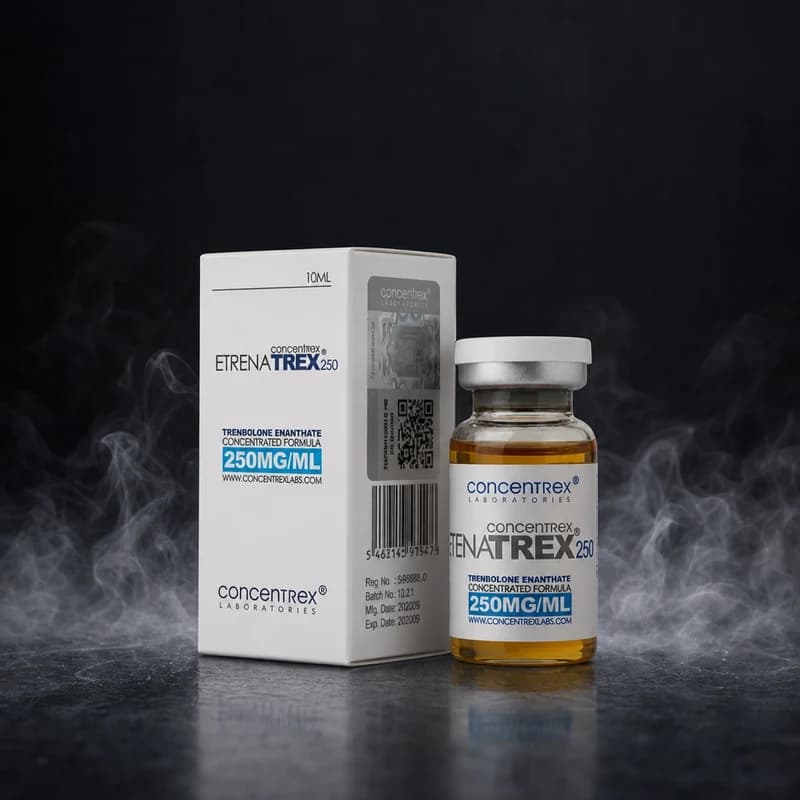
Contraindications: Trenentos is contraindicated in individuals with known hypersensitivity to Trenbolone or any component of the oil vehicle, including benzyl alcohol. It must not be used by individuals with existing prostate carcinoma, hepatic impairment, or cardiovascular disease characterised by left ventricular hypertrophy or uncontrolled hypertension. Female use is contraindicated due to the high androgenic activity of Trenbolone Enanthate and the irreversible virilisation risk associated with enanthate-ester compounds, whose prolonged clearance prevents rapid discontinuation.
Side Effects: Androgenic effects include accelerated hair follicle regression in genetically predisposed individuals, acne, and increased sebum production. Cardiovascular effects include elevated haematocrit, adverse changes to LDL/HDL cholesterol ratios, and increased blood pressure — all of which are amplified at higher weekly doses. Trenbolone Enanthate is a 19-nor compound and therefore carries specific prolactin-mediated side effects (including potential lactation-related symptoms in men) independent of aromatisation-related oestrogen activity. Night sweats, reduced aerobic capacity, and altered sleep architecture are commonly reported with all Trenbolone ester forms.
Monitoring: Haematological monitoring (full blood count, haematocrit) should be conducted before cycle initiation and at mid-cycle. Lipid panels (LDL, HDL, triglycerides) should be assessed at baseline and following cycle completion. Prolactin levels warrant specific attention given Trenbolone's 19-nor progestogenic activity; cabergoline or other dopamine agonists may be required as ancillaries. Blood pressure should be tracked throughout the administration period using a calibrated device.
PCT: Post-cycle therapy should not commence until approximately 14–18 days after the final Trenentos injection, reflecting the enanthate ester's extended clearance profile. Standard PCT protocols include a SERM (Selective Oestrogen Receptor Modulator) such as Nolvadex (Tamoxifen) or Clomid (Clomiphene Citrate) for 4–6 weeks. Prolactin management may need to extend into the early PCT window if symptoms persist. LH, FSH, and total testosterone levels should be measured after PCT completion to confirm endogenous axis recovery.

 High Concentration