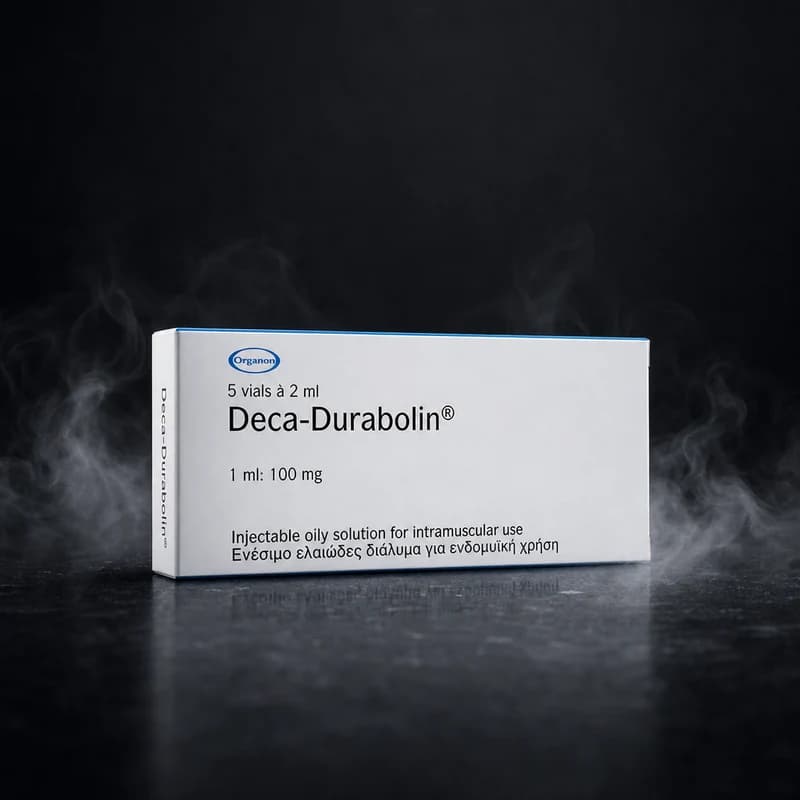
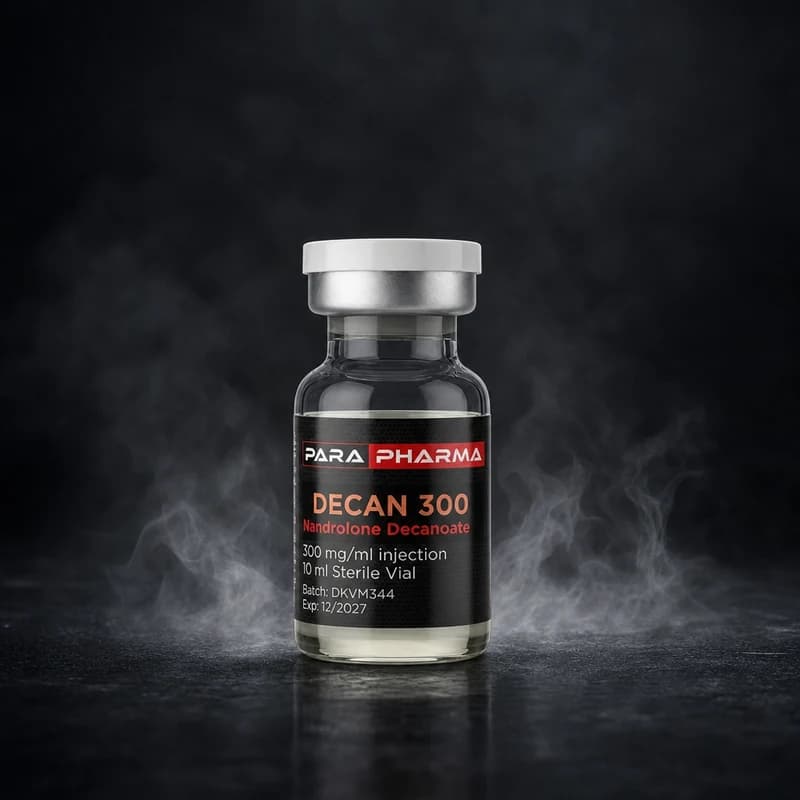
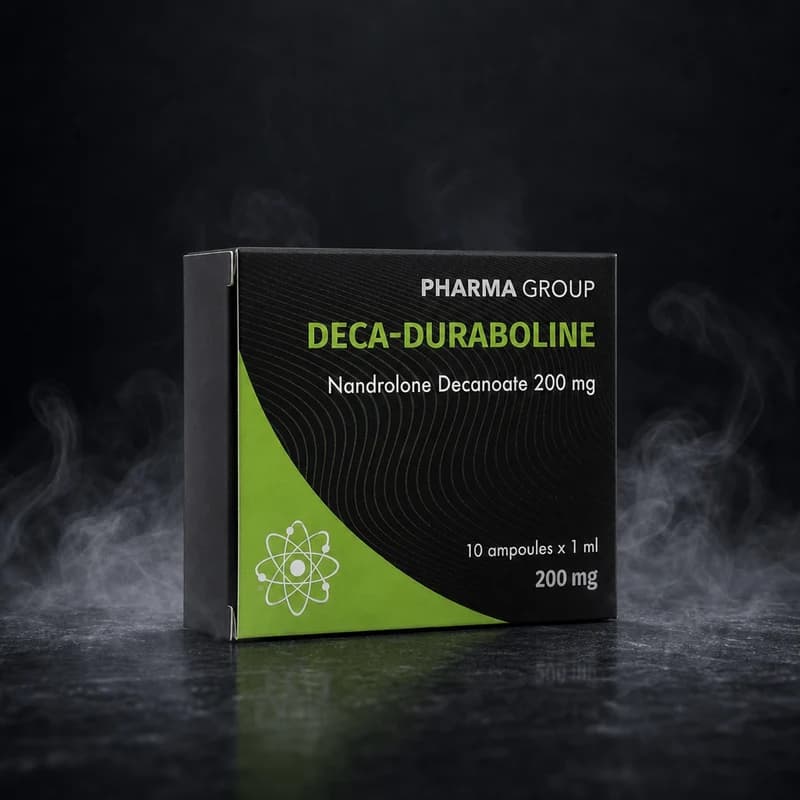
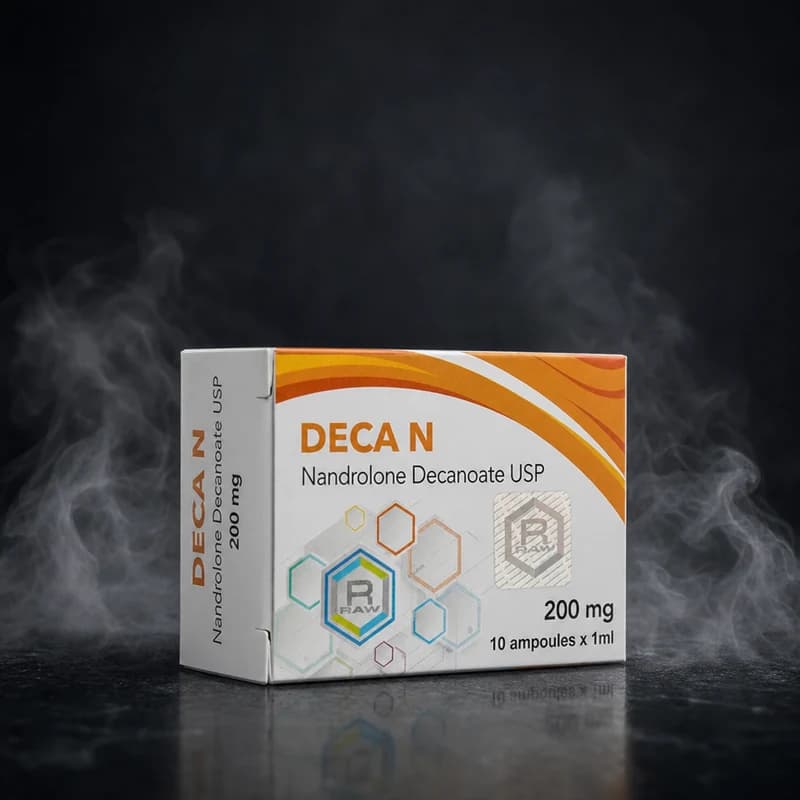
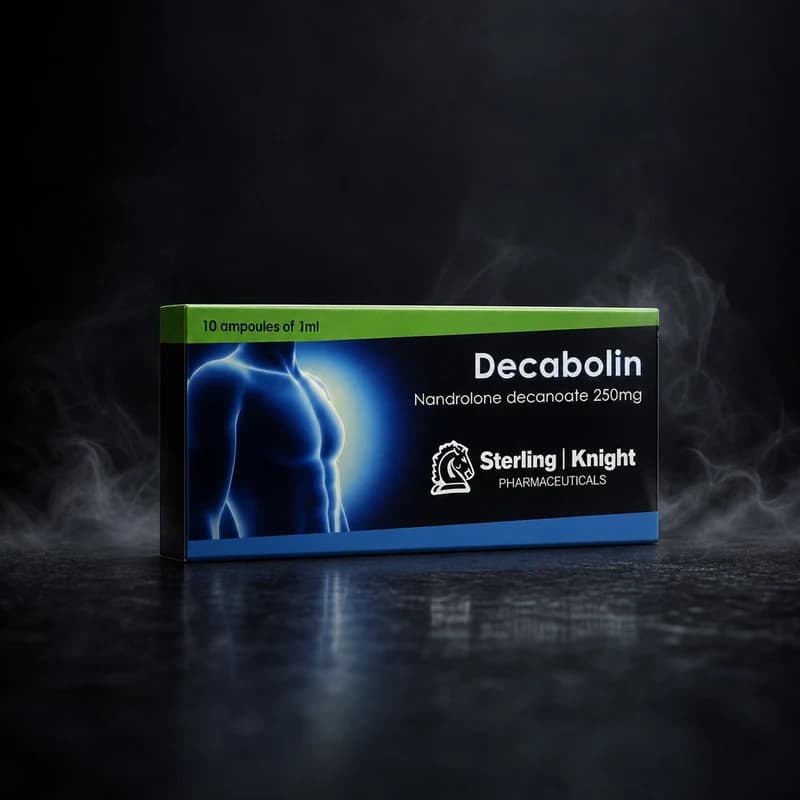
Nandrolone decanoate is a synthetic anabolic-androgenic steroid composed of the nandrolone hormone esterified with a decanoate fatty-acid chain, producing one of the longest-acting injectable compounds used in performance and clinical settings.
Mechanism & Pharmacology of Nandrolone Decanoate
Nandrolone decanoate functions primarily through androgen receptor (AR) activation, but its pharmacological profile diverges meaningfully from testosterone due to a structural modification at the 19-nor position — the removal of the carbon-19 atom from the testosterone backbone. This alteration produces a compound with an anabolic-to-androgenic ratio of approximately 125:37 compared with testosterone's baseline of 100:100, meaning nandrolone delivers strong tissue-building signals while generating comparatively modest androgenic side-effect pressure.
Once injected intramuscularly, the decanoate ester is cleaved by plasma esterases, releasing free nandrolone into circulation. The ester itself is responsible for the compound's prolonged pharmacokinetic profile: peak plasma concentrations are typically reached within 24–72 hours post-injection, and the half-life of nandrolone decanoate sits at approximately 6–8 days in oil-based preparations, translating to a total detection window that extends well beyond four weeks. Bioavailability from intramuscular administration is effectively 100%, circumventing the hepatic first-pass metabolism that limits oral alternatives.
At the cellular level, nandrolone binds the androgen receptor with roughly half the affinity of testosterone, yet because it is only minimally converted to dihydronandrolone (DHN) by 5-alpha reductase — rather than the more potent dihydrotestosterone (DHT) — the resulting androgenic activity in tissues rich in that enzyme (scalp, skin, prostate) is substantially lower. Crucially, nandrolone also interacts with progestin receptors, exhibiting moderate progestogenic activity that users should account for when selecting ancillary compounds. Aromatisation to oestrogen occurs at roughly 20% of the rate seen with testosterone, which reduces the likelihood of oestrogen-driven water retention at moderate doses, though it does not eliminate it entirely.
Nandrolone suppresses endogenous testosterone production via hypothalamic-pituitary-gonadal (HPG) axis feedback — inhibiting gonadotrophin-releasing hormone (GnRH) and, consequently, luteinising hormone (LH) and follicle-stimulating hormone (FSH). This suppression is considered profound relative to many other compounds, reinforcing the established practice of pairing nandrolone decanoate with exogenous testosterone to maintain physiological androgen levels throughout a cycle.
Application Context & User Groups
Nandrolone decanoate has one of the longest clinical track records in anabolic pharmacology. Medically, it was historically prescribed for conditions including anaemia associated with renal insufficiency, osteoporosis, and muscle-wasting diseases, with documented therapeutic doses ranging from 25 mg every two to three weeks in women to 200 mg weekly in male patients. This clinical heritage underpins the compound's reputation for relative tolerability when used responsibly.
In performance-oriented contexts, nandrolone decanoate is predominantly chosen during mass-building or off-season phases. Its nitrogen retention enhancement and capacity to increase collagen synthesis make it particularly valued by athletes seeking joint comfort alongside lean tissue accretion. Research has consistently shown that nandrolone increases bone mineral density and stimulates erythropoietin production in the kidneys, contributing to improved red blood cell counts and, therefore, enhanced muscular endurance — a characteristic of interest not only to bodybuilders but to strength-sport and aesthetic athletes more broadly.
Because of its long ester, nandrolone decanoate is poorly suited to short cycles. Optimal usage patterns typically involve cycle lengths of 12–16 weeks, allowing plasma levels to stabilise following the slow ester-cleavage kinetics and ensuring meaningful tissue adaptations are achieved before discontinuation. Weekly dosing is standard practice, and the compound is commonly stacked with testosterone enanthate or testosterone cypionate to offset HPG suppression and maintain libido and well-being.
Intermediate and advanced users frequently use nandrolone decanoate alongside anabolic agents with complementary receptor profiles — for example, compounds with strong androgen receptor agonism where nandrolone's moderate AR affinity is supplemented rather than duplicated. Beginners considering a first injectable cycle occasionally gravitate toward nandrolone-testosterone stacks due to the compound's lower androgenic burden, though the significant suppression profile and longer clearance time mean it is rarely considered the most forgiving introduction to injectable anabolics.
Range & Selection by Concentration and Pack Size
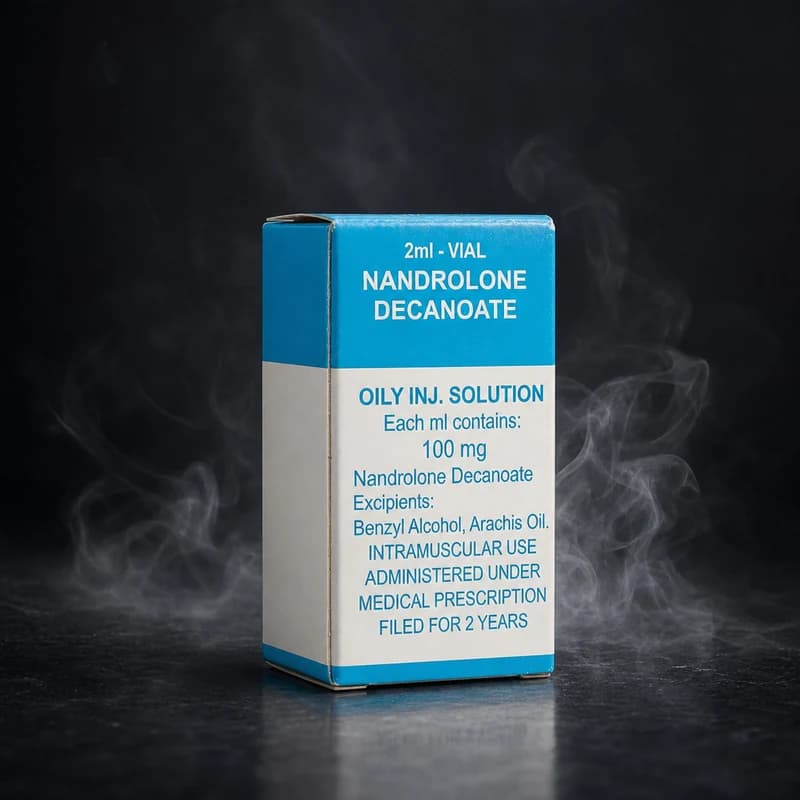
Our catalogue presents nandrolone decanoate across five distinct concentration tiers — 100 mg/ml, 200 mg/ml, 250 mg/ml, 300 mg/ml, and 350 mg/ml — and four pack formats: 10 ml vials, 10×1 ml ampules, 1×2 ml ampules, and 5×2 ml ampules. This breadth enables users to select the format most compatible with their dosing protocol and injection volume preferences.
Decadubol-250 250 mg/ml 10×1 ml Ampules by BM Pharmaceuticals represents the mid-range concentration tier in unit-dose ampule format. At 250 mg per millilitre, each ampule delivers a complete single dose for many weekly protocols, making this format attractive for users who prioritise sterility assurance and precise per-injection measurement without multi-dose vial considerations.
Decandrol 200 mg/ml 10×1 ml Ampules by Balkan Pharmaceuticals suits those operating at lower weekly volume targets — for instance, users running nandrolone at 200–400 mg weekly who prefer to administer one or two ampules per injection day. Balkan Pharmaceuticals is among the longer-established Eastern European manufacturers in this category, and their ampule format is particularly familiar to users with a clinical-era point of reference.
For those preferring the economy and flexibility of multi-dose vials, Deca 300 300 mg/ml 10 ml Vial by Dragon-Pharma and Deca-Durabolin 300mg/ml 10 ml Vial by Beligas Pharmaceuticals both occupy the popular 300 mg/ml tier — a concentration that allows users running 300–600 mg weekly to draw 1–2 ml per injection session, minimising injection volume while maintaining a manageable dose increment.
At the upper concentration tier, DecaTrex 350 mg/ml 10 ml Vial by Concentrex Labs is designed for experienced users seeking to reduce total injection volume at higher weekly doses. A single 1 ml draw delivers 350 mg, allowing protocols of 700 mg/week to be accommodated with just 2 ml total volume — a practical consideration for those sensitive to injection site discomfort from larger volumes.
The 100 mg/ml tier, while less commonly stocked in its own right, serves users who require granular dose adjustments or who are managing tolerability during early weeks of a longer cycle. Nandecos 200 mg/ml 10 ml Vial by Driada Medical bridges the entry and mid-range tiers, offering vial-format convenience at a concentration suited to those running 200–400 mg weekly as part of a TRT-adjacent or conservative bodybuilding protocol.
When selecting a product, prioritise the concentration that minimises unnecessary injection volume at your target dose, and consider pack format based on cycle length — vials are generally more cost-efficient for extended 14–16 week cycles, while ampule formats offer per-dose sterility that some users value for shorter stacks.
Frequently Asked Questions
How often should nandrolone decanoate be injected?
Due to its half-life of approximately 6–8 days, once-weekly injections are the standard minimum frequency for maintaining stable plasma concentrations. Many users split their weekly dose across two injection days — for example, Monday and Thursday — to further smooth serum peaks and troughs and reduce potential for oestrogen fluctuation linked to concentration spikes.
Why is testosterone typically paired with nandrolone decanoate?
Nandrolone decanoate profoundly suppresses endogenous testosterone production via the hypothalamic-pituitary-gonadal axis, often reducing LH and FSH to negligible levels. Without exogenous testosterone replacement, this results in low androgen status — characterised by fatigue, reduced libido, and mood disruption. A testosterone base maintains physiological androgen levels and counteracts these effects throughout the cycle duration.
What is the difference between 250 mg/ml and 350 mg/ml nandrolone decanoate products?
The active ingredient and ester are identical; the difference is concentration of hormone per millilitre of oil carrier. Higher concentrations — such as 350 mg/ml — allow users to administer larger doses in a smaller injection volume, which can reduce discomfort. Lower concentrations offer more flexibility for fine-tuned dose adjustments. Both tiers are pharmacologically equivalent on a per-milligram basis.


 GMP Standard