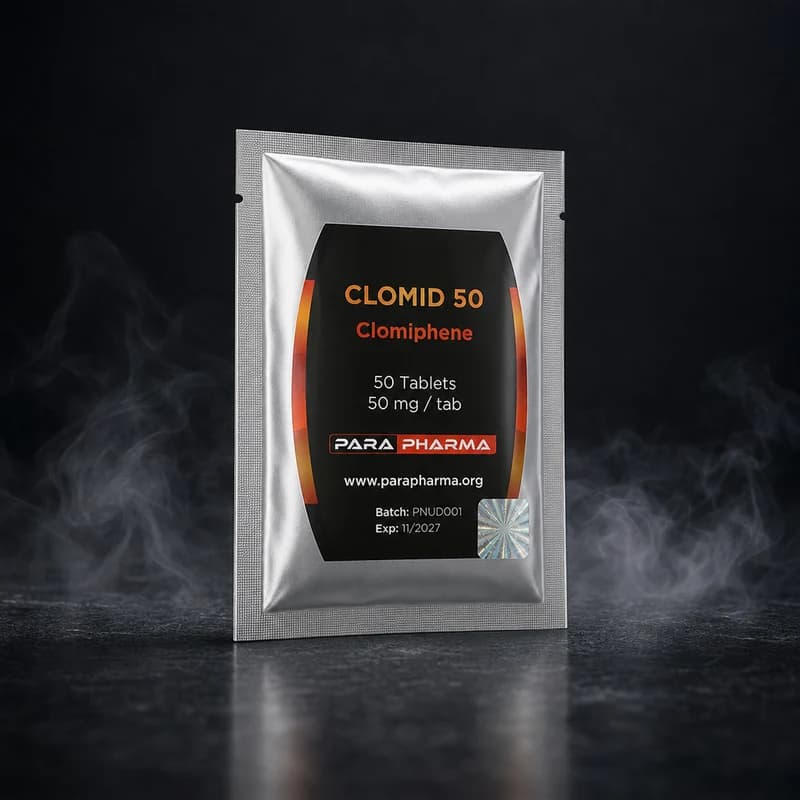
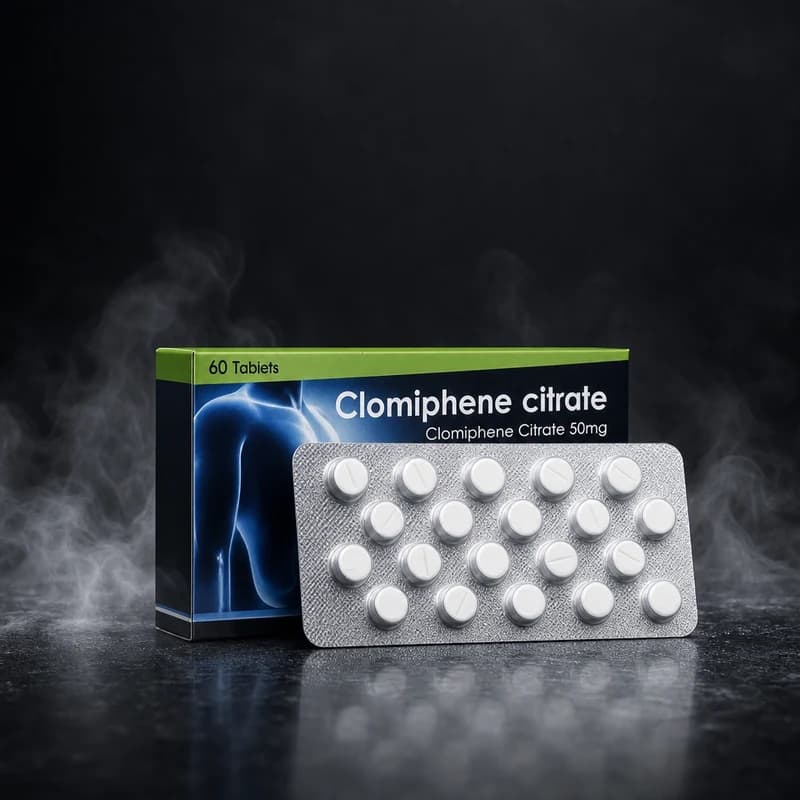
Clomiphene citrate is a selective oestrogen receptor modulator (SERM) belonging to the triphenylethylene class, widely used in performance and endocrine recovery contexts to restore endogenous testosterone production following anabolic cycles.
Mechanism & Pharmacology of Clomiphene Citrate
Clomiphene citrate exerts its principal action at the hypothalamus, where it competitively occupies oestrogen receptors and blocks the negative feedback that circulating oestrogens normally impose on the hypothalamic–pituitary–gonadal (HPG) axis. By occupying these receptors, clomiphene citrate prevents oestradiol from suppressing gonadotrophin-releasing hormone (GnRH) pulsatility. The result is an upstream signal cascade: GnRH pulses increase in amplitude and frequency, the anterior pituitary responds by elevating secretion of luteinising hormone (LH) and follicle-stimulating hormone (FSH), and the Leydig cells of the testes subsequently increase testosterone biosynthesis. This mechanism distinguishes clomiphene from aromatase inhibitors (AIs), which reduce circulating oestrogen; clomiphene instead redirects the body's own feedback architecture rather than altering hormone concentrations at their source.
From a pharmacokinetic standpoint, clomiphene citrate is well absorbed orally, reaching peak plasma concentrations within roughly six hours of ingestion. It exists as two geometric isomers — enclomiphene (trans-isomer) and zuclomiphene (cis-isomer) — with enclomiphene being the more potent anti-oestrogenic component responsible for LH/FSH stimulation. The compound has a notably extended effective half-life: enclomiphene clears within approximately five to seven days, while zuclomiphene can persist in tissue for several weeks due to enterohepatic recirculation. Oral bioavailability is estimated at around 50–70%, with hepatic metabolism yielding several active metabolites that contribute to its prolonged activity. Clomiphene citrate does not convert to oestrogen and does not suppress the HPG axis directly; unlike anabolic steroids, it acts as a recovery agent rather than a suppressive one.
It is worth noting that clomiphene binds oestrogen receptors with high affinity, with Ki values in the low nanomolar range. At therapeutic doses — typically 25–50 mg daily — its central anti-oestrogenic action is dominant, translating into meaningful LH and FSH elevations that clinical measurements consistently detect within three to five days of initiation.
Application Context & User Groups
In the bodybuilding and performance community, clomiphene citrate occupies a defined role as a post-cycle therapy (PCT) agent. After a course of exogenous androgens, the HPG axis enters a suppressed state: LH and FSH output is reduced, endogenous testosterone production falls, and testicular volume can decrease over time. Left unaddressed, recovery from this suppression may take many months. Clomiphene citrate accelerates the restoration timeline by re-engaging the body's own hormonal signalling before secondary hormonal imbalances — such as relative oestrogen dominance — become clinically symptomatic.
A commonly referenced PCT approach pairs clomiphene with another SERM, tamoxifen, each targeting overlapping but slightly distinct receptor populations. Clomiphene citrate is often the more potent stimulant of LH and FSH, making it the preferred lead agent in heavier PCT protocols following long or high-dose cycles. Shorter, milder cycles may be adequately managed with a solo clomiphene run of three to four weeks. Protocol durations of four to six weeks are frequently cited in reference texts, using tapering dose structures — beginning at 50 mg/day for the initial two weeks before reducing to 25 mg/day for the final phase — to allow the axis to stabilise gradually rather than abruptly withdrawing SERM support.
Beyond PCT, a smaller subset of users employs low-dose clomiphene citrate on-cycle or between cycles to maintain testicular function and avoid the degree of suppression that would otherwise develop. This application demands a more nuanced understanding of hormonal interplay, as the anti-oestrogenic properties of clomiphene at the hypothalamus still operate against a backdrop of elevated androgens.
Clomiphene citrate is also studied in the context of secondary hypogonadism in men, where it has demonstrated the ability to raise testosterone into a physiologically normal range without exogenous testosterone administration. This profile has made it of interest not only to athletes but to a broader population of men seeking hormonal support without the HPG-suppressive consequences of testosterone replacement therapy.
Range & Selection by Concentration and Pack Size
The clomiphene citrate category in this shop spans eleven manufacturers, providing two concentration tiers — 25 mg/tablet and 50 mg/tablet — across pack sizes ranging from 24 to 100 tablets. This range ensures that both short-term PCT protocols and longer, more methodical recovery programmes are well served.
The 50 mg/tablet tier is by far the most widely represented and suits the majority of PCT users. Clomiphene Citrate 50mg/tab 24 Tablets by Anfarm Hellas is an accessible entry point for shorter three-to-four-week protocols where a smaller pack suffices. For users planning a standard four-to-six-week course at 50 mg/day, Clomid 50mg/tab 50 Tablets by Beligas Pharmaceuticals offers a clean 50-tablet count that aligns directly with a no-waste, fixed-duration run. Those requiring a larger supply — whether for a longer taper or to keep a reserve on hand — will find CloTrex 50mg/tab 100 Tablets by Concentrex Labs the most economical per-tablet option in the range. Clomixyl 50mg/tab 30 Tablets by Kalpa Pharmaceuticals provides a midpoint option well suited to a four-week protocol using alternating daily doses.
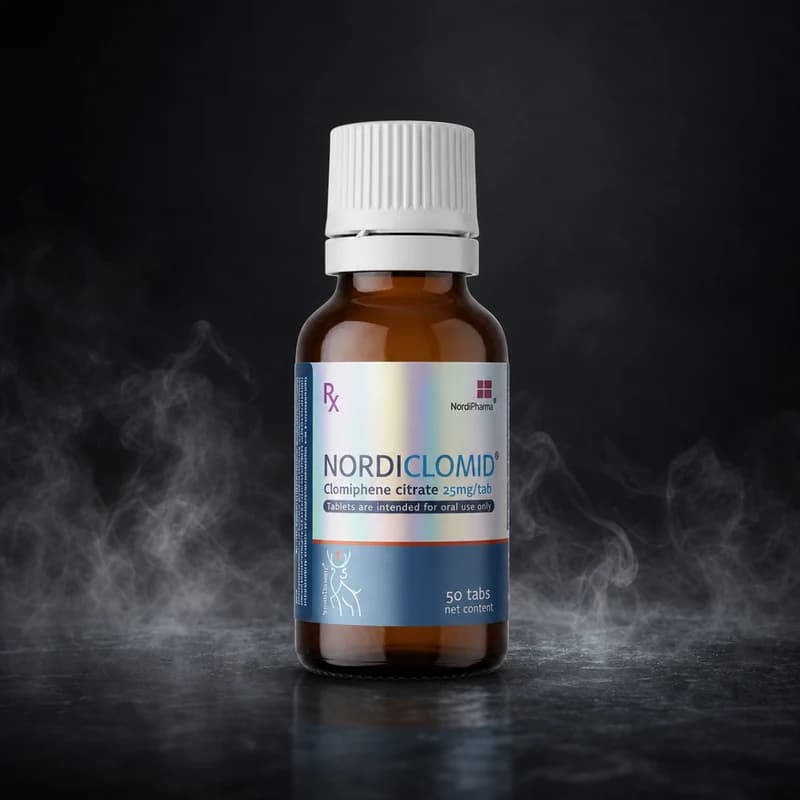
The 25 mg/tablet tier serves users who prefer finer dose titration — for example, those already well recovered who are running a maintenance phase, or individuals who respond sensitively to full 50 mg dosing and wish to avoid the vision disturbances or mood changes that occasionally accompany higher intakes. At 25 mg, a 50-tablet pack provides 50 days of daily use, making it practical for extended low-dose applications.
When selecting between packs, it is advisable to match the tablet count to a pre-planned protocol duration and taper schedule rather than purchasing imprecisely and stopping mid-pack. Cross-referencing with tamoxifen or anastrozole availability can also help users construct a complete PCT stack from within the shop's catalogue.
Frequently Asked Questions
How quickly does clomiphene citrate raise LH and FSH levels?
Clinical measurements show detectable increases in LH and FSH within three to five days of initiating clomiphene citrate at 50 mg/day. Meaningful rises in serum testosterone typically follow within seven to fourteen days, with peak recovery of the HPG axis usually observed by weeks three to four of a standard protocol.
What is the difference between 25mg and 50mg clomiphene tablets for PCT?
The 50 mg dose is standard for the initial phase of post-cycle therapy, providing stronger stimulation of LH and FSH. The 25 mg dose suits the tapering phase of a protocol or users with heightened sensitivity. Starting at 50 mg and reducing to 25 mg across a four-to-six-week run is one of the most commonly referenced approaches in PCT literature.
Can clomiphene citrate be used alongside an aromatase inhibitor during PCT?
Combining clomiphene with an AI during PCT is generally not recommended, as clomiphene's mechanism relies partly on endogenous oestrogen being present to normalise the HPG axis once the SERM is withdrawn. Excessive oestrogen suppression during recovery can impair mood, libido, and bone turnover. Pairing clomiphene with tamoxifen is a more widely accepted dual-SERM approach.


 Customer Favorite