Cabergoline: Mechanism and Pharmacology
Cabergoline is a synthetic ergoline derivative and potent dopamine D2 receptor agonist, developed clinically to suppress pathological hyperprolactinaemia and since adopted within performance and bodybuilding contexts for its pronounced prolactin-lowering action. Its pharmacological profile is unusually favourable compared to older dopaminergic agents: cabergoline exhibits exceptionally high binding affinity at dopamine D2 receptors located on pituitary lactotroph cells, where prolactin synthesis and secretion are tonically inhibited by dopaminergic input. When dopamine signalling is disrupted — as occurs during cycles involving certain 19-nortestosterone derivatives — cabergoline restores that inhibitory tone with a precision that bromocriptine, the traditional alternative, cannot match.
The pharmacokinetic data are striking. Cabergoline carries an oral bioavailability in the range of 40–65% and achieves peak plasma concentrations approximately two to three hours post-ingestion. Its elimination half-life is extraordinarily long, measured at 63–69 hours in healthy adults, which is the primary reason that twice-weekly dosing provides consistent, sustained prolactin suppression without the need for daily administration. Cabergoline undergoes extensive hepatic metabolism via amide bond hydrolysis rather than CYP450-dependent oxidation, reducing the interaction risk with many compounds that compete for cytochrome P450 enzymes. Protein binding sits at approximately 41%, leaving a significant free fraction in circulation.
At the receptor level, cabergoline binds the D2 receptor with nanomolar affinity and demonstrates partial agonism at D1 receptors and serotonin 5-HT2B receptors. The D2 selectivity is what drives its clinical utility: D2 activation on lactotrophs suppresses intracellular cyclic AMP generation, reduces calcium influx, and ultimately curtails prolactin gene transcription. Effective prolactin suppression is typically observed within two to four weeks of initiating therapy, with normalisation of elevated levels achievable in a substantial majority of users. The compound's potency on a per-milligram basis is substantially greater than bromocriptine, which requires multiple daily doses and generates more pronounced gastrointestinal side effects owing to its non-selective receptor activity.
Application Context and User Groups
Within performance and physique sport contexts, cabergoline is primarily sought for one reason: the prolactin-elevating properties of progestogenic anabolic compounds. Nandrolone (as nandrolone decanoate or phenylpropionate) and trenbolone in particular are associated with elevations in serum prolactin through a combination of direct pituitary stimulation and cross-reactivity at prolactin receptor pathways. Elevated prolactin concentrations can suppress luteinising hormone (LH) and follicle-stimulating hormone (FSH), impair libido, contribute to sexual dysfunction, and — in susceptible individuals — promote breast tissue sensitivity. Cabergoline addresses these downstream consequences at source by reducing prolactin to physiological or sub-physiological levels.
The user group is overwhelmingly male athletes engaged in intermediate-to-advanced cycles where nandrolone or trenbolone are present at significant weekly doses. A frequently cited reference range for prolactin management in this context is 0.25mg twice weekly, escalating to 0.5mg twice weekly if prolactin remains elevated on bloodwork. Cabergoline is not typically required on testosterone-only cycles, where prolactin disturbance is uncommon in the absence of other progestogens. It is also used in post-cycle therapy (PCT) where persistent hyperprolactinaemia can delay recovery of the hypothalamic-pituitary-gonadal (HPG) axis; normalising prolactin allows LH and FSH to recover more promptly once androgenic suppression is withdrawn.
A secondary, though smaller, user group includes competitive physique athletes who use cabergoline's dopaminergic activity for its reported effects on subjective wellbeing, motivation, and libido restoration — properties that align with dopamine's broader role in reward circuitry and executive function. These effects are real but dose-dependent; they emerge at the same doses used for prolactin control and do not require escalation. Users with pre-existing cardiovascular considerations should treat cabergoline with care, as high cumulative doses have been associated with cardiac valvulopathy in clinical populations receiving long-term, high-dose treatment — a risk profile generally considered negligible at the modest doses used in cycling contexts but worth acknowledging in any responsible framing.
Range and Selection by Concentration and Pack Size
Two distinct concentration tiers define the cabergoline offering available here, both supplied by Pfizer — the originator manufacturer and the benchmark for quality assurance in this category.
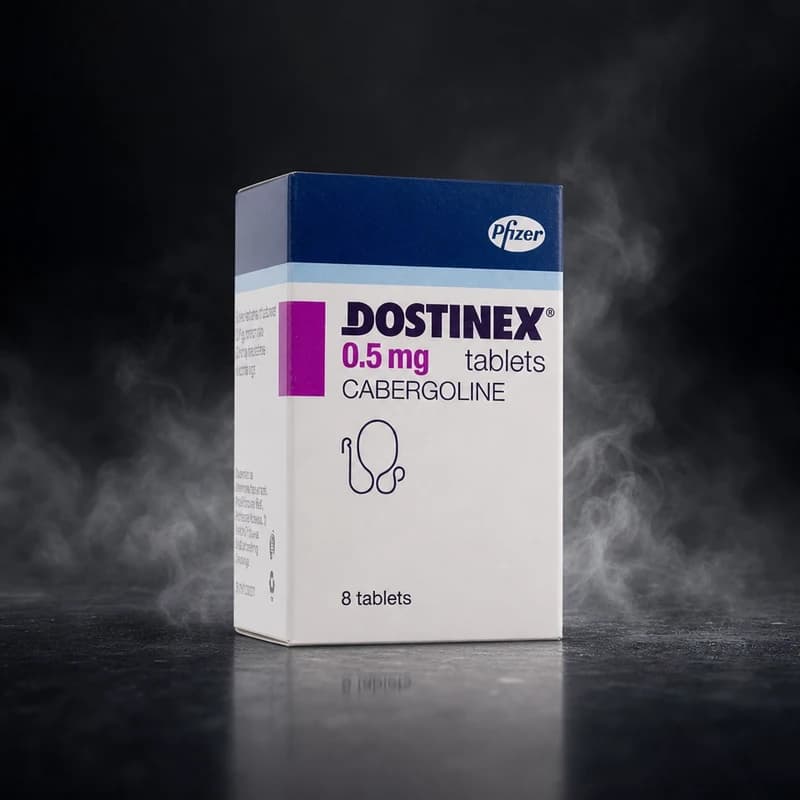
The entry-level tier is Dostinex 0.5mg (0.5mg per tablet, 8-tablet pack by Pfizer). Dostinex is among the most widely recognised cabergoline formulations globally and the dominant clinical reference product outside North America. The 8-tablet pack provides approximately four weeks of supply at the standard twice-weekly dosing of 0.5mg, making it an efficient option for users completing shorter cycles of six to twelve weeks who wish to manage prolactin without committing to a larger quantity. The 0.5mg tablet lends itself well to dose titration: halving a tablet delivers a 0.25mg dose, which is commonly used as a starting point to assess individual sensitivity before progressing. Dostinex is well suited to first-time cabergoline users and to those managing mild-to-moderate prolactin elevation during nandrolone or trenbolone inclusion in a cycle.
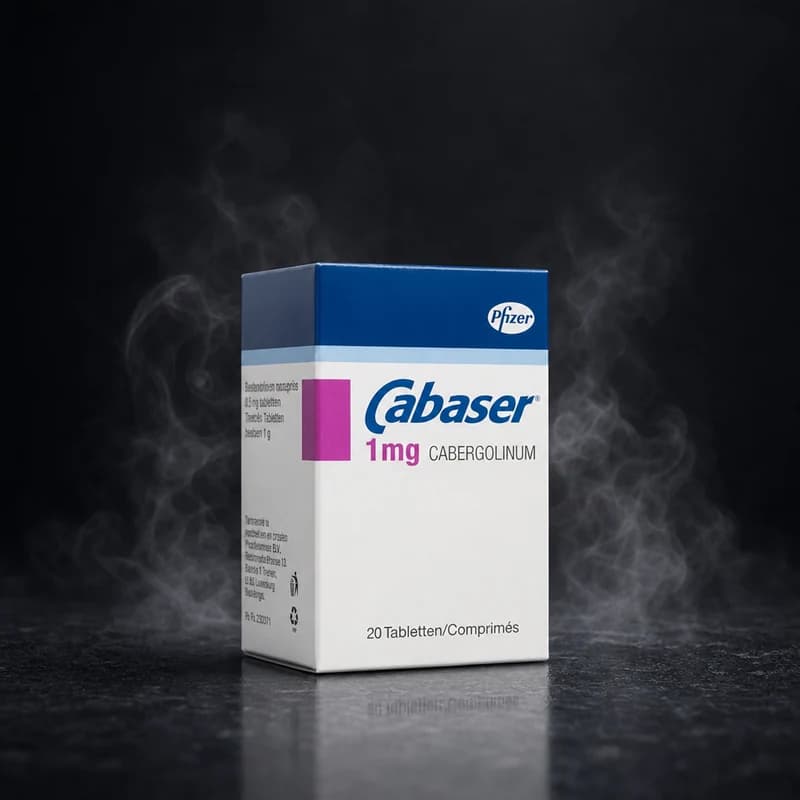
The higher-concentration tier is Cabaser 1mg (1mg per tablet, 20-tablet pack by Pfizer). Cabaser is the clinical formulation associated with Parkinson's disease management at elevated doses, and its 1mg tablet format reflects a stronger therapeutic footprint. For performance-context use, the 1mg tablet is most practically managed by splitting: a half tablet yields the 0.5mg dose used by the majority of cycling athletes, whilst the full tablet is reserved for cases where prolactin remains resistant to lower doses or where a physician has indicated a higher requirement. The 20-tablet pack represents a notably more economical supply per milligram and is the preferred choice for longer cycles or for athletes who anticipate sustained need across multiple cycles. Cabaser's tablet format is denser, so precise splitting tools are advisable for those dosing below 0.5mg.
For users new to dopamine agonist management, Dostinex at 0.5mg is the recommended starting point — its tablet size facilitates dose adjustment and the pack size suits a single cycle stint. For experienced users on extended or stacked cycles involving high-dose nandrolone or trenbolone, Cabaser 1mg offers both the dosing headroom and the supply volume that advanced use demands. In both cases, prolactin bloodwork before, mid-cycle, and post-cycle remains the single most important tool for calibrating dose accurately.
Frequently Asked Questions
How often should cabergoline be taken during an anabolic cycle?
The standard protocol within performance contexts is twice weekly, typically Monday and Thursday or similar evenly spaced days. This aligns with cabergoline's exceptionally long half-life of 63–69 hours, which ensures stable plasma levels and consistent prolactin suppression without daily dosing. Starting at 0.25mg twice weekly and adjusting based on bloodwork is the most common approach.
Is cabergoline necessary on every cycle, or only specific ones?
Cabergoline is primarily relevant when prolactin-elevating compounds are present — most notably nandrolone (Deca, NPP) and trenbolone. Testosterone-only cycles rarely cause problematic prolactin elevation in healthy individuals. Its use should be guided by blood panels rather than applied prophylactically across all cycles, as unnecessary suppression of prolactin below baseline carries its own hormonal implications.
What is the difference between Dostinex and Cabaser if both are made by Pfizer?
Both contain cabergoline as the active ingredient and are manufactured by Pfizer, but they differ in tablet strength and intended clinical indication. Dostinex (0.5mg) was developed specifically for hyperprolactinaemia, while Cabaser (1mg) targets Parkinson's disease at higher doses. For performance use, the practical difference is milligram convenience and pack economy — Cabaser offers more total cabergoline per pack at a higher per-tablet dose.


 Lab Tested