Mechanism & Pharmacology of Yohimbine
Yohimbine is a selective alpha-2 adrenergic receptor antagonist derived from the bark of the West African Pausinystalia yohimbe tree, used in bodybuilding and physique sports primarily to enhance lipolysis in regions with high alpha-2 receptor density. Understanding its mechanism requires a brief look at adrenergic signalling. Catecholamines such as adrenaline and noradrenaline bind both alpha and beta adrenoceptors on adipose tissue. Whereas beta-receptor activation promotes fat breakdown, alpha-2 receptor activation suppresses it — acting as a biological brake on lipolysis. Yohimbine competitively antagonises the alpha-2 adrenoceptor, thereby removing that inhibitory signal and allowing catecholamine-driven fat mobilisation to proceed more freely.
Yohimbine binds the alpha-2 adrenoceptor with a Ki of approximately 1–5 nM, giving it strong affinity relative to many competing ligands. It also exhibits secondary activity at serotonin 5-HT1A and 5-HT1B receptors, dopamine D2 receptors, and imidazoline I2 receptors, although the alpha-2 antagonism remains the commercially relevant mechanism at typical supplementation doses. Oral bioavailability in humans ranges from roughly 22% to 33% due to first-pass hepatic metabolism, primarily via CYP2D6 and CYP3A4. The plasma half-life is approximately 0.25 to 1.25 hours for the parent compound, though active metabolites — particularly 11-hydroxy-yohimbine — extend pharmacological activity meaningfully beyond that window.
Peak plasma concentrations are typically reached within 45 to 60 minutes post-ingestion, making pre-exercise timing strategically important. At elevated plasma levels, yohimbine raises circulating noradrenaline, which is measurable in controlled trials; one frequently cited pharmacokinetic study reported a 60–70% increase in plasma noradrenaline following a dose in the 0.2 mg/kg range. Yohimbine also inhibits presynaptic alpha-2 autoreceptors in the central nervous system, amplifying noradrenergic neurotransmission and contributing to the alertness, thermogenic sensation, and mild anxiogenic effects some users report. These CNS properties distinguish yohimbine meaningfully from other lipolytic agents that act peripherally only.
Application Context & User Groups
Yohimbine occupies a specific and well-defined niche in the physique-sport supplement stack. Its primary application is the reduction of persistent subcutaneous fat stores in areas with disproportionately high alpha-2 receptor density — the lower abdomen, hips, and thighs are classical sites in male and female athletes respectively, and these regions are among the last to respond to caloric deficit alone. Yohimbine's value proposition is therefore most relevant in the final stages of a contest preparation or a structured cut, when overall body fat is already moderate and the remaining tissue is genuinely alpha-2 dominant.
The compound is not a general-purpose fat burner suited to someone beginning a weight-loss programme at high body-fat levels. Research, including a double-blind placebo-controlled trial published in Research in Sports Medicine (2006) involving elite soccer players, demonstrated significantly greater fat loss in the yohimbine group over a three-week period, with participants already carrying relatively low baseline body fat. This reinforces the view that yohimbine functions best as a precision tool rather than a foundation-level intervention.
User groups who commonly incorporate yohimbine include competitive bodybuilders and physique athletes approaching peak week, physique-conscious individuals in the latter phases of a 12–16 week cutting protocol, and endurance athletes seeking to preserve lean mass while reducing fat. Its combination with a fasted-state cardiovascular session — typically low-to-moderate intensity, lasting 30 to 45 minutes — is a widely used protocol, as insulin suppresses alpha-2 receptor blockade's effectiveness; yohimbine's lipolytic benefit is meaningfully blunted when insulin is elevated.
Yohimbine is contraindicated for individuals with cardiovascular conditions, anxiety disorders, or those taking MAO inhibitors, tricyclic antidepressants, or other sympathomimetics. Dose titration from the lowest effective level is strongly advised given inter-individual variation in CYP2D6 activity — poor metabolisers may accumulate significantly higher plasma concentrations from the same oral dose than extensive metabolisers. Athletes who are sensitive to stimulants or who train in the evening should factor in yohimbine's CNS stimulant properties when scheduling use.
Range & Selection by Concentration and Pack Size
Our yohimbine category spans three distinct concentration tiers across three manufacturers, giving users precise control over their dose protocol without the need for awkward tablet splitting or inaccurate estimation.
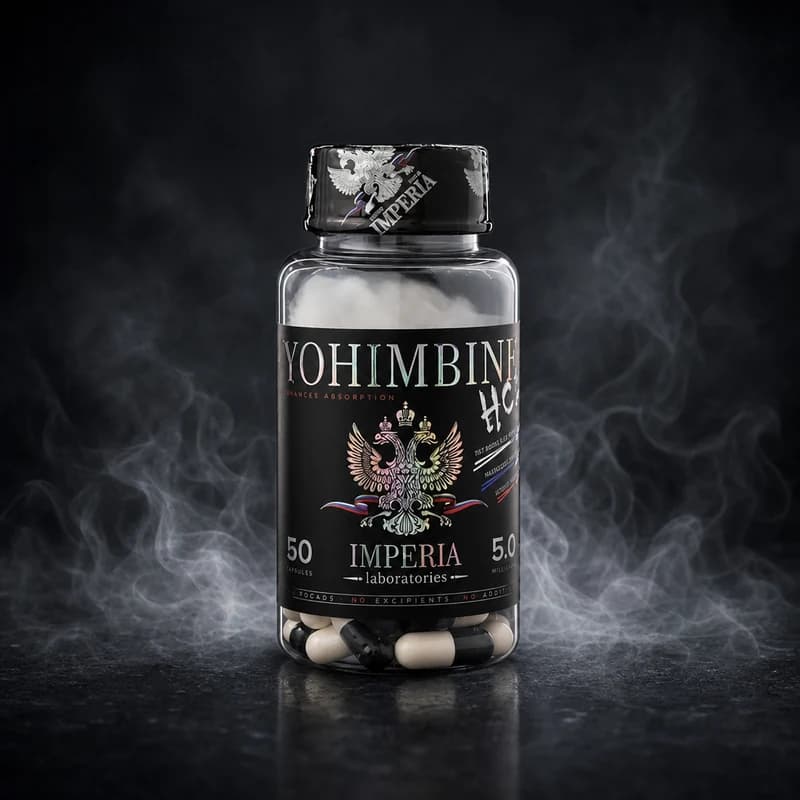
Yohimbine 5mg/tab 50 Tablets by Imperia Laboratories is the entry-level option in this range and the logical starting point for any user new to the compound. At 5 mg per tablet, a user can begin with a single tablet, assess individual tolerability over a week or more, and make incremental upward adjustments with maximum precision. The 50-tablet pack provides a standard trial cycle of four to six weeks at beginner doses, making it cost-appropriate for exploratory use. This tier is also relevant to experienced users who are particularly sensitive to stimulant compounds or who have a known CYP2D6 poor-metaboliser status.
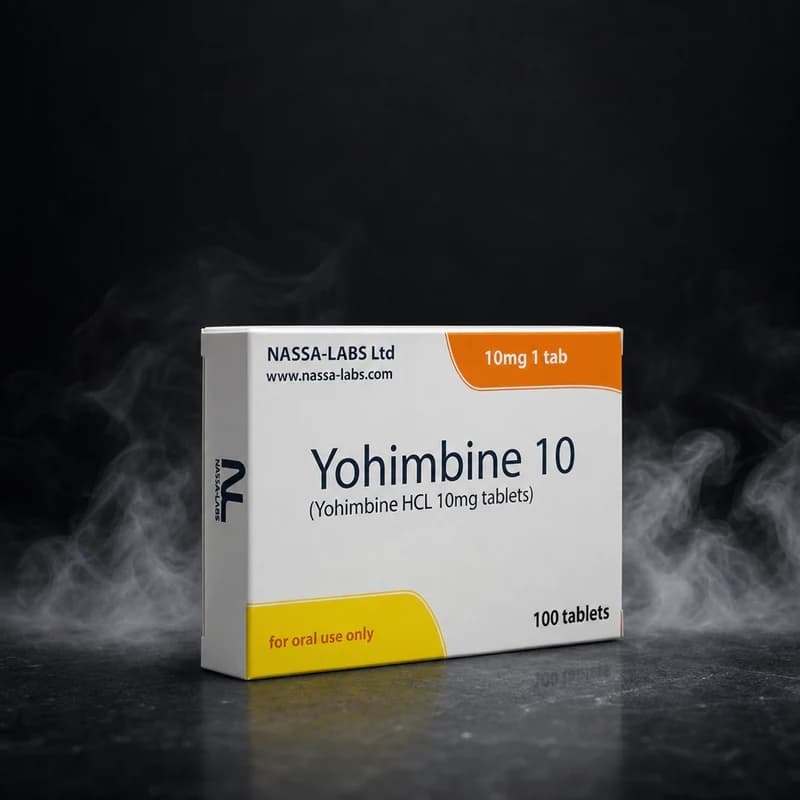
Yohimbine 10mg/tab 100 Tablets by Nassa Labs occupies the mid-range and is likely to suit the largest segment of the experienced supplementation community. The 10 mg concentration reflects a single dose that sits comfortably within the commonly cited research range of 0.2 mg/kg of bodyweight for an 80–90 kg athlete, depending on exact protocol. The 100-tablet pack format supports an extended cutting phase of eight to twelve weeks — particularly practical for athletes running a full contest prep cycle without needing to reorder mid-protocol. Nassa Labs' 100-tablet presentation offers strong economy of scale for consistent, longer-duration use.
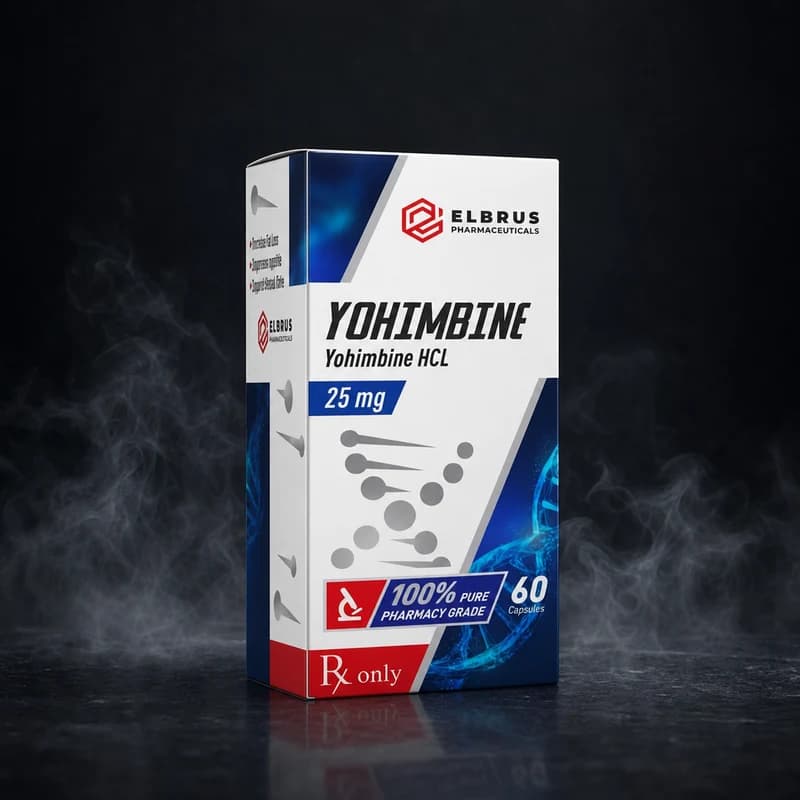
Yohimbine 25mg/tab 60 Tablets by Elbrus Pharmaceuticals represents the high-concentration tier and is suited exclusively to experienced users who have thoroughly established their individual tolerance profile. At 25 mg per tablet, this formulation is not appropriate for dose titration and should only be approached by those who have successfully and comfortably used lower concentrations over multiple cycles. For a heavier athlete in the 100–110 kg range, a single 25 mg tablet may fall within physiological dosing parameters; for a lighter individual, fractions may be appropriate but require a pill cutter for accuracy. The 60-tablet pack from Elbrus Pharmaceuticals represents a practical single-cycle supply at high-end doses.
A brief note: yohimbine-containing products are sold for research and supplementation purposes. Users with pre-existing health conditions should consult a healthcare professional before use.
Frequently Asked Questions
What is the best time to take yohimbine for fat loss?
Yohimbine is most effective when taken in a fasted state, approximately 30–45 minutes before low-to-moderate intensity cardiovascular exercise. Insulin significantly diminishes its lipolytic activity by downregulating cAMP-mediated fat mobilisation, so avoiding carbohydrate intake prior to dosing is considered essential for optimal effect.
How does yohimbine differ from caffeine as a fat-loss agent?
Caffeine inhibits the enzyme phosphodiesterase, increasing cAMP levels to promote lipolysis, and also stimulates catecholamine release. Yohimbine works upstream by removing the alpha-2 adrenoceptor brake on lipolysis directly. The two compounds have complementary mechanisms and are commonly co-administered, though this combination amplifies cardiovascular and CNS stimulant effects and requires careful individual tolerance assessment.
What concentration of yohimbine should a beginner start with?
A beginner should start with the lowest available concentration — 5 mg per tablet — and use a single tablet to assess individual response before considering any dose increase. Due to highly variable CYP2D6 metabolism between individuals, plasma levels and side-effect profiles can differ substantially at the same oral dose, making conservative initiation the standard recommended approach.


 Lab Tested