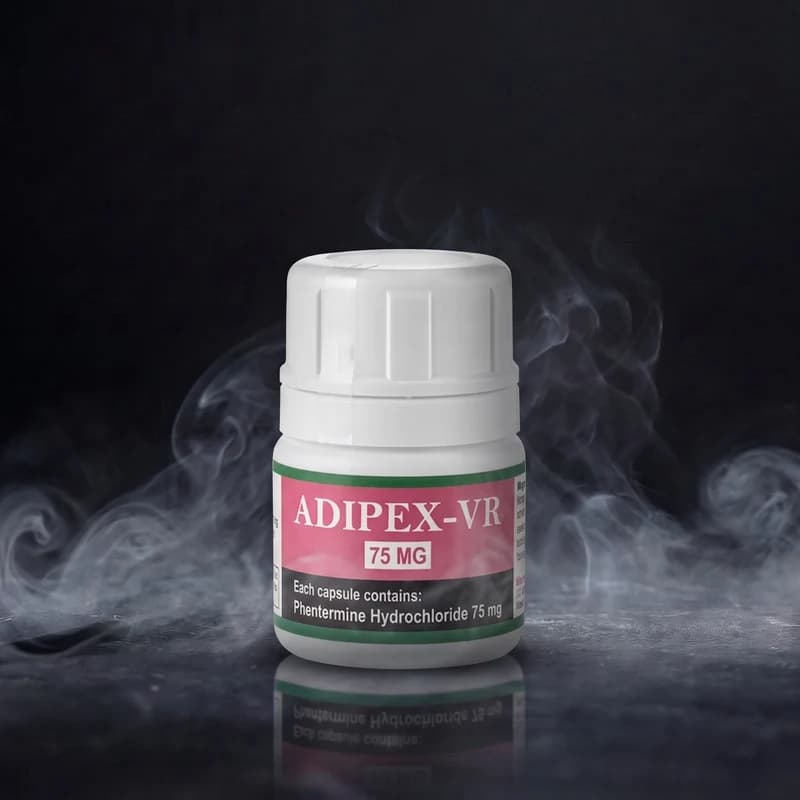
Mechanism & Pharmacology of Phentermine
Phentermine is a sympathomimetic amine and schedule-class appetite suppressant that acts primarily on the central nervous system to reduce hunger signalling and increase energy expenditure. Structurally related to amphetamine, phentermine carries a phenethylamine backbone with a tertiary-butyl substitution that reduces its CNS stimulant profile relative to older compounds in the same class. The molecule stimulates the release of norepinephrine from hypothalamic nerve terminals, and to a lesser degree dopamine and serotonin, effectively blunting the hunger signals generated in the arcuate nucleus of the hypothalamus. Norepinephrine binds adrenergic receptors, particularly alpha-1 and beta-1 subtypes, which suppress appetite and elevate basal metabolic rate through thermogenic pathway activation.
Oral bioavailability of phentermine is high, typically ranging between 70–80%, with peak plasma concentrations reached approximately 3–4.4 hours post-ingestion. Its half-life sits at roughly 19–24 hours, making once-daily dosing pharmacologically rational and convenient for users managing caloric restriction protocols. The compound is primarily excreted unchanged through the kidneys, with renal pH significantly influencing clearance rate — alkaline urine prolongs the half-life, while acidic urine accelerates elimination. Phentermine does not inhibit monoamine oxidase (MAO) directly, yet co-administration with MAO inhibitors remains contraindicated due to risk of hypertensive crisis through indirect catecholamine potentiation. At the 37.5mg standard dose, phentermine exerts measurable elevations in resting energy expenditure, with clinical study data suggesting increases of approximately 5–10% above baseline in adherent subjects during short-term administration cycles.
Application Context & User Groups
Within the bodybuilding and physique sport community, phentermine is typically considered a pre-competition or extended-cut tool — used during caloric-deficit phases where appetite suppression is the primary challenge to dietary adherence. Its practical utility lies in reducing the subjective experience of hunger that intensifies during prolonged hypocaloric diets, particularly when calorie intake drops below 1,500–1,800 kcal per day. At these intake levels, ghrelin concentrations rise progressively, and endogenous appetite regulation becomes increasingly difficult to override through behavioural strategies alone. Phentermine pharmacologically attenuates this ghrelin-driven hunger surge by elevating norepinephrine tone in the hypothalamus, allowing athletes to maintain rigid caloric targets without constant conscious restraint.
Phentermine is particularly relevant for athletes engaged in natural or tested federations who are seeking a legal, non-hormonal cutting agent that does not interfere with hormonal panels or require post-cycle therapy. It is equally employed by physique enthusiasts outside competitive sport who are managing body composition during extended diet phases lasting 8–16 weeks, where appetite dysregulation is the principal obstacle. Unlike anabolic agents, phentermine does not alter lean tissue dynamics directly — its value is exclusively in the energy balance equation, specifically in reducing caloric intake by making dietary adherence psychologically and physiologically more manageable.
User groups range from competitive bodybuilders and physique athletes in final contest preparation to serious recreational trainees managing recomposition phases. The compound is also relevant to performance-focused individuals who carry excess body fat and require a structured, medication-supported dietary intervention alongside resistance training. It is not appropriate for individuals seeking short-term results without meaningful dietary change — phentermine enhances the effect of a structured nutrition programme rather than replacing one. Responsible use cycles are conventionally kept short, typically 8–12 weeks, to mitigate the risk of tolerance development and to preserve the compound's effectiveness at the 37.5mg therapeutic and performance-relevant dose.
Range & Selection by Concentration and Pack Size
Our phentermine category offers a focused selection at the established clinical standard of 37.5mg per tablet, sourced from two reputable pharmaceutical manufacturers. This concentration represents the upper approved single-dose boundary in conventional medical settings and has become the reference dose adopted by the bodybuilding community due to its well-characterised efficacy and tolerability data.
Adipex RTD 37.5mg/tab 30 Tablets by Knoll Pharmaceuticals is the flagship entry in this range. Knoll Pharmaceuticals holds a long-standing reputation for pharmaceutical precision, and Adipex RTD is one of the most recognisable phentermine presentations globally. The 30-tablet pack serves as an ideal entry point for users beginning their first phentermine protocol or those returning after a break who wish to reassess individual tolerance before committing to a longer cycle. At one tablet per day, this pack covers a single month of supplementation — a logical trial period aligned with standard introductory cycle guidance.
Phentermine 37.5mg/tab 30 Tablets by Magnus Pharmaceuticals provides an alternative single-month option from a manufacturer with growing credibility in the European market. Magnus Pharmaceuticals applies stringent quality controls consistent with pharmaceutical-grade production, making this product a strong contender for users who prefer brand diversification or who have previously responded well to Magnus products across other categories. The 30-tablet format from Magnus mirrors the Adipex presentation in dosing structure, giving buyers genuine choice between manufacturers at the same concentration and pack volume.
Phentermine 37.5mg/tab 90 Tablets by Magnus Pharmaceuticals is the high-volume option within this category, offering a full 90-day supply in a single purchase. This pack is best suited to experienced users who have already established individual tolerance at the 37.5mg dose level and are committing to a structured 10–12-week cutting phase. From a practical standpoint, the 90-tablet pack reduces reorder frequency and typically offers a more cost-efficient per-tablet value — relevant for athletes who plan competition preparation timelines well in advance. Magnus's extended-pack offering reflects confidence in their manufacturing consistency and provides continuity of supply without formulation variation mid-cycle.
Buyers selecting between pack sizes should base their decision primarily on cycle length and experience level. First-time users or those returning after an extended hiatus are well-served by the 30-tablet options, allowing a clean month-long assessment. Experienced users with a confirmed response and a defined 10–12-week plan are better positioned to choose the 90-tablet Magnus pack for uninterrupted cycle coverage. Both manufacturers represented here produce phentermine at the 37.5mg standard — the choice between them can be guided by prior brand preference or availability at the time of purchase.
Frequently Asked Questions
What is the standard dosing protocol for phentermine 37.5mg tablets in a cutting cycle?
The standard approach is one 37.5mg tablet taken orally once daily, typically 30–60 minutes before the first meal or in the early morning to minimise sleep disruption from its stimulant effect. Cycles are generally capped at 8–12 weeks. Some users split the dose into two smaller administrations, though this requires a scored tablet or alternative preparation and is less common at this concentration.
How does phentermine differ from other appetite suppressants used in bodybuilding?
Phentermine is a direct-releasing sympathomimetic amine, meaning it actively stimulates norepinephrine release in the hypothalamus rather than merely blocking reuptake. This mechanism delivers more pronounced appetite suppression than many over-the-counter stimulants. Unlike serotonergic agents or GLP-1 agonists, phentermine's primary action is adrenergic, resulting in a distinct profile of hunger reduction combined with mild thermogenic activity — useful in contest prep where both caloric control and energy maintenance matter.
Is phentermine suitable for users who are also running anabolic compounds?
Phentermine does not interfere with hormonal signalling or androgen receptor function, so it can generally be used alongside anabolic protocols without pharmacological conflict at the receptor level. However, combining stimulant compounds requires careful cardiovascular monitoring, as stacking adrenergic agents may elevate resting heart rate and blood pressure. Users should assess their full stack and individual cardiovascular baseline before adding phentermine to an existing protocol.


 Lab Tested