T4 Levothyroxine is a synthetic form of thyroxine, the principal secretory product of the thyroid gland, used to regulate and amplify basal metabolic rate at the cellular level.
Mechanism & Pharmacology of T4 Levothyroxine
Levothyroxine (L-T4) is the levo-isomer of thyroxine, chemically designated as (S)-3,3′,5,5′-tetraiodothyronine. Once absorbed, T4 circulates bound predominantly to thyroxine-binding globulin (TBG), with only approximately 0.03% present as the biologically active free fraction. The liver and peripheral tissues — particularly skeletal muscle and adipose — convert T4 to the far more potent triiodothyronine (T3) via the selenoenzyme type 1 iodothyronine deiodinase (DIO1), which removes a single iodine atom from the outer phenolic ring. This deiodination step is the rate-limiting gateway to downstream hormonal activity.
Free T3, derived from T4 conversion, enters target cells and binds thyroid hormone receptor alpha (TRα) and thyroid hormone receptor beta (TRβ), nuclear receptors that heterodimerize with the retinoid X receptor (RXR) and subsequently bind thyroid hormone response elements (TREs) on chromosomal DNA. This ligand–receptor–DNA interaction drives transcription of genes governing mitochondrial biogenesis, uncoupling protein expression, and substrate oxidation — collectively determining how efficiently calories are burned at rest. T4 therefore functions as a prohormone: the thyroid gland secretes it, and peripheral tissue activates it.
Oral bioavailability of pharmaceutical-grade levothyroxine sodium sits between 70% and 80% when taken in a fasted state, dropping meaningfully if co-ingested with calcium, iron, or high-fibre foods. The plasma half-life of T4 is approximately 6–7 days, its long duration attributable to extensive TBG binding and slow hepatic clearance. This extended half-life means stable blood levels can be maintained with once-daily dosing, and that plasma concentrations shift gradually — taking several days to plateau after a dose change.
Thyroid hormone output is tightly regulated by the hypothalamic–pituitary–thyroid (HPT) axis. The hypothalamus releases thyrotropin-releasing hormone (TRH), which stimulates the anterior pituitary to secrete thyroid-stimulating hormone (TSH). TSH drives thyroid follicular cells to synthesise and release T3 and T4. Exogenous levothyroxine suppresses TSH via negative feedback, a mechanism directly relevant to understanding dose-dependent effects and the risk of overcorrection.
Application Context & User Groups
Levothyroxine is well established medically as the standard pharmacological treatment for hypothyroidism, a condition affecting approximately 2% of the UK population, with subclinical hypothyroidism estimated at a further 5–10%. In clinical practice, TSH-normalising doses typically range from 50mcg to 200mcg daily, individualised by body weight (commonly 1.6mcg/kg as a starting heuristic) and adjusted according to measured thyroid function tests.
Within the bodybuilding and physique sports community, T4 levothyroxine attracts specific interest during calorie-restricted phases. Prolonged dieting suppresses endogenous thyroid output — a well-documented adaptive response in which the hypothalamus downregulates TRH secretion in response to sustained negative energy balance. Athletes and competitive bodybuilders use exogenous T4 to counteract this metabolic adaptation, supporting basal metabolic rate during contest prep or extended cuts. Because T4 must still undergo peripheral conversion to active T3, users who favour a more gradual and self-regulating hormonal elevation often prefer T4 over direct T3 supplementation, accepting the conversion step as a built-in buffer against over-stimulation.
Combination products containing both T3 and T4 in fixed ratios — such as those available in this category at 150mcg total — offer a clinical analogue to natural thyroid extract, providing immediate T3 activity alongside the sustained reservoir effect of T4. This is relevant to users who report suboptimal response to T4-only protocols, possibly due to impaired DIO1 activity secondary to selenium deficiency, chronic caloric restriction, or genetic deiodinase polymorphisms.
In competitive physique sports, T4 levothyroxine is not categorised as a prohibited substance on the current WADA list, although individual federations may maintain their own rules and athletes should verify compliance. Users with pre-existing thyroid disorders, cardiovascular disease, or those on medications affecting thyroid hormone metabolism should seek specialist medical assessment before use. Levothyroxine does not build muscle directly; its role is facilitatory — maintaining the metabolic environment in which caloric targets and training stimuli can produce the intended physique outcome.
Range & Selection by Concentration and Pack Size
This category features products across two concentration tiers — 100mcg per tablet and 150mcg per tablet — spanning pack sizes of 40, 50, and 100 tablets, giving users meaningful flexibility in dosing precision and supply duration.
T4 - Levothyroxine Sodium 100mcg/tab 50 Tablets by Hilma Biocare represents the 100mcg tier and is well suited to users beginning a thyroid-supportive protocol or seeking a conservative entry dose. At 100mcg per tablet, incremental adjustments (splitting tablets or alternating daily doses) are practical, and the 50-tablet pack provides a run of approximately 7 weeks at a consistent daily 100mcg. Hilma Biocare's pharmaceutical-standard manufacturing profile makes this an appropriate choice for those prioritising dose accuracy in single-compound T4.
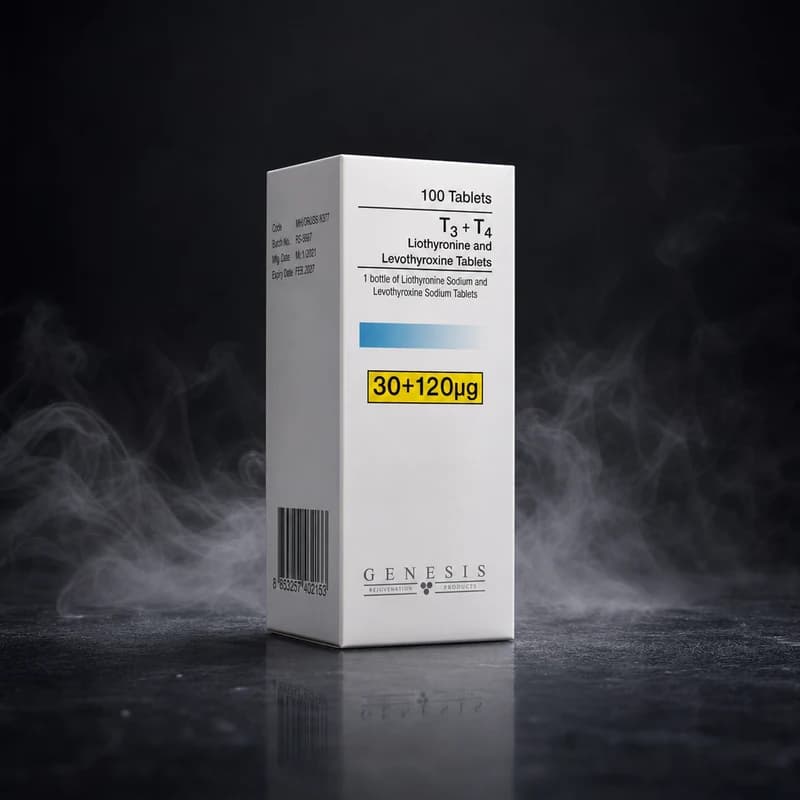
For those working with combination protocols at higher total iodothyronine exposure, the 150mcg per tablet tier merits close attention. T3 + T4 150mcg/tab 100 Tablets by Genesis provides the largest pack size in this group — 100 tablets — making it practical for extended preparation phases where supply continuity is critical. The fixed T3/T4 combination at this concentration is suited to experienced users who understand the accelerated onset of T3 activity relative to T4 alone and who have already established their individual response to thyroid hormone supplementation.
T3 + T4 150mcg/tab 40 Tablets by Sterling Knight Pharmaceuticals offers the same 150mcg combination profile in a 40-tablet pack, representing a shorter-cycle option or a practical trial run for those new to the T3/T4 combination format before committing to a larger supply. Sterling Knight Pharmaceuticals brings consistent pharmaceutical standards to this entry, and the 40-tablet quantity is well matched to short pre-competition phases of four to six weeks.
When selecting between tiers, consider that users stepping down from supraphysiological drug protocols often prefer the gradual metabolic support offered by T4-dominant products, while those already experienced with thyroid hormone compounds and managing acute metabolic suppression may find the combination products at 150mcg more immediately effective. Always calibrate duration and dose to the specific phase, dietary context, and any concurrent compounds in use.
Frequently Asked Questions
What is the difference between T4 only and a T3 + T4 combination product?
T4 alone acts as a prohormone, relying on peripheral enzymatic conversion to active T3 for effect. Combination products supply both hormones simultaneously, producing quicker onset of metabolic activity from the T3 component while the T4 provides a sustained background reservoir. Users with poor T4-to-T3 conversion capacity — due to diet, selenium status, or genetics — often report superior response to combination formulas.
How long does it take for T4 levothyroxine to produce noticeable metabolic effects?
Due to T4's plasma half-life of approximately 6–7 days, it takes roughly 4–6 weeks of consistent daily dosing to reach steady-state plasma concentrations. Metabolic changes such as increased resting temperature, heart rate, and perspiration may become apparent within the second or third week, but the full pharmacological effect at a given dose is not reliably assessed until steady state is achieved.
Can T4 levothyroxine be used alongside anabolic compounds?
Levothyroxine is commonly incorporated into advanced physique protocols alongside anabolic agents, primarily to counteract diet-induced suppression of endogenous thyroid output. It does not directly interact with androgen receptors and is not androgenic or anabolic in its own right. Concurrent use demands awareness of cardiovascular load, as both thyroid hormones and certain anabolic compounds can independently elevate heart rate and body temperature.


 Lab Tested