contraindications: Do not use in the presence of untreated adrenal insufficiency — thyroid hormone accelerates cortisol clearance, and uncompensated adrenal reserves may collapse under increased metabolic demand.
Contraindicated in acute myocardial infarction or uncorrected cardiac arrhythmia; levothyroxine increases cardiac output and oxygen demand independently of T3 conversion.
Not suitable for individuals with known hypersensitivity to any component of the tablet formulation.
side_effects: Palpitations and tachycardia — typically emerge during dose escalation or when conversion efficiency is higher than anticipated; reduce dose by one titration step.
Heat intolerance, excessive perspiration, and weight loss beyond target — indicate supraphysiological T3 levels from over-conversion.
Insomnia and anxiety can occur at doses above 100 mcg in conversion-efficient individuals; morning dosing minimises circadian disruption.
Hair thinning or texture change may appear with prolonged use; typically reversible after discontinuation and HPT axis recovery.
monitoring: Recheck serum TSH and free T4 at weeks 4–6 after each dose change; given the 6–7-day half-life, earlier testing reflects a transitional rather than stable state.
Track resting heart rate and morning body temperature weekly throughout the protocol as real-time conversion proxies.
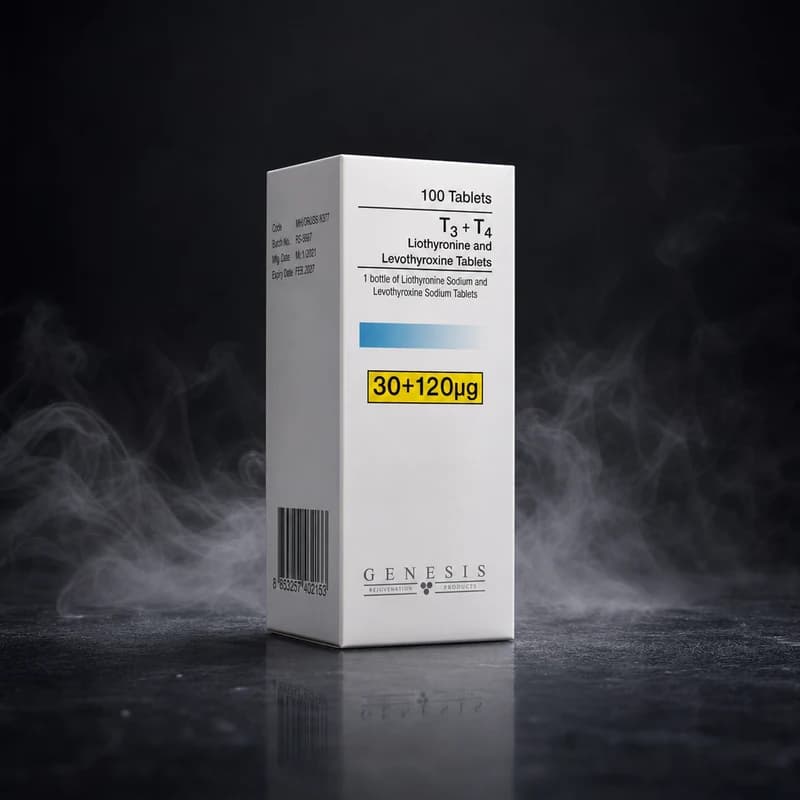
If using 150 mcg concurrently with any T3 preparation, measure free T3 separately to quantify combined active-hormone load.
pct: Endogenous thyroid production recovery after T4-only protocols is generally more gradual than after T3 cycles; allow 8–12 weeks for full HPT axis normalisation, confirmed by TSH returning to the individual's pre-cycle baseline.
No selective thyroid-axis restart agent equivalent to SERMs in anabolic PCT exists; recovery relies on dose tapering and time.
Post-cycle bloodwork should include TSH, free T4, and free T3 to confirm all three markers have returned toward pre-cycle ranges before considering a repeat protocol.

 Lab Tested