Liraglutide: Mechanism and Pharmacology
Liraglutide is a long-acting glucagon-like peptide-1 (GLP-1) receptor agonist derived from native human GLP-1 through a single amino acid substitution at position 34 (arginine replacing lysine) and the attachment of a C-16 fatty acid side chain via a glutamic acid linker. This structural modification enables liraglutide to bind non-covalently to albumin in the plasma, dramatically extending its half-life to approximately 13 hours — a substantial improvement over endogenous GLP-1, which is degraded by dipeptidyl peptidase-4 (DPP-4) within minutes of secretion. The extended half-life supports once-daily subcutaneous administration, making it one of the more pharmacologically convenient GLP-1 analogues available.
Liraglutide engages the GLP-1 receptor (GLP-1R), a class B G-protein-coupled receptor expressed across a wide range of tissues including pancreatic beta cells, the hypothalamus, the gastrointestinal tract, and the cardiovascular system. Upon receptor activation, liraglutide stimulates adenylate cyclase, increasing intracellular cyclic AMP (cAMP) and triggering glucose-dependent insulin secretion from pancreatic beta cells. Critically, because this process is glucose-dependent, insulin release diminishes at lower blood glucose concentrations — a mechanistic safeguard that differentiates GLP-1 agonists from older insulinotropic agents.
Beyond pancreatic action, liraglutide suppresses glucagon secretion from alpha cells, slows gastric emptying, and acts centrally on hypothalamic GLP-1 receptors to reduce appetite and caloric intake. The compound demonstrates approximately 55% bioavailability following subcutaneous injection and reaches peak plasma concentrations (Tmax) at 8–12 hours post-dose. Steady-state plasma levels are achieved within two to three days of daily dosing, and its volume of distribution is approximately 11–17 litres — consistent with primarily vascular and extracellular distribution rather than extensive tissue penetration.
The metabolic cascade liraglutide initiates — GLP-1 receptor activation, cAMP upregulation, glucose-dependent insulin release, glucagon suppression — collectively constitutes a multifaceted hormonal intervention with relevance well beyond simple glycaemic control.
Application Context and User Groups
The application landscape for liraglutide has broadened considerably since its initial development. Its dual capacity to regulate blood glucose and modulate body weight makes it relevant to several distinct user profiles within the health, performance, and body composition space.
For individuals managing metabolic conditions characterised by insulin resistance or elevated fasting glucose, liraglutide addresses a specific hormonal axis that dietary intervention alone often cannot adequately correct. Research published in clinical literature demonstrates that liraglutide at doses of 1.2mg to 1.8mg daily reduces HbA1c by approximately 1.0–1.5 percentage points, alongside meaningful reductions in fasting plasma glucose.
At higher doses (up to 3mg/day, as evaluated in dedicated obesity-management trials), liraglutide produces clinically significant reductions in body weight — averaging 5–8% of total body weight over 56 weeks in large-scale trials — largely attributable to central appetite suppression rather than peripheral metabolic acceleration alone. For bodybuilders and physique athletes engaged in cutting phases or contest preparation, where appetite management and lean mass retention are simultaneously prioritised, this appetite-suppressing mechanism offers a relevant pharmacological tool distinct from stimulant-based appetite suppressants.
Athletes using anabolic compounds that negatively affect insulin sensitivity — notably certain androgens and progestins — may find GLP-1 agonist support particularly pertinent. Liraglutide modulates the incretin axis without the hypoglycaemic risk of exogenous insulin, offering a lower-risk approach to metabolic maintenance during pharmacologically complex cycles.
Additionally, liraglutide has demonstrated cardioprotective properties in landmark cardiovascular outcomes trials (LEADER trial), including reductions in major adverse cardiovascular events (MACE) in high-risk populations. While this is not the primary consideration for most bodybuilding users, it adds a layer of physiological context when assessing the overall risk-benefit profile of long-term use.
It is worth noting that liraglutide use should be approached with appropriate medical oversight, and users should be aware of contraindications including personal or family history of medullary thyroid carcinoma or multiple endocrine neoplasia syndrome type 2 (MEN2).
Range and Selection by Concentration and Pack Size
The liraglutide category currently offers a single concentration tier — 12mg/3ml — delivered via pre-filled pen injector. This format provides a total dose reservoir of 12mg across 3ml of solution, with each pen designed for multi-dose use calibrated to common therapeutic dose increments.
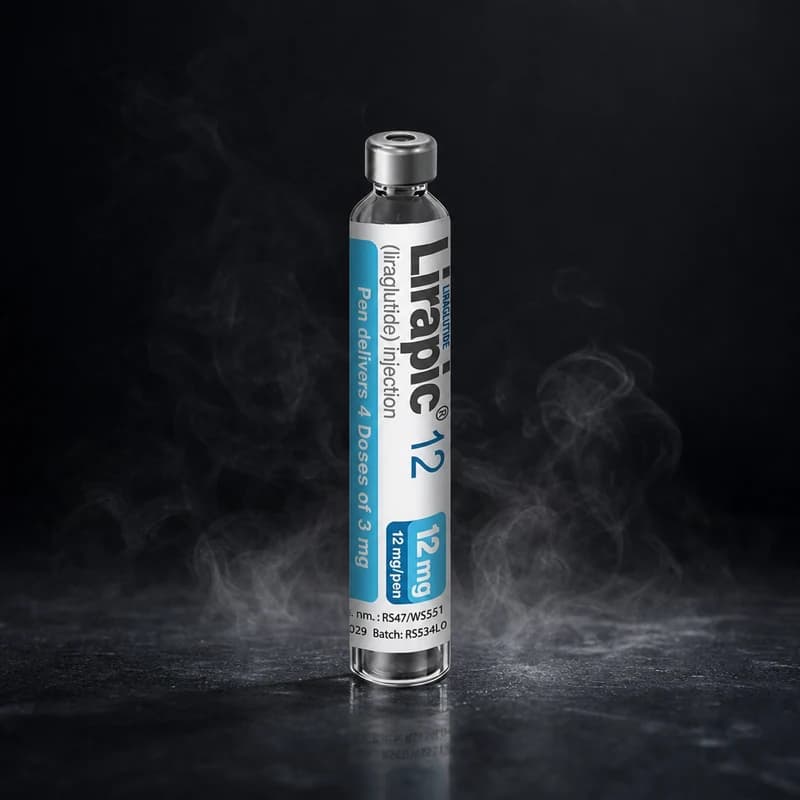
Lirapic 12mg/3ml 1 Pen by Pharmacona is the representative product in this category. Pharmacona's formulation delivers liraglutide in a ready-to-use pen device, removing the preparation steps associated with traditional vial-and-syringe protocols and offering consistent dose delivery with minimal dosing error — a meaningful practical advantage for users titrating incrementally from lower starting doses upward. The 12mg total load in a single pen is well-suited to extended use at standard therapeutic dose ranges, providing meaningful duration of supply before replacement is required.
Who should select the 12mg/3ml pen format? This concentration and format is most appropriate for users who have already completed an introductory titration period and are maintaining a stable dose in the mid-to-upper therapeutic range, or for those establishing a multi-week supply for a structured metabolic management protocol. The pen device itself simplifies administration for users unfamiliar with conventional injection practices, reducing barriers to consistent, accurate subcutaneous delivery.
As the category expands, additional manufacturers and concentration variants may become available. However, for users currently seeking a reliable, precisely dosed liraglutide pen from a recognised pharmaceutical manufacturer, Lirapic 12mg/3ml 1 Pen by Pharmacona represents a well-specified entry point into GLP-1 agonist supplementation.
Frequently Asked Questions
How does liraglutide differ from semaglutide in terms of dosing frequency and half-life?
Liraglutide has a plasma half-life of approximately 13 hours, requiring once-daily subcutaneous injection. Semaglutide, by contrast, has a half-life of roughly 165–184 hours, enabling once-weekly dosing. Both are GLP-1 receptor agonists, but semaglutide's more extensive albumin-binding and structural modifications produce markedly longer systemic exposure per dose.
What is the typical titration schedule when starting liraglutide?
Users generally begin at 0.6mg daily for one week to assess gastrointestinal tolerance, then increase by 0.6mg increments at weekly intervals. Therapeutic targets typically range from 1.2mg to 3.0mg daily depending on the intended application. Gradual titration minimises common side effects including nausea, which tends to attenuate as the body adapts to GLP-1 receptor activation.
Is the 12mg/3ml pen format suitable for a full treatment cycle without replacement?
At a maintenance dose of 1.2mg daily, the 12mg pen provides approximately ten days of supply. At 1.8mg daily, this extends to roughly six to seven days. Users planning longer protocols should account for these usage rates when assessing how many pens are required to sustain uninterrupted dosing throughout their chosen cycle duration.


 Lab Tested