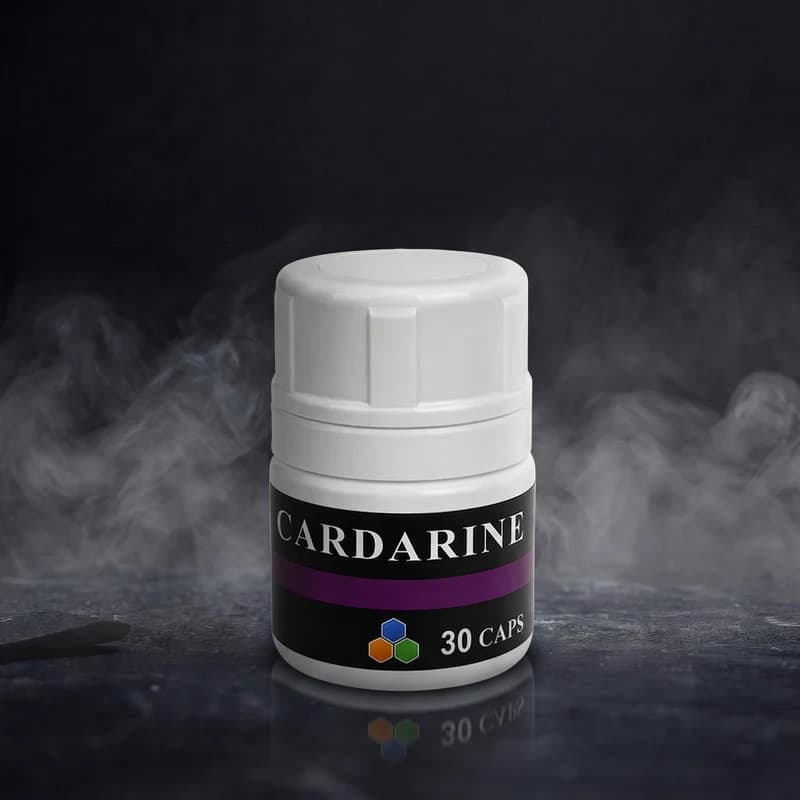
Mechanism & Pharmacology of Cardarine as a PPARδ Agonist
Cardarine is a selective peroxisome proliferator-activated receptor delta (PPARδ) agonist, originally investigated in the early 2000s by GlaxoSmithKline and Ligand Pharmaceuticals as a potential therapeutic agent for metabolic syndrome, dyslipidaemia, and cardiovascular disease. Unlike selective androgen receptor modulators (SARMs), Cardarine operates through an entirely distinct pathway: it does not bind the androgen receptor at all. Instead, Cardarine activates the PPARδ receptor, a nuclear receptor expressed abundantly in skeletal muscle, cardiac tissue, adipose tissue, and the liver — making its profile uniquely suited to metabolic and performance applications rather than anabolic ones.
At the molecular level, PPARδ activation regulates a broad network of genes involved in fatty acid oxidation, mitochondrial biogenesis, and glucose homeostasis. Cardarine binds the ligand-binding domain of PPARδ with high selectivity, triggering the transcription of genes such as CPT1 (carnitine palmitoyltransferase 1), which governs the transport of long-chain fatty acids into the mitochondria for beta-oxidation. Simultaneously, PPARδ activation upregulates PDK4 (pyruvate dehydrogenase kinase 4), effectively shifting cellular energy preference away from glucose catabolism and towards fat as the primary fuel source. This metabolic reprogramming is at the core of Cardarine's reputation for dramatically enhancing aerobic endurance and accelerating body-fat reduction.
It is worth distinguishing the two closely related compounds that both carry the "Cardarine" trade name in the research and performance community. GW501516 is the original and more extensively studied compound. GW0742 — offered by Elbrus Pharmaceuticals in this range — is a structurally related second-generation PPARδ agonist that demonstrates comparable receptor binding affinity with a slightly altered pharmacokinetic signature. Both compounds share the key thiazole-phenoxy scaffold and exhibit roughly similar oral bioavailability, estimated in preclinical data at 20–35% following first-pass hepatic metabolism. Half-life is documented between 16 and 24 hours in preclinical models, supporting once-daily oral dosing protocols. The plasma half-life profile means PPARδ occupancy remains consistently elevated throughout a 24-hour period, avoiding the peaks and troughs associated with shorter-acting compounds.
Cardarine does not suppress the hypothalamic-pituitary-gonadal (HPG) axis, does not aromatise, and carries no androgenic load, which sets it apart categorically from anabolic steroids and most SARMs on the market.
Application Context & User Groups
Within the bodybuilding and competitive physique community, Cardarine has acquired a reputation primarily in two distinct scenarios: contest preparation and extended endurance-focused training blocks.
During a caloric deficit, preserving lean muscle mass while accelerating fat mobilisation is the central challenge. Because Cardarine's PPARδ mechanism promotes fatty acid oxidation at the mitochondrial level, it allows users to sustain high training volumes on reduced caloric intake without the rapid loss of work capacity typically associated with aggressive cuts. Physique athletes frequently report that cardiovascular performance — measured by VO₂ output, session duration, and perceived exertion — remains stable or improves during caloric restriction when Cardarine is incorporated.
For endurance athletes and hybrid-sport competitors — a growing demographic within the performance supplementation market — Cardarine's ability to shift substrate utilisation towards fat spares glycogen reserves, which translates directly into later-stage performance during prolonged efforts. Preclinical rodent studies demonstrated statistically significant improvements in running capacity at doses producing plasma concentrations consistent with the 10–15 mg human-equivalent range. These findings generated considerable research interest before GlaxoSmithKline discontinued the programme due to preclinical oncology signals observed at supraphysiological doses over extended periods — a context that practitioners in the performance space acknowledge when designing cycle lengths, typically ranging from six to ten weeks.
Cardarine is also frequently incorporated into post-cycle protocols following anabolic or SARM cycles. Because it does not interact with the HPG axis, it can be run concurrently with hormonal recovery agents without interference, while simultaneously supporting body-composition maintenance during the transitional period when anabolic stimulus is reduced.
User groups who gravitate towards Cardarine include: competitive natural and untested bodybuilders in cutting phases, CrossFit and functional fitness athletes seeking endurance and body-composition support simultaneously, MMA and combat sports competitors managing weight classes, and recreational gym-goers prioritising fat loss without sacrificing training output.
A brief note: Cardarine is a research compound not approved for human therapeutic use. This content is informational in nature and does not constitute medical advice.
Range & Selection by Concentration and Pack Size
The current range offers two concentration tiers across two manufacturers, giving buyers flexibility to match their experience level, intended dosing protocol, and supply duration to a specific product.
Cardarine (GW0742) 10mg/tab 60 Tablets by Elbrus Pharmaceuticals represents the entry-tier concentration and is the most appropriate starting point for users new to PPARδ agonism. At 10 mg per tablet across a 60-tablet pack, users have a full eight-week supply at the commonly cited 10 mg daily protocol, or a six-week supply at 10–20 mg daily with the flexibility of splitting or doubling tablets. Elbrus Pharmaceuticals produce this formulation under their GW0742 designation, which is meaningful for users who wish to work with the second-generation analogue specifically. GW0742 shares the core endurance and fat-oxidation profile of GW501516 with a marginally distinct pharmacokinetic fingerprint, and for many users the practical effects are essentially equivalent. The 60-tablet count is a practical advantage for longer research cycles.
Cardarine 15mg/tab 50 Tablets by Rich Piana 5% Nutrition occupies the higher-concentration tier and is tailored towards experienced users who have previously established their individual response to PPARδ agonism at lower doses. At 15 mg per tablet, this format is well-suited to protocols running at 15 mg daily — a straightforward single-tablet-per-day approach that removes the need for any splitting or calculation. Rich Piana 5% Nutrition is a well-known brand within the performance community, and their Cardarine offering reflects a formulation positioned for users who require a precise, higher-strength daily dose without overshoot. The 50-tablet pack provides a solid ten-week supply at one tablet daily, accommodating the longer cycle durations sometimes preferred by endurance-focused athletes.
When selecting between tiers: beginners and those testing individual response should favour Cardarine (GW0742) 10mg/tab 60 Tablets by Elbrus Pharmaceuticals for its lower per-dose flexibility and extended pack duration. Experienced users running confirmed 15 mg daily protocols will find Cardarine 15mg/tab 50 Tablets by Rich Piana 5% Nutrition the more convenient and cost-efficient option. Neither product should be viewed as interchangeable with the other without accounting for the per-tablet dose difference — a 15 mg tablet cannot be halved with the same precision as a 10 mg tablet can be doubled.
Frequently Asked Questions
What is the difference between GW501516 and GW0742 in Cardarine products?
Both GW501516 and GW0742 are selective PPARδ agonists sharing the same core mechanism — activating fat oxidation and improving endurance capacity. GW0742 is a second-generation analogue with a slightly modified chemical structure that produces a comparable pharmacological profile. In practice, users report very similar outcomes from both; GW0742 is the compound found in the Elbrus Pharmaceuticals product in this range.
Can Cardarine be used during post-cycle therapy (PCT)?
Yes, Cardarine is commonly incorporated into post-cycle protocols because it does not interact with the hypothalamic-pituitary-gonadal axis. It neither suppresses testosterone production nor interferes with SERM-based recovery agents such as nolvadex or clomid. This makes it a practical option for maintaining fat-loss momentum and training performance during hormonal recovery phases.
How long is a typical Cardarine cycle and what daily dose is standard?
Most documented protocols in the performance community run between six and ten weeks, with daily doses ranging from 10 mg to 20 mg. A 10 mg daily dose is standard for first-time users, while experienced individuals may progress to 15–20 mg. Once-daily dosing is appropriate given Cardarine's estimated 16–24 hour half-life, and timing relative to meals appears to have minimal impact on efficacy.


 Lab Tested