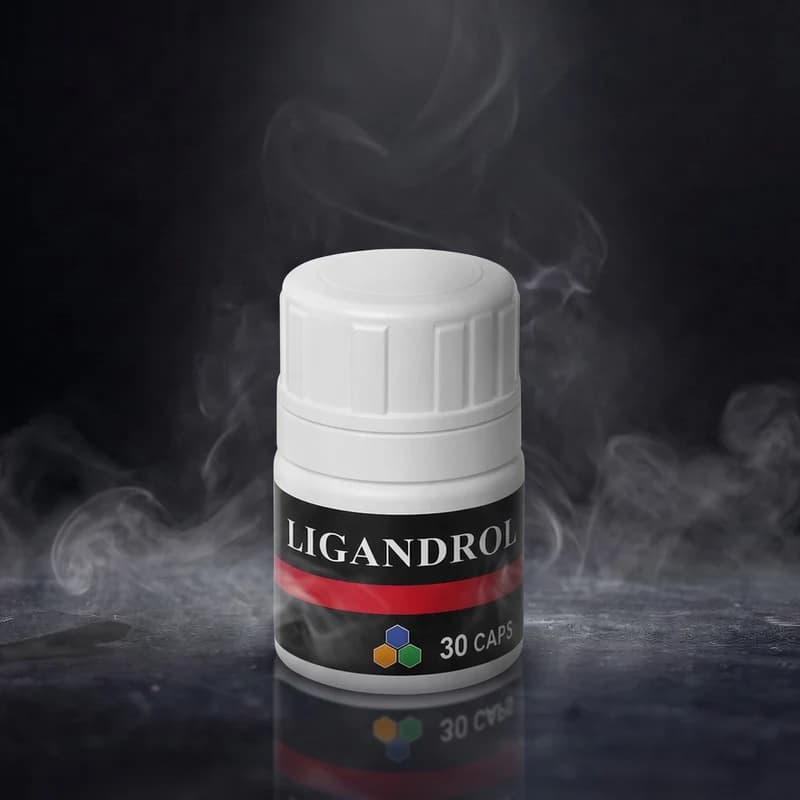
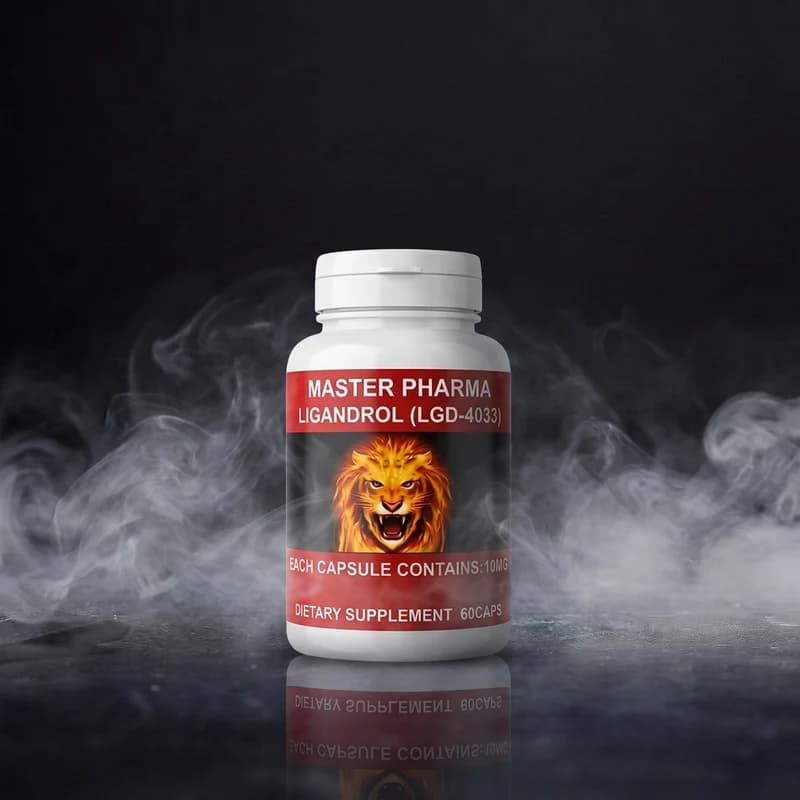
Mechanism & Pharmacology of Ligandrol (LGD-4033)
Ligandrol is a non-steroidal selective androgen receptor modulator (SARM) developed by Ligand Pharmaceuticals and subsequently advanced by Viking Therapeutics under the designation VK5211, originally investigated for the treatment of muscle-wasting conditions and osteoporosis. Unlike anabolic-androgenic steroids, Ligandrol achieves its anabolic effects through tissue-selective engagement of the androgen receptor rather than broad hormonal activation across multiple organ systems.
Ligandrol binds the androgen receptor with a binding affinity (Ki) reported at approximately 1 nM, placing it among the most potent oral SARMs characterised to date. This exceptionally high affinity means that meaningful receptor occupancy is achieved at relatively modest doses, which is central to its pharmacological appeal. The compound operates as a full agonist at the androgen receptor in skeletal muscle and bone tissue, activating downstream transcription factors — most notably members of the androgen response element pathway — that drive muscle protein synthesis, nitrogen retention, and satellite cell proliferation.
Oral bioavailability is well established in human pharmacokinetic studies, with the compound demonstrating near-complete absorption from the gastrointestinal tract and resistance to first-pass hepatic inactivation that would otherwise blunt circulating plasma levels. The elimination half-life of Ligandrol sits between 24 and 36 hours in healthy adults, confirmed in the Phase I clinical data published by Basaria et al. (2013), which supports once-daily dosing without the pharmacokinetic troughs associated with shorter-acting agents. Plasma concentrations reach steady state within approximately five days of consistent administration. Ligandrol undergoes hepatic metabolism primarily via hydroxylation and glucuronidation, producing metabolites detectable in urine — a pharmacokinetic detail relevant to competitive athletes subject to anti-doping oversight, as urinary metabolites can persist well beyond the parent compound's plasma half-life.
Critically, the selectivity profile of Ligandrol means that at research-context doses, androgenic signalling in tissues such as the prostate and sebaceous glands is substantially attenuated compared to testosterone or synthetic AAS. However, suppression of the hypothalamic–pituitary–gonadal (HPG) axis does occur in a dose-dependent manner, with luteinising hormone (LH) and follicle-stimulating hormone (FSH) values declining measurably within two weeks of continuous use — a factor that informs cycle length decisions and post-cycle recovery planning.
Application Context & User Groups
The bodybuilding and physique community adopted Ligandrol rapidly following the publication of early clinical safety data, which documented statistically significant lean mass accrual in healthy older men at doses as low as 1 mg per day over 21 days. Extrapolating from this, experienced users typically explore higher dose ranges to pursue more pronounced hypertrophic responses, though the compound's potency relative to its molecular mass means dose calibration warrants careful attention.
Ligandrol is primarily sought in three applied contexts within the physique and performance space. First, during dedicated lean muscle-building phases, where users value the compound's ability to drive progressive increases in contractile tissue mass with comparatively modest fluid retention relative to wet androgens — a characteristic that makes body composition changes visually appreciable within several weeks. Second, during body recomposition efforts, where simultaneous lean mass accretion and modest fat oxidation can occur, particularly when dietary and training protocols support a mild caloric deficit. Third, in strength-focused applications: early lean mass and neuromuscular adaptation data suggest that Ligandrol supports meaningful increases in one-repetition maximum performance on compound movements, with several community-reported and pilot study observations indicating strength gains disproportionate to the duration of use.
The typical user profile spans intermediate-to-advanced resistance-trained individuals who have already optimised their nutrition, progressive overload protocols, and recovery infrastructure. Beginners rarely represent the appropriate starting point given the compound's hormonal activity and the importance of understanding one's physiological baseline prior to introducing agents that modulate androgen receptor signalling. Female users appear in the community conversation around Ligandrol, drawn by its selectivity versus traditional androgens, though the HPG axis suppression and virilisation risk considerations remain relevant and individual sensitivity varies considerably.
Athletes competing under bodies affiliated with WADA should note that Ligandrol appears on the Prohibited List under S1 Anabolic Agents, and its urinary metabolites have been the basis for anti-doping rule violations at elite levels of sport. This is a practically important distinction for the competitive athlete versus the recreational physique user. For those in non-tested environments, cycle lengths in community use typically range from six to ten weeks, followed by a structured recovery interval.
Range & Selection by Concentration and Pack Size
Our Ligandrol category currently features two concentration tiers — 10 mg per tablet and 15 mg per tablet — sourced from manufacturers with distinct positioning in the performance supplement space, allowing users to match product specification to experience level and dosing philosophy.
The 10 mg tier is represented by Ligandrol (LGD-4033) 10 mg/tab 60 Tablets by Elbrus Pharmaceuticals. A 60-tablet pack at this concentration provides a full 600 mg of active compound, offering flexible cycle structuring. At 10 mg daily, this pack supports a six-week run with manageable per-dose increments. For users approaching Ligandrol for the first time or returning after an extended break, the 10 mg unit allows dose titration — beginning at half a tablet where supported — and provides practical headroom to assess individual response before committing to higher intake. Elbrus Pharmaceuticals has established a reputation for pharmaceutical-grade tableting with consistent compression and coating quality, which matters for dosing accuracy across a cycle.
The 15 mg tier is represented by Ligandrol 15 mg/tab 50 Tablets by Rich Piana 5% Nutrition. At 15 mg per tablet and a 50-tablet pack count, this format delivers 750 mg total — structured for users who have prior experience with the compound and are targeting more advanced applications, whether that is accelerated lean mass accrual during a building phase or strength prioritisation ahead of a performance peak. Rich Piana 5% Nutrition brings brand recognition from the broader sports nutrition market, and their entry into SARM formulation reflects growing demand for higher-concentration, single-daily-dose formats. The 15 mg tablet is particularly well-suited to users who have previously run the 10 mg tier without adverse response and are seeking an incremental step up rather than a dramatic protocol shift.
Guidance by tier: the 10 mg format is the recommended starting point for compound-naïve users and those emphasising recomposition over outright mass gain. The 15 mg format better serves experienced users in dedicated hypertrophy or strength phases where higher daily doses align with established personal tolerance. In either case, cycle support and post-cycle planning remain integral to responsible use.
Frequently Asked Questions
What makes Ligandrol different from other SARMs in terms of receptor binding?
Ligandrol binds the androgen receptor with a Ki of approximately 1 nM, giving it one of the highest binding affinities among characterised oral SARMs. This means potent anabolic signalling is achievable at lower absolute doses compared to less affinity-selective compounds such as Ostarine, making accurate dosing and careful titration particularly important.
How long does Ligandrol remain detectable in urine?
The parent compound clears plasma within a few days given its 24–36 hour half-life, but hydroxylated and glucuronidated metabolites persist in urine considerably longer — potentially weeks depending on dose, duration of use, and individual metabolism. Athletes subject to WADA-affiliated anti-doping testing should treat Ligandrol as a long-window detection risk.
Is once-daily dosing sufficient for Ligandrol, or should it be split?
Once-daily dosing is pharmacokinetically appropriate. Ligandrol's half-life of 24–36 hours maintains stable plasma concentrations with a single daily dose, and the clinical pharmacokinetic data confirms steady-state is reached within approximately five days. Splitting doses does not meaningfully improve receptor occupancy consistency and adds unnecessary complexity to administration.


 Lab Tested