ACP-105 is a non-steroidal, partial agonist of the androgen receptor, investigated in preclinical research for its favorable selectivity profile relative to classical androgens.
Pharmacological Profile and Research Relevance
ACP-105 was originally developed by Acadia Pharmaceuticals and demonstrates pronounced tissue selectivity in in vitro and animal models: the compound binds the androgen receptor (AR) with high affinity while exhibiting significantly lower androgenic activity in prostatic and cutaneous tissue compared to full agonists such as testosterone. This partial agonism mechanistically distinguishes ACP-105 from earlier SARM generations and makes it a subject of research into selective tissue modulation. Preclinical data suggest anabolic effects in muscle and bone tissue without reproducing the side effects observed in classical androgen studies to the same extent. The compound has not yet entered clinical approval trials in humans; all available data derive from cell culture and animal experiments.
Structural Characteristics and Receptor Kinetics
Structurally, ACP-105 belongs to the class of tetrahydroquinoline-based SARMs. This core scaffold enables a specific conformational change in the androgen receptor upon binding that differs from the conformation induced by steroidal androgens. As a result, distinct coactivator proteins are selectively recruited, which accounts for the tissue-differentiated gene expression observed. The half-life and bioavailability of ACP-105 have been described as favorable in animal studies; however, robust human pharmacokinetic data are not available. For research purposes, the compound is available in oral formulations, facilitating standardized dosing experiments.
Product Range & Selection
The current range includes the following research formulation:
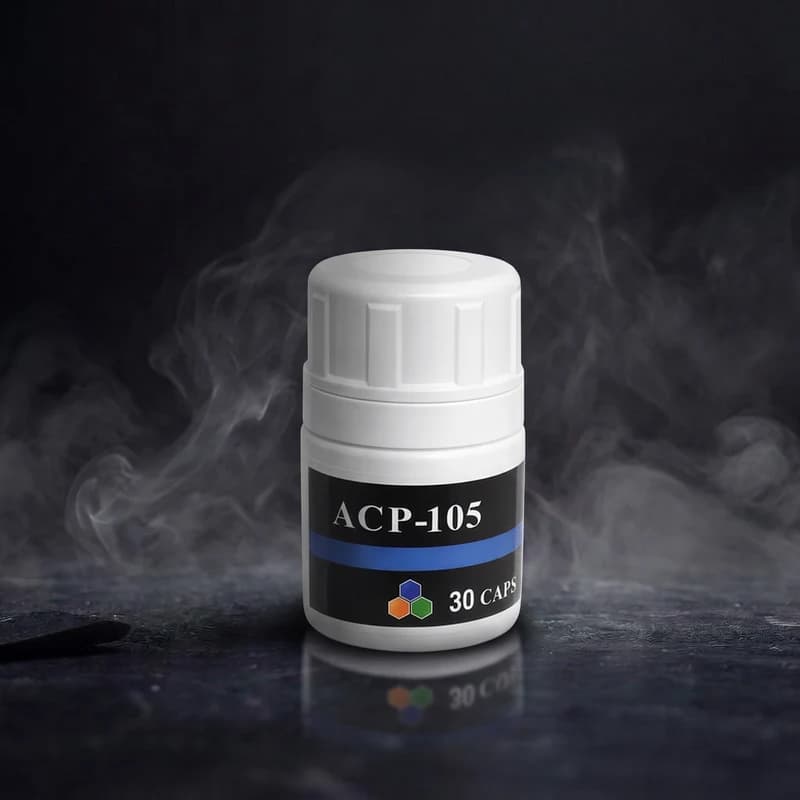
ACP-105 | 5 mg/Tab | 30 Tablets | Vital Research – Oral tablet formulation with 5 mg of active compound per unit, packaged in units of 30 tablets; suitable for standardized in vitro and ex vivo research applications under controlled laboratory conditions.

 Lab Tested