Mechanism & Pharmacology of Methyltestosterone
Methyltestosterone is a synthetic, 17-alpha-alkylated derivative of testosterone that was first synthesised in the 1930s, making it one of the earliest anabolic-androgenic steroids to enter clinical use. The 17-alpha methyl group is the defining structural modification: it prevents rapid first-pass hepatic degradation, granting the compound genuine oral bioavailability estimated between 60% and 70% — a significant improvement over unmodified testosterone, which is almost entirely cleared before reaching systemic circulation.
Methyltestosterone binds the androgen receptor (AR) with high affinity, initiating transcription of androgen-responsive genes involved in nitrogen retention, erythropoiesis, and secondary sexual development. The compound carries an androgenic-to-anabolic ratio of approximately 1:1 relative to testosterone, meaning its androgenic potency is roughly equivalent to its myotrophic activity — a profile that distinguishes it from more anabolically skewed derivatives such as nandrolone or oxandrolone. The androgen receptor recognises methyltestosterone as a full agonist, producing maximal receptor activation without partial-agonist attenuation.
The half-life of methyltestosterone sits in the range of 2.5 to 3.5 hours, which is notably short even by oral-steroid standards. This pharmacokinetic reality demands multiple daily administrations to sustain consistent plasma concentrations. Detection windows in urine-based testing extend considerably beyond the half-life — estimated at up to several weeks depending on dose — owing to the persistence of hydroxylated metabolites. Because the compound is subject to aromatisation by the CYP19A1 (aromatase) enzyme, oestrogenic side effects including water retention and gynaecomastia are pharmacologically possible. Notably, methyltestosterone also undergoes 5-alpha reduction via the SRD5A enzyme to form 17-alpha-methyl-dihydrotestosterone (mestanolone), a metabolite with substantially elevated androgenic potency at androgen-sensitive tissues such as the scalp and prostate. This metabolic pathway partly explains the compound's pronounced androgenic character relative to its anabolic output. Hepatic stress — a consequence shared by all 17-alpha-alkylated compounds — is quantifiable through elevated serum aminotransferase (AST/ALT) values; cycles are therefore universally kept brief, typically under six weeks.
Application Context & User Groups
Historically, methyltestosterone held a broad clinical role. It was prescribed for hypogonadism in adult males, delayed puberty in adolescent patients, and — perhaps most notably — for menopausal symptom management in women, often formulated alongside oestrogens. The United States FDA-approved formulation Estratest combined esterified oestrogens with methyltestosterone precisely for this purpose. In oncology contexts, it was employed to manage oestrogen-receptor-positive breast cancer before more targeted therapies became available.
Within the bodybuilding and performance community, methyltestosterone occupies a specific niche distinct from longer-acting injectables. Its rapid onset — plasma levels rise within one to two hours of ingestion — makes it particularly valued as a pre-training activator. Users report marked increases in aggression, drive, and neuromuscular output within a single dosing window, an effect attributed partly to direct central nervous system androgen receptor activation and partly to elevated androgen tone more broadly. It is not typically selected as a primary mass-building compound in modern protocols because its anabolic-to-androgenic ratio does not favour lean tissue accrual over androgenic side effects to the degree that compounds like boldenone or oxandrolone do.
The user groups most associated with methyltestosterone in contemporary performance contexts include experienced male athletes who prioritise acute strength and aggression for powerlifting or strongman events, and those seeking a bridge compound during transitions between longer injectable cycles. Female use is considered high-risk given the compound's androgenic potency and its propensity for virilisation at even modest doses; the historical clinical use in women involved tightly controlled low doses under medical supervision. Beginners are universally advised to explore less hepatotoxic and less androgenic oral compounds before considering methyltestosterone.
Cycle lengths typically range from four to six weeks, with daily doses in male users generally falling between 25mg and 50mg split across two or three administrations to account for the short half-life. Liver-support supplementation — TUDCA, UDCA, or NAC — is considered standard practice. Post-cycle therapy incorporating a selective oestrogen receptor modulator (SERM) such as clomiphene or tamoxifen is recommended to restore the hypothalamic-pituitary-gonadal (HPG) axis following suppression.
Range & Selection by Concentration and Pack Size
Our methyltestosterone category spans three concentration tiers — 5mg, 10mg, and 25mg per tablet — sourced from eight manufacturers, giving users meaningful flexibility in dose management and commitment level.
5mg Tier — Entry-Level Dosing Precision
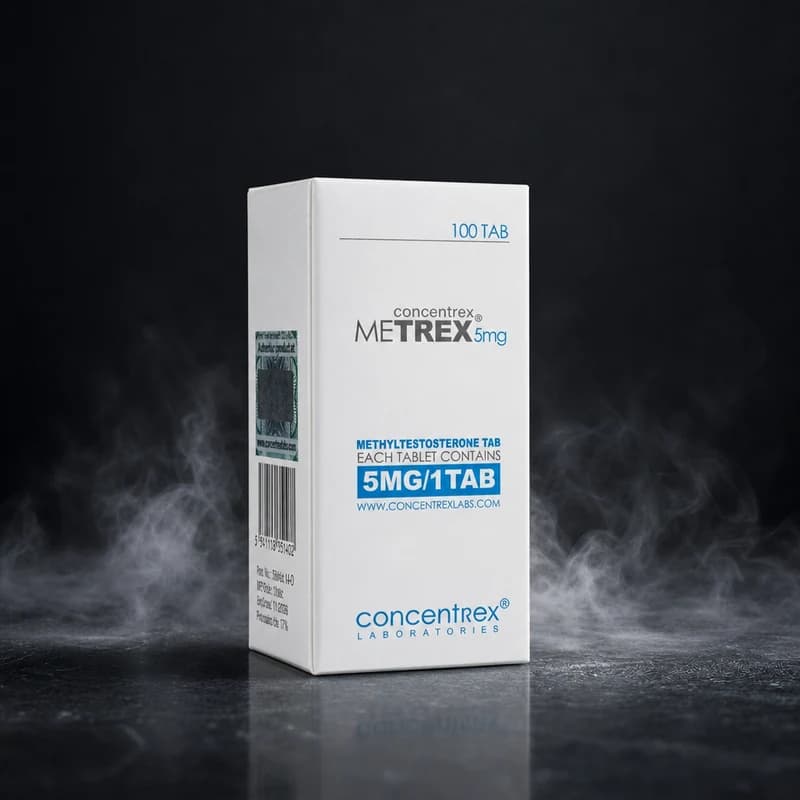
The 5mg tier is represented by MeTrex 5mg/tab 100 Tablets by Concentrex Labs. At this concentration, tablets allow for precise micro-dosing and straightforward titration upward from a conservative starting point. A 25mg daily dose, for example, requires five tablets — making this tier best suited to users who prefer granular control and wish to assess individual sensitivity before escalating. The 100-tablet pack provides a reasonable supply across a five- to six-week cycle at introductory dosing.
10mg Tier — Intermediate Flexibility
The 10mg tier is represented by Methyl-1-Test 10mg/tab 100 Tablets by Dragon-Pharma. Two to five tablets daily covers the most commonly applied male dose range without requiring an unwieldy number of tablets. This concentration hits a practical midpoint: granular enough for measured escalation, yet efficient for those already familiar with the compound. A 100-tablet pack at this strength comfortably accommodates a four-to-five-week run at moderate doses.
25mg Tier — Experienced-User Standard
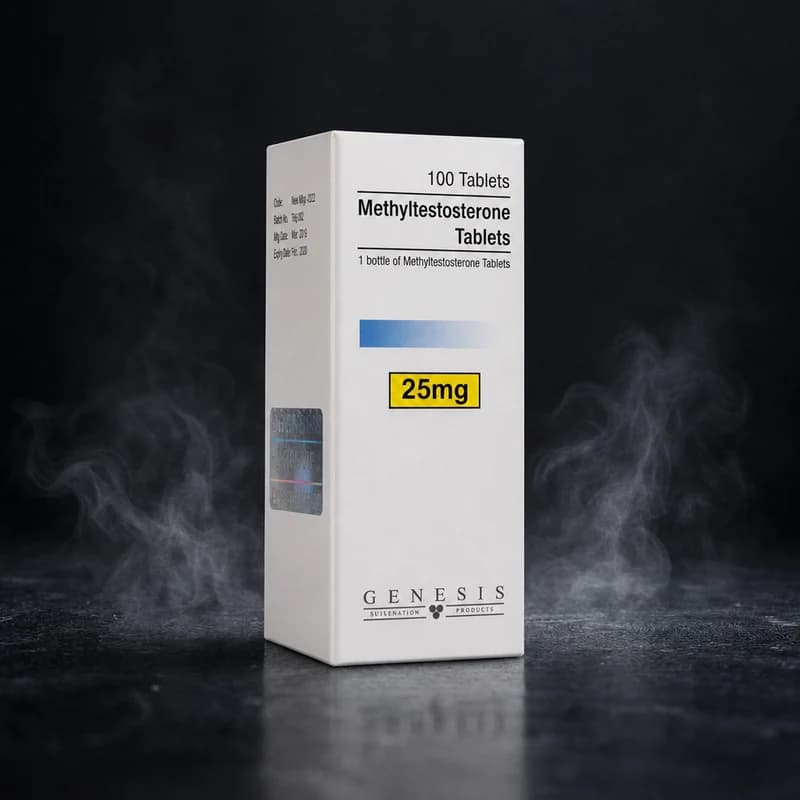
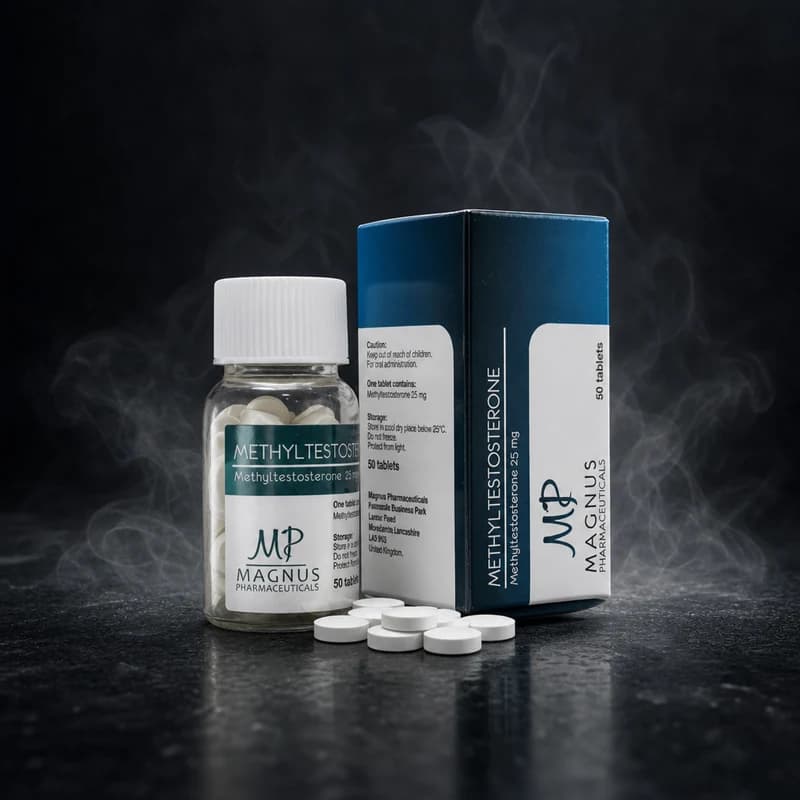
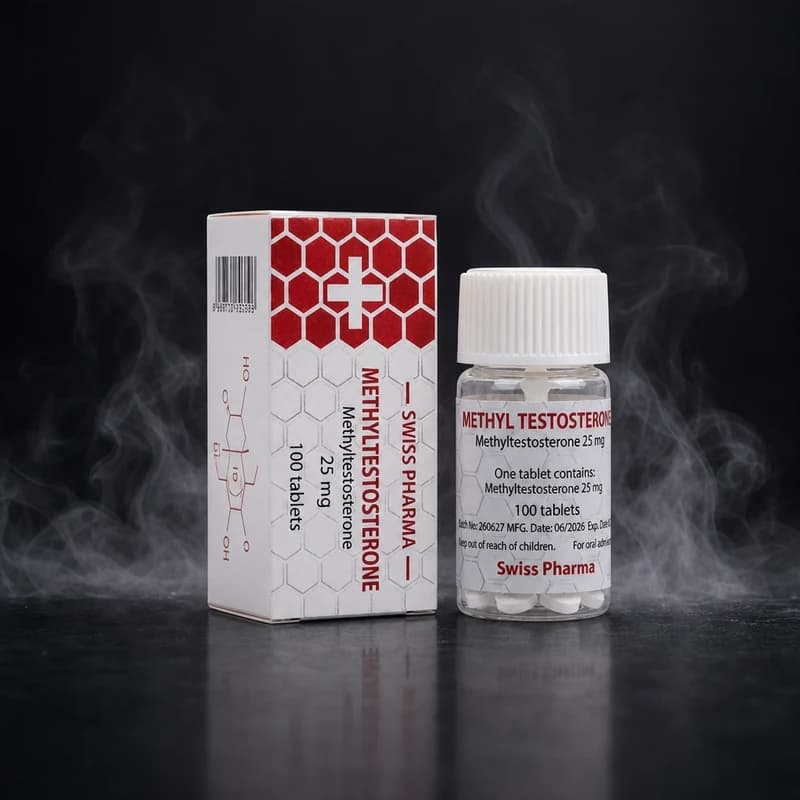
The 25mg tier offers the widest product selection in the range and is the concentration most closely aligned with clinical and performance-history literature. Methyltestosterone 25mg/tab 100 Tablets by Genesis and Methyltestosterone 25mg/tab 50 Tablets by Magnus Pharmaceuticals both offer this strength, with Genesis providing a 100-tablet supply for longer cycles or higher-dose protocols and Magnus offering the 50-tablet pack as a shorter-commitment option. Methyl Testosterone 25mg/tab 100 Tablets by Kim Pharma and the equivalent offering from Rossiaz Lab round out the tier with manufacturer diversity. At this concentration, a single daily tablet delivers a meaningful androgenic stimulus, and two to three tablets per day represents the upper range of standard application. The 25mg tier is most appropriate for experienced users with an established baseline understanding of their androgenic response.
Across all tiers, users should select pack size in proportion to intended cycle length to avoid unnecessary compound stockpiling. Shorter cycles of four weeks are generally advisable for first-time users of the compound regardless of concentration chosen.
Frequently Asked Questions
What is the half-life of methyltestosterone and how does it affect dosing frequency?
Methyltestosterone has a half-life of approximately 2.5 to 3.5 hours, making it one of the shorter-acting oral steroids available. To maintain stable androgen levels and avoid peaks and troughs in plasma concentration, most users divide their daily dose into two or three administrations taken throughout the day, typically with meals to aid tolerability.
How does methyltestosterone differ from testosterone in terms of effects and bioavailability?
Unlike unmodified testosterone, methyltestosterone carries a 17-alpha methyl group that prevents first-pass liver breakdown, giving it oral bioavailability of roughly 60–70%. The trade-off is increased hepatic stress. Its androgenic-to-anabolic ratio is approximately 1:1, similar to testosterone itself, but its shorter half-life and rapid CNS stimulation give it a more acute aggression-enhancing character compared to injectable testosterone esters.
Which methyltestosterone concentration is most suitable for a first-time user?
First-time users are generally better served by the 5mg or 10mg tablet tiers, as these allow for careful dose escalation and easier correction if side effects emerge. Starting at 10–15mg daily and observing the androgenic and hepatic response over one to two weeks before increasing the dose is a measured approach. The 5mg offering from Concentrex Labs or the 10mg tablets from Dragon-Pharma are practical starting points for this purpose.


 Lab Tested