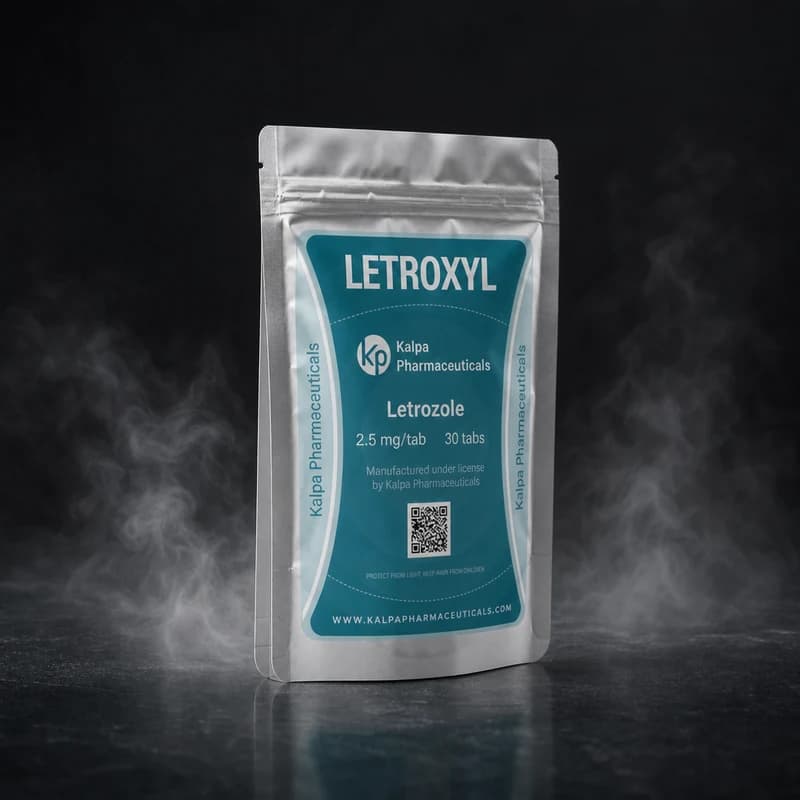
Contraindications: NordiLetrox is not indicated for pre-menopausal women outside medically supervised oncology contexts. Individuals with severe hepatic impairment should not use letrozole without specialist evaluation, as CYP3A4-mediated clearance is reduced under impaired liver function. Do not use if hypersensitivity to letrozole or any tablet excipient has been established.
Side Effects: Potential adverse effects include transient joint discomfort and reduced bone mineral density with prolonged use — a risk that is minimised by the short two-to-three-week mini-PCT duration recommended for mild cycles. Mood changes, fatigue, and headache have been reported and are generally dose-dependent. Excessive estradiol suppression, signalled by low libido and persistent lethargy, indicates the dose or frequency should be reduced immediately.
Monitoring: Where bloodwork is available, serum estradiol (measured by LC-MS/MS or equivalent sensitive assay) should be checked before initiating NordiLetrox and at the midpoint of the AI phase. Bone density monitoring is not required for mini-PCT durations of three weeks or fewer but becomes relevant if letrozole use extends beyond six weeks cumulatively.
PCT: In the context of mild-cycle recovery, NordiLetrox is intended as the opening, short AI phase only — not as a standalone PCT agent. The gonadotropin restoration stage requires a SERM. Extending the letrozole phase beyond Week 3 in a mild-suppression scenario increases the probability of estradiol dropping below physiological range, which actively impairs axis recovery rather than supporting it.

 Lab Tested