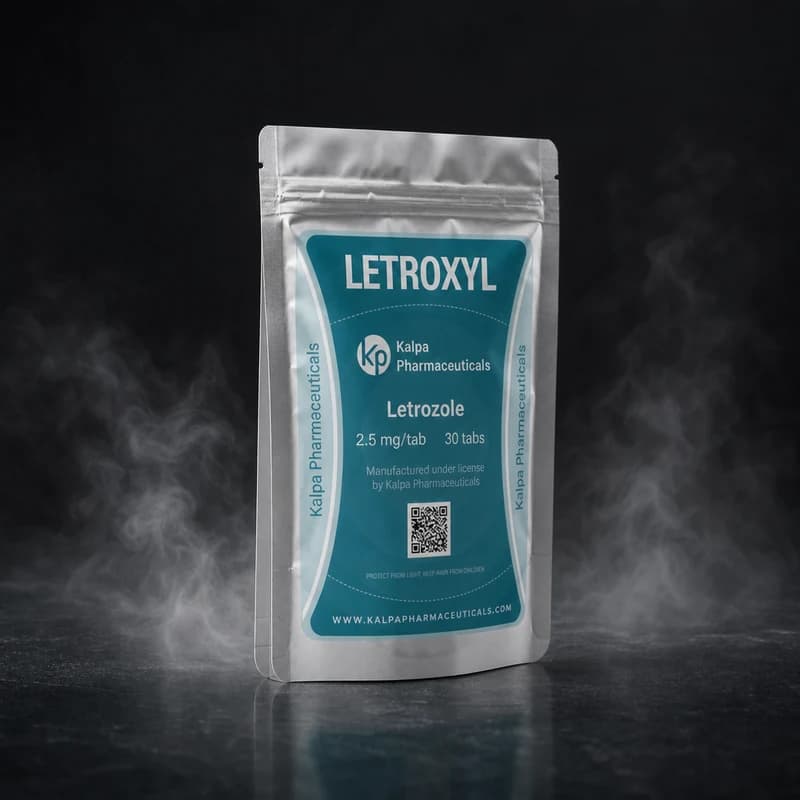
Contraindications: Femara 5 is not appropriate for individuals with documented hypersensitivity to Letrozole or any excipient in the tablet formulation. It is contraindicated in pre-menopausal women and must not be used during pregnancy — Letrozole carries teratogenic risk confirmed in animal reproductive toxicity studies. Individuals with severe hepatic impairment (Child–Pugh Class C) should not self-administer without specialist medical oversight, as Letrozole clearance is substantially reduced in this population.
Side_Effects: Estradiol over-suppression is the primary risk at PCT doses and can manifest as reduced libido, joint discomfort, mood disruption, and impaired lipid profiles (elevated LDL relative to HDL). Mild adverse effects may include headache, fatigue, and peripheral oedema. Prolonged use at supra-therapeutic doses has been associated with adverse effects on bone mineral density — a concern relevant to multi-cycle users.
Monitoring: Estradiol, LH, FSH, and total testosterone should be assessed at baseline, week two, and week four of PCT. Lipid panel monitoring is advisable for cycles extending beyond six weeks of AI use. Dose adjustments must be data-driven: symptomatic management without labwork increases both over-suppression and under-suppression risk.
PCT: Letrozole is an AI component of PCT, not a standalone recovery agent — SERM-based gonadotropin stimulation is required to complete axis restoration. Do not extend the AI phase beyond four weeks without confirmed laboratory justification. Letrozole is not a substitute for medical evaluation in cases of persistent post-cycle hypogonadism.

 Lab Tested