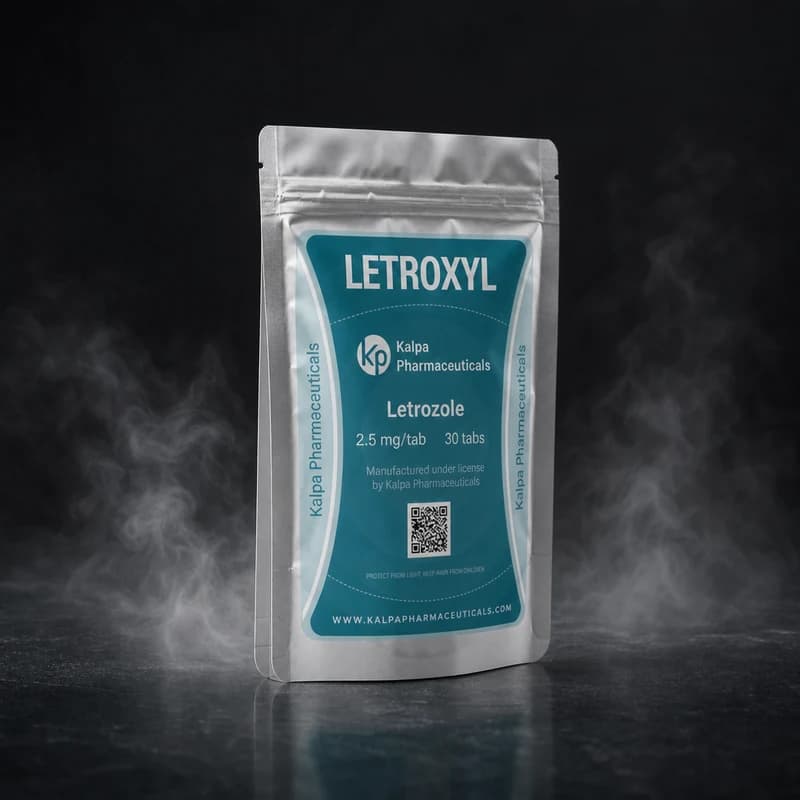
contraindications: Not for use in pre-menopausal women or individuals with confirmed hypersensitivity to letrozole or any excipient.
Concurrent use with estrogen-containing compounds negates aromatase-inhibitor activity and is clinically counterproductive.
Severe hepatic impairment may alter letrozole clearance kinetics; use with caution and reduce dose if indicated.
side_effects: Excessive estradiol suppression — confirmed by bloodwork — can cause joint pain, reduced libido, mood disturbance, and adverse lipid shifts.
Letrozole exhibits a long plasma half-life (approximately 45 hours); dose accumulation is possible when daily administration extends beyond six weeks without reduction.
Bone mineral density may decrease with prolonged aromatase inhibition; users on extended cycles should consider baseline DXA assessment.
monitoring: Obtain serum estradiol (E2), LH, FSH, and total testosterone at baseline and at two-week intervals throughout the PCT phase.
Use a sensitive LCMS-based estradiol assay; standard immunoassay panels frequently underreport E2 in male physiology and lead to dose miscalculation.
Monitor lipid panel (LDL/HDL ratio) during extended letrozole use, as significant estradiol suppression can adversely affect cardiovascular lipid markers.
pct: Letrozole is the aromatase-control phase compound in heavy-cycle PCT — it does not replace SERM therapy and must be tapered before SERM initiation.
Do not extend the full-dose letrozole phase beyond the point where gonadotropins have resumed, as continued deep suppression of estradiol at that stage impedes final HPTA normalisation.

 Lab Tested