Androgen Receptor Binding: The Pharmacological Foundation of Tri-Trenbolone
Kim Pharma Tri-Trenbolone 200mg/ml is a 19-nor steroid whose principal pharmacological action is defined by direct, high-affinity occupation of the androgen receptor (AR) — an interaction that drives gene transcription linked to nitrogen retention, protein synthesis, and anti-catabolic signalling. Trenbolone's AR binding affinity, measured by competitive radioligand displacement assay, registers at roughly five times the affinity of testosterone for the same receptor site. This figure is not a marketing estimate; it is a consistently reproduced value in androgen receptor pharmacology literature, attributable to the compound's C19-demethylated, Δ9,11 double-bond configuration that locks the ligand-receptor complex in a more stable conformation than testosterone achieves.
DHT-Derivative Character and What It Means Mechanistically
Trenbolone's lineage as a 19-nor derivative of DHT has direct consequences for its tissue-level behaviour. Unlike testosterone, trenbolone resists conversion by 5α-reductase into a more potent reduced metabolite, because the Δ9,11 structure already positions the molecule at near-maximum receptor affinity in its parent form. Compared to compounds that require 5α-reduction to reach full androgenic potency at target tissues, trenbolone arrives at the receptor as a fully active ligand without enzymatic conversion. Equally significant: trenbolone does not aromatise to oestrogen via CYP19A1 aromatase, meaning AR occupancy proceeds without the parallel oestrogen-receptor activation that complicates the androgenic environment of testosterone-based cycles.
Three Esters, One Receptor Target — Temporal Coverage
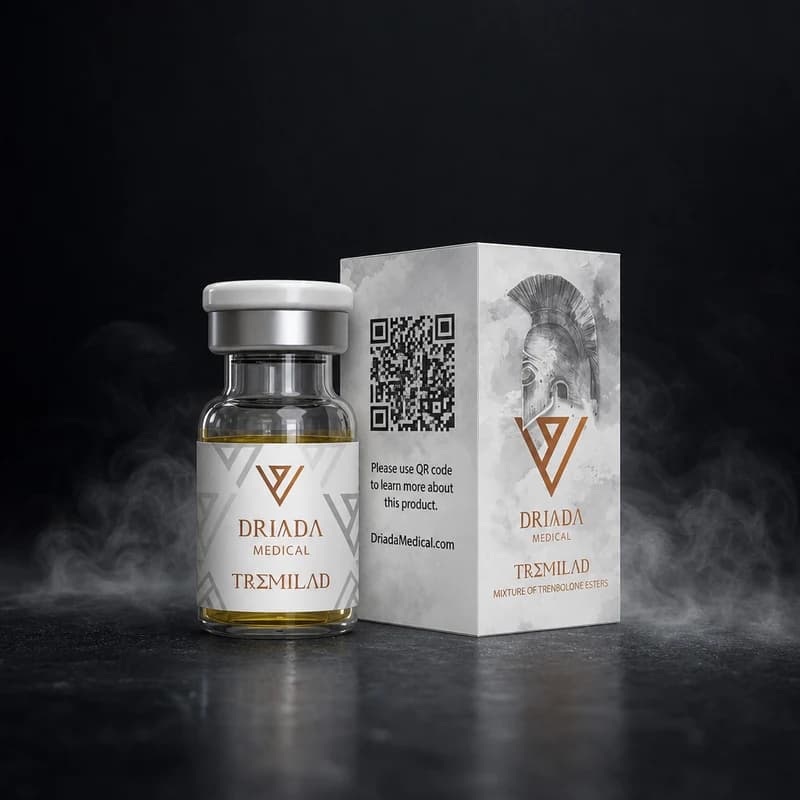
Kim Pharma's 200mg/ml formulation distributes receptor-occupying trenbolone across three distinct elimination half-lives through its Acetate, Enanthate, and Hexahydrobenzylcarbonate components. The result is that the same high-affinity AR ligand maintains continuous receptor engagement from the first 24–48 hours post-injection through to the extended Enanthate and Hexahydrobenzylcarbonate terminal phases — all directed at the same molecular target. The compound's glucocorticoid receptor antagonism, an independent mechanistic property documented in androgen receptor pharmacology, further reinforces the anti-catabolic dimension of sustained receptor occupancy by limiting cortisol-driven muscle protein breakdown during periods of caloric restriction.
Quality Infrastructure Supporting Stated Receptor-Active Concentration
A receptor-affinity advantage is only as meaningful as the concentration delivered. Kim Pharma subjects each production batch to HPLC potency testing against certified reference standards, confirming that the 200mg/ml label claim reflects the actual androgenic load per injection. LAL endotoxin screening provides the sterility validation dimension. Both data sets form part of the batch release record, available to distributors on request.

 Top Seller