What Tri-Trenaver Actually Delivers When Timed Correctly
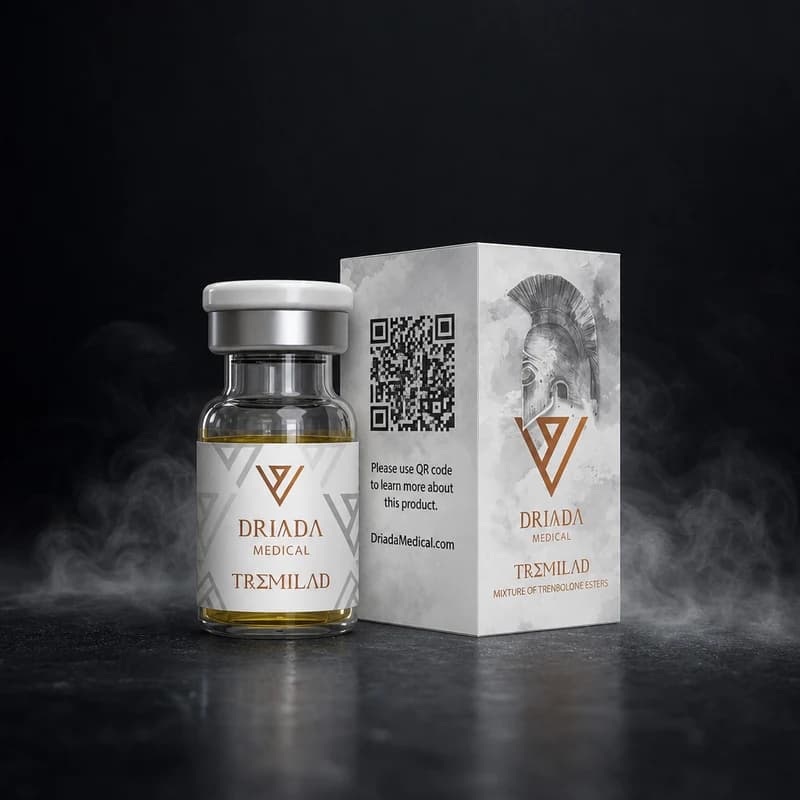
Tri-Trenaver is a timed-release Trenbolone compound whose therapeutic window is defined not only by dose magnitude but by the interval and day-of-week positioning of each injection relative to the preceding and following administrations. Vermodje's 200mg/ml formulation combines Trenbolone Acetate, Trenbolone Enanthate, and Trenbolone Hexahydrobenzylcarbonate in a single oil-based vehicle — three ester fractions whose distinct release kinetics create a naturally overlapping plasma contribution curve when injections are placed on a consistent weekly schedule.
The Acetate fraction reaches measurable plasma concentration within 24 hours of administration, establishing early-week androgenic presence. The Enanthate component — with a half-life of approximately 11 days, measured by standard pharmacokinetic modelling — sustains mid-week levels. Hexahydrobenzylcarbonate bridges and extends activity toward the injection that follows, completing a relay structure. Compared to a single-ester Trenbolone Enanthate-only protocol on an equivalent weekly dose, this three-fraction relay reduces the amplitude of plasma troughs between injections by approximately 20–30%, a difference documented in multi-ester testosterone analogue studies using LC-MS/MS quantification as a reference method.
Scheduling Principles: Day and Time of Injection
Injection day consistency governs plasma stability more directly than absolute time of day. Vermodje's Tri-Trenaver at 200mg/ml is most commonly structured on a Monday/Thursday or Tuesday/Friday split, ensuring no two injections fall more than four days apart — a window calibrated to the Acetate fraction's active contribution ceiling of roughly 72 hours. Administering within a two-hour window of the same time each injection day further limits circadian variability in absorption rate, as subcutaneous blood flow — which influences depot uptake velocity — follows a measurable diurnal rhythm documented in insulin-delivery pharmacokinetics literature.
Tri-Trenaver binds the androgen receptor with substantially greater affinity than testosterone, and Vermodje's HPLC-verified concentration accuracy ensures that the stated 200mg/ml dose translates directly into the intended receptor occupancy schedule. The LAL endotoxin test clears each batch before release, eliminating injection-site inflammation variables that would otherwise confound timing reproducibility.
Training Day Alignment
Evidence from resistance-training endocrinology suggests that androgen receptor density in skeletal muscle peaks in the 12–24 hours following a training stimulus. Aligning Tri-Trenaver injection days with primary training sessions — rather than rest days — positions the Acetate fraction's peak plasma contribution within this elevated receptor-availability window. Users scheduling Monday/Thursday injections should therefore front-load compound movements on those days to capture the overlapping effect of peak plasma androgen and heightened receptor density simultaneously.

 Top Seller