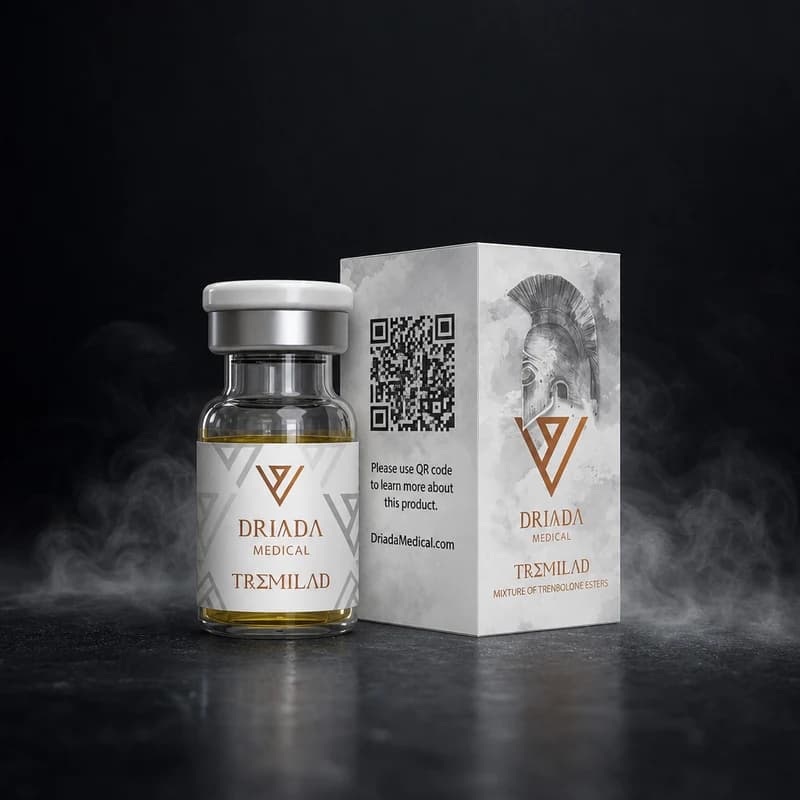
contraindications: Contraindicated in individuals with known hypersensitivity to Trenbolone or any excipient in the carrier oil vehicle.
Not for use by women — strong androgenic activity at 200mg/ml carries high virilisation risk without a safe dose threshold.
Contraindicated in persons with active hepatic impairment, despite the injectable route reducing hepatic first-pass burden; systemic androgen metabolism still involves hepatic processing.
Not indicated for individuals under 21 years of age; androgen receptor saturation during skeletal development carries irreversible growth-plate consequences.
side_effects: Androgenic: acne, accelerated scalp hair loss in genetically predisposed individuals, increased body hair density.
Cardiovascular: dose-dependent suppression of HDL cholesterol; haematocrit elevation requiring monitoring at cycles exceeding 8 weeks.
Neurological: insomnia and elevated aggression are reported more frequently with Trenbolone than with testosterone at equivalent androgenic load — the injectable route's high bioavailability means full androgenic exposure is delivered without attenuation.
Respiratory: 'Tren cough' — a transient bronchospasm response occasionally occurring immediately post-injection, attributed to micro-embolism of oil particles reaching pulmonary vasculature.
Endocrine: prolactin elevation through dopamine D2 receptor modulation; cabergoline or bromocriptine may be required for management.
monitoring: Lipid panel (HDL/LDL) at baseline and every 6 weeks during active cycle; injectable androgens at 200mg/ml exert measurable lipid effects from week 3 onward.
Haematocrit and haemoglobin measured at cycle midpoint; erythropoietic stimulation by Trenbolone is dose- and duration-dependent.
Blood pressure monitoring twice weekly; the high systemic bioavailability of the injectable form means cardiovascular strain is proportional to dose without the buffering effect oral bioavailability losses sometimes inadvertently provide.
Prolactin level check at cycle week 4; early identification of prolactin elevation allows timely introduction of dopamine agonist therapy.
pct: Post-cycle therapy should account for the Hexahydrobenzylcarbonate and Enanthate ester clearance periods before SERM initiation; premature PCT start while heavy esters remain active reduces recovery efficacy.
Standard PCT protocols incorporating Nolvadex (Tamoxifen) or Clomid (Clomiphene) are recommended; timing should be confirmed against known ester half-life data rather than estimated by cycle end date alone.
Prolactin support (cabergoline 0.25–0.5mg twice weekly) should be continued into early PCT if mid-cycle prolactin monitoring indicated elevation.

 Top Seller