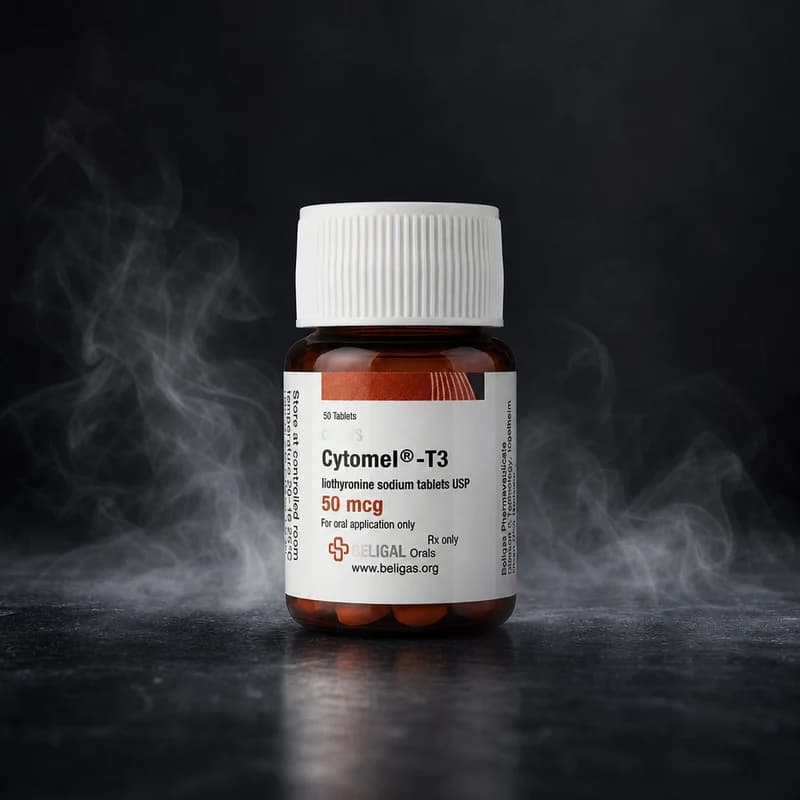
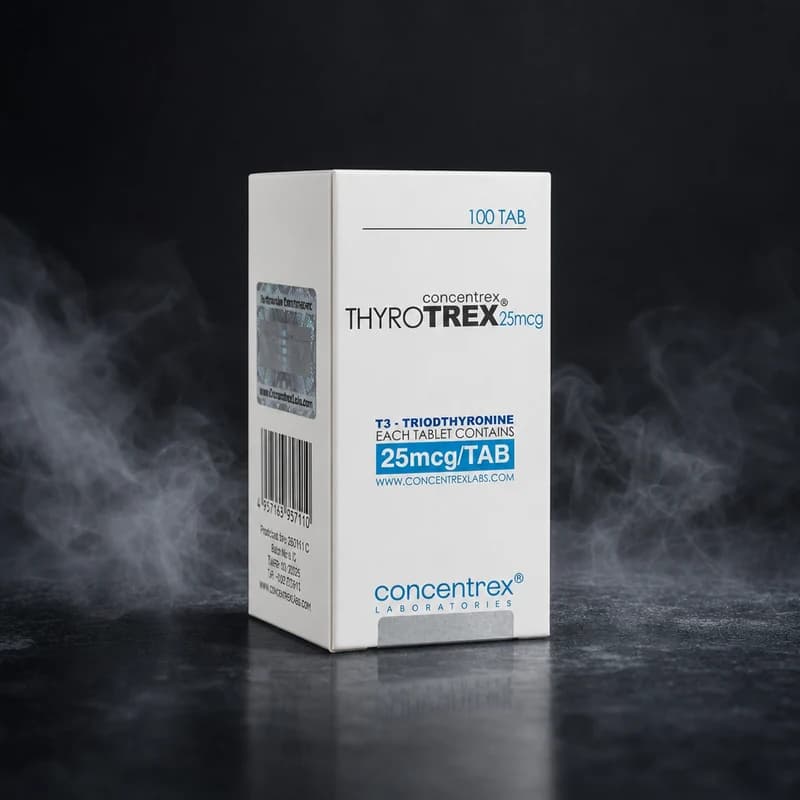
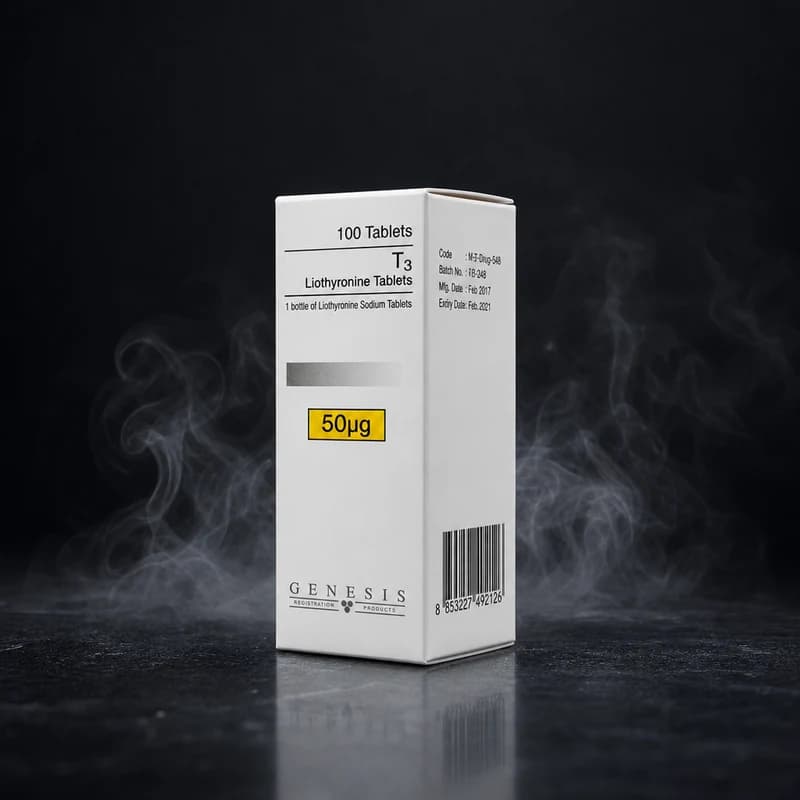
Contraindications: Do not use if diagnosed with untreated adrenal insufficiency, acute myocardial infarction, or thyrotoxicosis of any aetiology. Individuals with pre-existing cardiac arrhythmia or uncontrolled hypertension must obtain physician clearance before combining T3 with Growth Hormone, as both agents independently increase cardiac workload. Pregnancy and breastfeeding are absolute contraindications to performance-dose Liothyronine use.
Side_Effects: Common: elevated resting heart rate, diaphoresis, heat intolerance, and increased bowel frequency — all dose-dependent and typically reversible on reduction. At supraphysiological doses, muscle cramping and fine hand tremor may appear, particularly if GH is co-administered without adequate electrolyte support. Chronic over-dosing accelerates bone turnover; calcium and vitamin D co-supplementation is advisable in extended protocols.
Monitoring: Check resting heart rate each morning before rising; values consistently above 85–90 bpm indicate the current dose exceeds the individual's tolerance threshold and warrant reduction. Thyroid panel (TSH, fT3, fT4) at protocol midpoint provides objective evidence of suppression depth; IGF-1 monitoring serves as the parallel GH-efficacy marker. Periodic ECG is advisable when GH exceeds 3 IU/day alongside T3.
PCT: Thyroid axis recovery does not require pharmacological PCT agents analogous to HPG-axis restoration; however, a structured taper (see dosage table) is mandatory to prevent transient hypothyroid rebound. If HPG suppression is present due to concurrent AAS use, standard SERMs (Tamoxifen, Clomiphene) address gonadal recovery independently. Allow a minimum of eight weeks post-protocol before repeat thyroid labs are used as a new baseline reference.

 Lab Tested