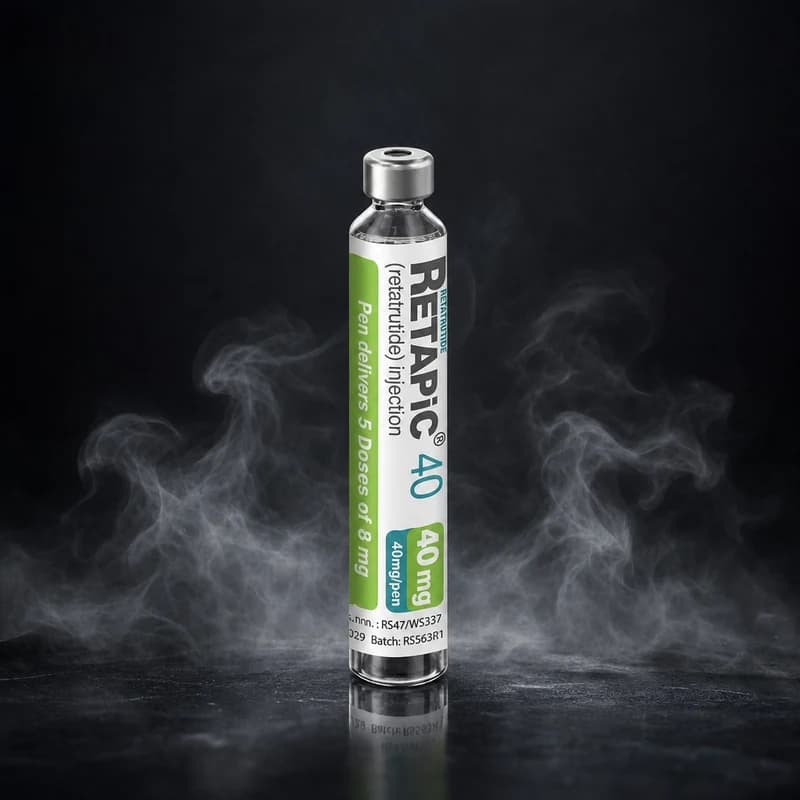
Triple Incretin Receptor Agonism: The Mechanistic Foundation of Retatrutide
Retatrutide is defined pharmacologically as a synthetic acylated peptide that achieves concurrent agonism at glucagon-like peptide-1 (GLP-1), glucose-dependent insulinotropic polypeptide (GIP), and glucagon (GCGR) receptors — a triple-receptor profile that no approved single-agent incretin therapy currently replicates in one molecule. This mechanism places Retatrutide in a distinct class from dual GLP-1/GIP agonists such as tirzepatide, where glucagon receptor co-activation adds a third metabolic lever not present in that comparator. Understanding how these three receptor systems interact is essential for contextualising this compound's research profile.
GLP-1 Receptor Agonism: Satiety and Insulin Secretion
Activation of the GLP-1 receptor drives glucose-dependent insulin release from pancreatic beta cells and simultaneously suppresses glucagon from alpha cells — a paired glycaemic control mechanism. GLP-1 receptor agonism also transmits satiety signals centrally via vagal afferent pathways and hypothalamic nuclei, reducing caloric intake independently of gastric effects. Retatrutide engages the GLP-1 receptor with potency consistent with long-acting acylated GLP-1 analogues, contributing directly to appetite suppression observed across GLP-1 class agents.
GIP Receptor Agonism: Amplifying the Incretin Effect
GIP receptor co-activation synergistically amplifies insulin secretion beyond what GLP-1 receptor stimulation achieves alone — a phenomenon first quantified in phase I clinical pharmacology studies examining tirzepatide pharmacodynamics. Retatrutide extends this dual-incretin architecture by adding GIP receptor engagement to its profile; GIP receptor signalling also promotes adipocyte lipid uptake regulation, adding a peripheral metabolic dimension beyond pure pancreatic action.
Glucagon Receptor Co-activation: Energy Expenditure and Hepatic Metabolism
The glucagon receptor component distinguishes Retatrutide mechanistically from all dual GLP-1/GIP agents. Glucagon receptor agonism increases hepatic glucose output acutely, but at the sustained, receptor-titrated levels achieved through co-agonism alongside GLP-1 — where insulin counterbalance is simultaneously elevated — the net effect shifts toward increased energy expenditure via thermogenic signalling rather than hyperglycaemia. Phase II clinical trial data (NCT04881760) reported body weight reductions of up to 24.2% at 48 weeks in participants receiving higher-dose Retatrutide regimens, a magnitude attributed in part to this glucagon-driven energy expenditure component. Imperia Laboratories supplies Retatrutide at 10mg/10ml concentration, released only after reversed-phase HPLC purity confirmation and LAL-method endotoxin verification under documented GMP conditions.

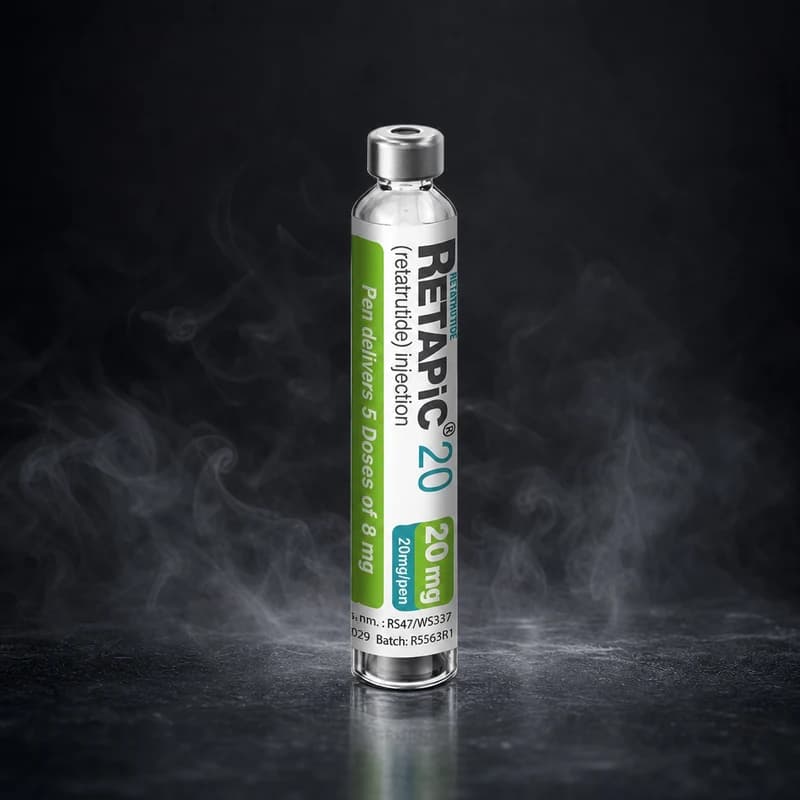 HPLC Verified