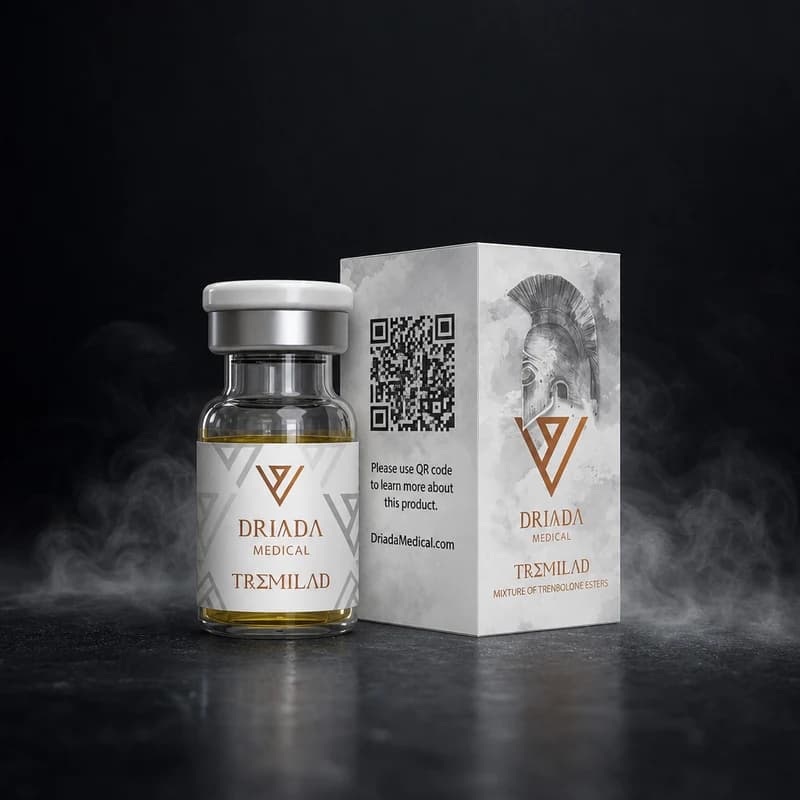
Trenbolone Mix and Metabolic Reprogramming: The NordiTren3 Profile
NordiTren3 is a multi-ester Trenbolone formulation at 200 mg/ml whose clinical relevance, from a metabolic standpoint, centres on its capacity to shift nutrient partitioning away from lipid storage and toward muscle protein accretion. Trenbolone's interaction with the androgen receptor (AR) — binding with roughly five times the affinity of testosterone, as established by competitive radioligand displacement methodology — drives downstream changes in insulin-signalling cascades that alter how muscle tissue responds to carbohydrate intake. This is not incidental: the metabolic remodelling effect is one of the compound's most practically significant attributes during phases where body composition, not merely mass, is the target.
Insulin Sensitivity, Glucose Partitioning, and the AR Axis
Androgen receptor activation by Trenbolone upregulates GLUT4 transporter translocation in skeletal muscle, a mechanism documented in androgen-receptor-positive myocyte models and consistent with the nutrient repartitioning effect athletes report empirically. GLUT4 upregulation increases insulin-stimulated glucose uptake into muscle cells, which means carbohydrate consumed around training is directed preferentially toward glycogen resynthesis rather than triglyceride synthesis in adipose tissue. Compared to testosterone-based cycles at equivalent androgenic load, Trenbolone-dominant protocols produce a measurably more favourable lean-mass-to-fat-gain ratio, an outcome attributable in part to this GLUT4-mediated mechanism rather than androgenic signalling alone.
Trenbolone simultaneously antagonises the glucocorticoid receptor (GR), suppressing cortisol-driven catabolic signalling that would otherwise promote gluconeogenesis and peripheral insulin resistance during caloric restriction. The combined AR agonism and GR antagonism creates a dual metabolic environment: anabolic signalling is elevated while the cortisol-mediated resistance to insulin-stimulated glucose disposal is attenuated. Blood glucose monitoring becomes a practical recommendation during NordiTren3 cycles, particularly for users running aggressive caloric surpluses, because enhanced GLUT4 activity can transiently exaggerate postprandial glucose clearance.
Manufacturing Verification: Batch-Level Analytical Accountability
Nordi Pharma subjects each NordiTren3 production batch to HPLC analysis confirming that the three ester fractions — Acetate, Enanthate, and Hexahydrobenzylcarbonate — are present at their specified proportional concentrations within the 200 mg/ml total. LAL (Limulus Amebocyte Lysate) endotoxin testing is applied as a mandatory release criterion, not an optional quality step. GMP-compliant manufacturing conditions govern sterility, particulate limits, and environmental controls throughout production. The result is a vial whose label claim is analytically verified rather than assumed from formulation input weights.

 Top Seller