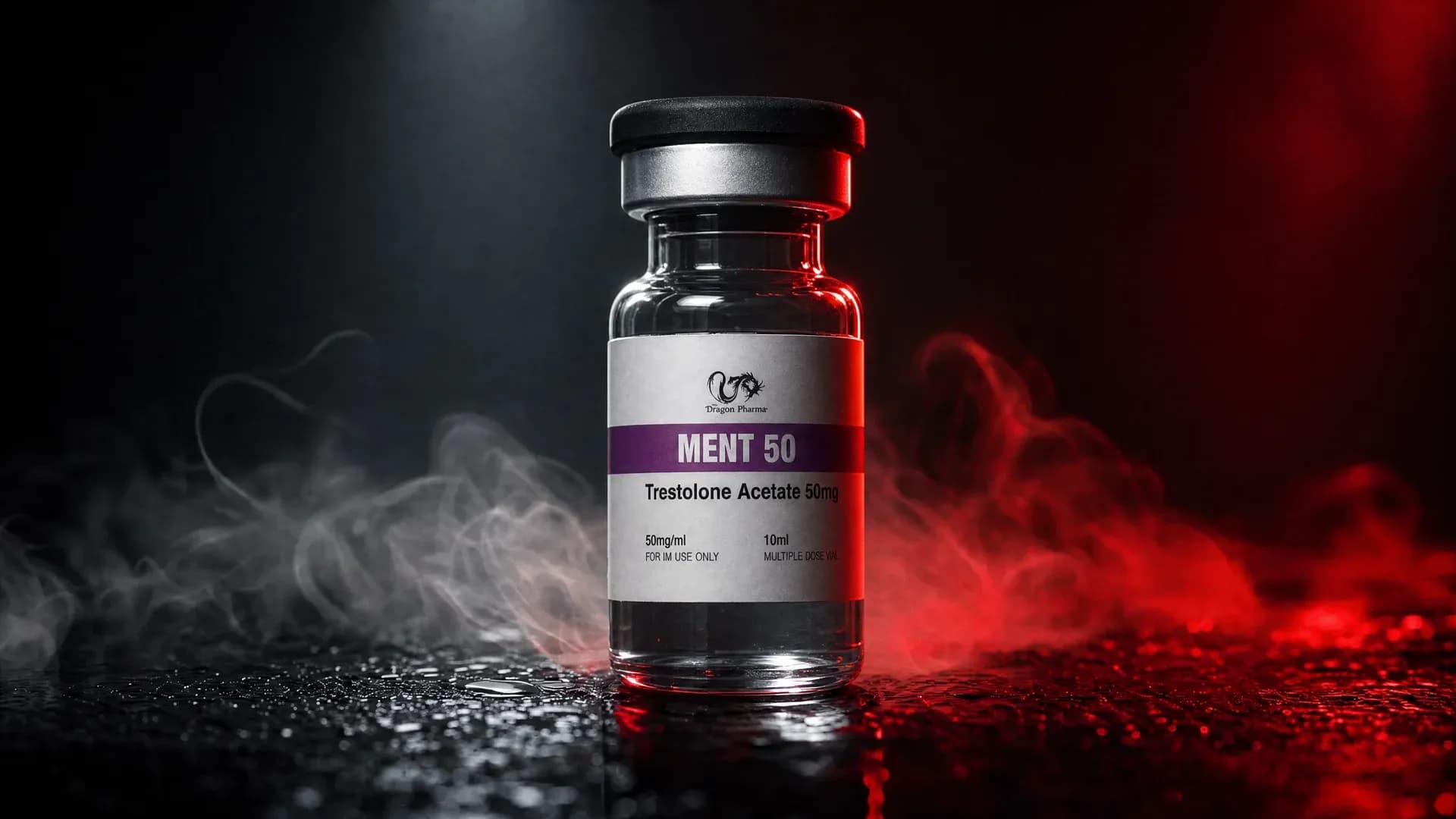
UGL vs Pharma Grade: Purity, Dosing Accuracy, and Risk
Pharma grade steroids come with validated purity and dosing accuracy — UGL products come with neither. Independent lab tests reveal underdosing, wrong compounds, and contamination that turn every cycle into a gamble.
UGL vs Pharma Grade: Purity, Dosing Accuracy, and Risk
TL;DR
- Pharma grade anabolic steroids are manufactured under regulated conditions with validated purity (typically 98%+ active ingredient) and dosing accuracy within roughly ±5% of label claim; underground lab (UGL) products have neither guarantee.
- Independent lab testing of UGL products repeatedly finds underdosing of 20–50%, occasional overdosing, wrong compounds entirely, and contamination with heavy metals, solvents, or bacteria.
- The practical risk difference is largest for injectables: non-sterile oil, incorrect carrier concentrations, and residual solvents can cause abscesses, infections, and systemic reactions that no amount of "good reviews" prevents.
- Dosing inaccuracy compounds every other risk — an underdosed product tempts users to increase volume, while an overdosed or mislabeled one turns a planned 500 mg/week into an unknown exposure.
- Harm reduction means: prefer pharma grade where legally obtainable, verify any UGL product through third-party testing (HPLC analysis), never trust packaging alone, and run bloodwork that would expose a mislabeled or underdosed product.
- No source quality tier eliminates the inherent risks of anabolic steroid use itself — suppression, cardiovascular strain, and haematocrit elevation occur regardless of who brewed the vial.
What "Pharma Grade" and "UGL" Actually Mean
Pharma grade refers to products manufactured by licensed pharmaceutical companies under Good Manufacturing Practice (GMP) regulations. Every batch is produced in controlled facilities, with raw materials tested for identity and purity, sterile fill processes for injectables, and finished-product verification against the label claim. In the EU, these products exist because anabolic steroids have legitimate medical indications — testosterone preparations for hypogonadism, nandrolone historically for anaemia and osteoporosis, oxandrolone for catabolic states. When a pharmacy dispenses a testosterone ampoule, the 250 mg inside is 250 mg within a narrow pharmacopoeial tolerance, in a sterile vehicle, with a traceable batch number.
Underground labs are unlicensed operations producing the same molecules without any of that infrastructure. The category spans an enormous quality range. At the top end are semi-professional operations sourcing tested raw powder, using proper filtration (0.22 µm sterile filters), and submitting samples for third-party analysis. At the bottom end are individuals brewing in kitchens with unverified Chinese raw powder, no sterility controls, and label claims that are marketing rather than measurement. Critically, the packaging tells you nothing: counterfeit holograms, printed batch numbers, and professional-looking boxes cost pennies to produce.
A third category deserves mention: counterfeit pharma grade — UGL products dressed in the branding of real pharmaceutical companies. These carry the risks of UGL production while exploiting the trust the pharma label creates, and they are common enough that "pharma" packaging from a grey-market source should never be taken at face value.
Purity: What Actually Differs Between the Two
Purity has three components, and pharma grade controls all three by regulation while UGL controls none by default.
Active ingredient identity. Is the molecule in the vial actually what the label says? Pharma products are verified; UGL products occasionally are not. Third-party testing programmes — where users submit samples anonymously to analytical labs — have documented cases of boldenone sold as testosterone, one oral steroid substituted for a cheaper one, and vials containing a blend when a single compound was claimed. The substitution logic is economic: some raw powders cost a fraction of others.
Chemical purity of the active ingredient. Even when the molecule is correct, raw powder quality varies. Pharmaceutical-grade raws are typically 98–99%+ pure. UGL raws from grey-market suppliers may carry synthesis byproducts, residual solvents from manufacturing, or heavy metal contamination (lead, arsenic, cadmium have all appeared in tested samples). At the doses used in bodybuilding contexts — often ten or more times therapeutic doses — small contaminant percentages become meaningful exposures over a 12-week cycle.
Microbiological purity. For injectables this is the sharpest dividing line. GMP sterile manufacturing involves validated autoclaving, sterile filtration, aseptic filling, and sterility testing per batch. UGL production at best involves filtering through a syringe filter into sealed vials — a method that reduces but cannot verify sterility. Benzyl alcohol in the oil acts as a bacteriostat, not a guarantee. The documented consequence is a steady stream of injection-site abscesses and, less commonly, systemic infections in user communities.
Quality dimension | Pharma grade (GMP) | UGL (typical range) |
|---|---|---|
Active ingredient identity | Verified per batch | Usually correct at reputable labs; substitutions documented at bad ones |
Chemical purity of API | 98–99%+ | ~85–99%, source-dependent |
Dosing accuracy | ±5% of label claim | Commonly ±20–50%; occasionally far worse |
Sterility (injectables) | Validated and tested | Unknown; filtration at best, nothing at worst |
Heavy metal / solvent residues | Tested, within limits | Occasionally present in tested samples |
Batch traceability | Full | None |
Consistency between batches | High | Variable even within the same lab |
Dosing Accuracy: The Hidden Variable
Dosing accuracy is where UGL risk becomes quietly dangerous, because it corrupts every calculation the user makes. The entire logic of harm-reduction dosing — start at 250–500 mg/week, titrate against bloodwork, keep haematocrit and lipids in range — assumes the number on the label is approximately the number in the vial. Independent analyses of UGL products have found products containing 50% of label claim, and others containing 150%.
Each direction of error fails differently. An underdosed product produces weak results and normal-looking mid-cycle bloodwork, prompting the user to raise the dose or extend the cycle — or to conclude that higher doses "don't work for them," distorting every future decision. An overdosed product produces side effects disproportionate to the planned dose: oestradiol climbing faster than expected, haematocrit rising aggressively, blood pressure drifting up — and the user treats the wrong variable, adding an aromatase inhibitor or cutting a compound that was never the problem.
Mislabeling is worse than either. A vial sold as a mild compound that actually contains a harsher one — or a concentration twice the claim — turns conservative planning into an accidental aggressive cycle. This is one reason trenbolone has an outsized side-effect reputation in some user reports: a portion of those reports likely involve products whose actual content differed from the label.
Among the better-documented UGL brands operating in the European market, products such as 1-Test Cyp 100 100mg/ml 10ml Vial by Dragon-Pharma and Acro-Trenbolone 100mg/ml 10ml Vial by Beligas Pharmaceuticals come from labs with established track records and some community-level third-party testing history — which improves the odds of accurate dosing but does not convert them into regulated pharmaceuticals. The honest framing: reputable UGL is a calculated risk with mitigations, not an equivalent to pharma grade.
Health Risks Specific to Substandard Products
Beyond the inherent risks of anabolic steroids themselves, substandard manufacturing adds a distinct layer:
- Injection-site infections and abscesses. Non-sterile oil or contaminated vials cause localised infections ranging from painful lumps to abscesses requiring surgical drainage. Severe post-injection pain, spreading redness, warmth, or fever after an injection is a medical problem, not "bad PIP."
- Systemic infection. Bacteraemia and sepsis from contaminated injectables are rare but documented, and they are medical emergencies.
- Heavy metal accumulation. Lead and other metals found in some tested raws accumulate with repeated exposure; a user running multiple cycles per year from an untested source has a genuinely unknown cumulative exposure.
- Solvent and excipient reactions. Excessive benzyl alcohol or benzyl benzoate concentrations — used to keep high-concentration products in solution — cause severe post-injection pain, tissue irritation, and in some users systemic reactions. High-concentration products (400 mg/ml and above) are the usual offenders.
- Unknown compound exposure. Taking a substituted compound means taking its side-effect profile blind: its aromatisation behaviour, its hepatotoxicity, its cardiovascular load.
These compound-quality risks sit on top of the pharmacological risks that exist no matter how pure the product is. Supraphysiological androgen use drives haematocrit upward through stimulated erythropoiesis — the management of that, from dose reduction to therapeutic phlebotomy, is covered in detail in High Haematocrit On Steroids Phlebotomy Dose Management Prevention. Blood pressure elevation, HDL suppression, and longer-term cardiac remodelling are similarly source-independent; the monitoring framework for them is laid out in Heart Health On A Steroid Cycle LVH Blood Pressure Cardiology Grade Monitoring. The point worth internalising: switching from UGL to pharma grade removes the manufacturing risk layer and changes none of these.
How to Assess and Mitigate Quality Risk
For users who cannot legally obtain pharma grade, the risk hierarchy of sourcing decisions looks like this:
- Pharma grade from a legitimate pharmacy (in jurisdictions where personal possession is legal with a prescription): the only tier with regulatory guarantees.
- Established UGL brands with third-party testing history: some labs have years of anonymous HPLC results submitted by users through testing services, showing consistent dosing within a plausible tolerance. This is evidence, not proof — a lab can pass ten tests and fail the eleventh batch.
- New or unverified UGL brands: treat label claims as unverified marketing.
- Anything sold as pharma grade through grey-market channels at implausible prices: assume counterfeit until proven otherwise.
Practical verification steps:
- Third-party lab testing. HPLC analysis of a vial costs roughly the price of one to two vials and answers the two questions that matter most: is the compound correct, and is the concentration close to claim? For anyone running multiple cycles per year, periodic testing of each new source or batch is the single highest-value harm-reduction spend available.
- Bloodwork as a dosing audit. Mid-cycle total testosterone is a crude but useful assay: 500 mg/week of accurately dosed testosterone enanthate produces serum levels far above reference range in virtually everyone. A mid-cycle result barely above baseline at that dose means the product is underdosed or fake, regardless of what the label says.
- Physical inspection (weak evidence, still worth doing). Crashed crystals in the vial, unusual colour, floating particles, or oil that refuses to hold solution are reasons to discard, not to filter and inject anyway.
- Sterile technique regardless of source. Alcohol swabs, new needles for drawing and injecting, site rotation — these mitigate technique-caused infections but cannot fix a contaminated product.
The broader market context matters too: injectables carry the sterility problem, while orals carry the substitution problem (cheap compounds sold as expensive ones). The Injectable Steroids category illustrates the range of compounds and concentrations in circulation — and the concentration column on any label is precisely the number third-party testing exists to verify.
Practical Protocol: Sourcing Decision Checklist
Before committing to a cycle from any non-pharmacy source, work through the following:
Step | Action | What it rules out |
|---|---|---|
1 | Research the lab's testing history (independent HPLC results, not lab-published COAs) | Labs with documented underdosing or substitutions |
2 | Verify batch consistency across multiple tests and dates | One good batch used as marketing cover |
3 | Run baseline bloodwork before the first injection | Establishes the reference point for the dosing audit |
4 | Mid-cycle bloodwork: total T, E2 sensitive, lipids, haematocrit | Underdosed/fake product, unexpected E2 behaviour |
5 | Test any new source or new batch with HPLC before a full cycle | Batch-to-batch variability |
6 | Inspect each vial; discard anything with particles, crystals, or discoloration | Grossly failed products |
7 | Track injection reactions; escalating PIP across a vial suggests solvent/excipient problems | Excessive BA/BB or contamination |
8 | Post-cycle bloodwork to confirm recovery | Completes the monitoring loop |
None of these steps makes UGL use safe; each one removes a specific, identifiable failure mode. Skipping all of them means accepting every failure mode simultaneously.
FAQ
Is UGL gear always underdosed?
No — that is too simple. Testing programmes have found reputable UGL products within 10% of label claim and bad actors at 50% or less, sometimes from the same product line in different batches. The accurate statement is that UGL dosing is unverified, not universally low. Some products are even overdosed, which is its own problem. Without third-party HPLC data on the specific batch in your hands, the honest position is "unknown," and your bloodwork should be planned around that uncertainty.
Can I tell if a vial is legit by how it looks or how the injections feel?
No. Professional counterfeiting has made packaging — holograms, batch codes, verification stickers — nearly worthless as evidence; fake verification websites exist for exactly this purpose. Post-injection pain is equally unreliable: smooth injections can come from underdosed oil, and painful ones from high solvent concentrations in a technically "legit" product. The only meaningful verifications are laboratory analysis of the vial and bloodwork that shows whether your serum levels match the claimed dose.
Is pharma grade worth the extra cost compared to a reputable UGL?
If pharma grade is legally accessible to you, the premium buys certainty on identity, dose, and sterility — the three variables that most often go wrong underground. That said, cost pressure is real, and many users accept reputable, well-tested UGL as a reasonable middle ground. What is not reasonable is paying pharma prices for grey-market "pharma" products without verifying authenticity: counterfeit pharma packaging is common precisely because the margin is attractive.
What is third-party testing and how do I actually do it?
Independent analytical services accept anonymous samples and run HPLC (and sometimes mass spectrometry) to identify the compound and measure its concentration. You send a small amount of oil or a tablet fragment and receive a result typically within one to two weeks. Costs are modest relative to a cycle's total spend. The limitation: one test covers one batch from one vial, so it validates a source at a point in time rather than permanently. Periodic re-testing, especially when changing suppliers, is the standard that actually reduces risk.
Does using pharma grade eliminate the health risks of steroids?
No — it eliminates the manufacturing risks and nothing else. Suppression of natural testosterone, oestradiol management, HDL suppression, haematocrit elevation, blood pressure load, and long-term cardiac effects are properties of the molecules themselves at supraphysiological doses. A perfectly pure 500 mg/week cycle still requires bloodwork, still needs PCT planning, and still carries cardiovascular cost. Source quality and pharmacological risk are two separate problems; solving one leaves the other fully intact.
Are orals or injectables riskier from UGL sources?
They fail differently. Injectables carry the sterility risk — contamination can cause abscesses and systemic infection, which is why injectable sourcing deserves the most scrutiny. Orals avoid the infection route but are the more common target for outright substitution, because cheap raw compounds can be pressed into tablets sold as expensive ones, and some substituted orals are significantly more hepatotoxic than what was purchased. If forced to prioritise testing budget, verify injectables for sterility proxies (source reputation) and orals for identity via HPLC.
Conclusion
The UGL versus pharma grade question is really a question about how much uncertainty you are willing to carry into a decision that already involves meaningful physiological risk. Pharma grade, where legally obtainable, closes the manufacturing risk layer: verified identity, verified dose, verified sterility. Reputable UGL narrows that gap through testing history and consistency, but never closes it — batch variability and the absence of regulation are structural, not reputational. And at the bottom of the market, counterfeit "pharma" products combine UGL manufacturing with false confidence, the worst of both options.
The harm-reduction position is straightforward. Prefer regulated sources where the law allows. Where it does not, treat every label claim as unverified until HPLC testing and mid-cycle bloodwork say otherwise — total testosterone mid-cycle is itself a rough assay of whether the vial contains what it claims. Maintain bloodwork discipline across the full cycle: baseline, mid-cycle (hormones, E2, lipids, haematocrit), and post-PCT recovery markers. And hold both truths at once: source quality determines your exposure to contamination and dosing error, but no tier of quality protects you from the compounds themselves. Suppression, cardiovascular strain, and haematological drift occur in a pharmacy ampoule exactly as they do in an underground vial.
Anyone unwilling to accept residual uncertainty about what is in the vial, or unable to access bloodwork to audit it, should not be running underground products at all — and anyone unable to commit to monitoring should not be running a cycle from any source. The vial you can verify is worth more than the cycle you cannot.