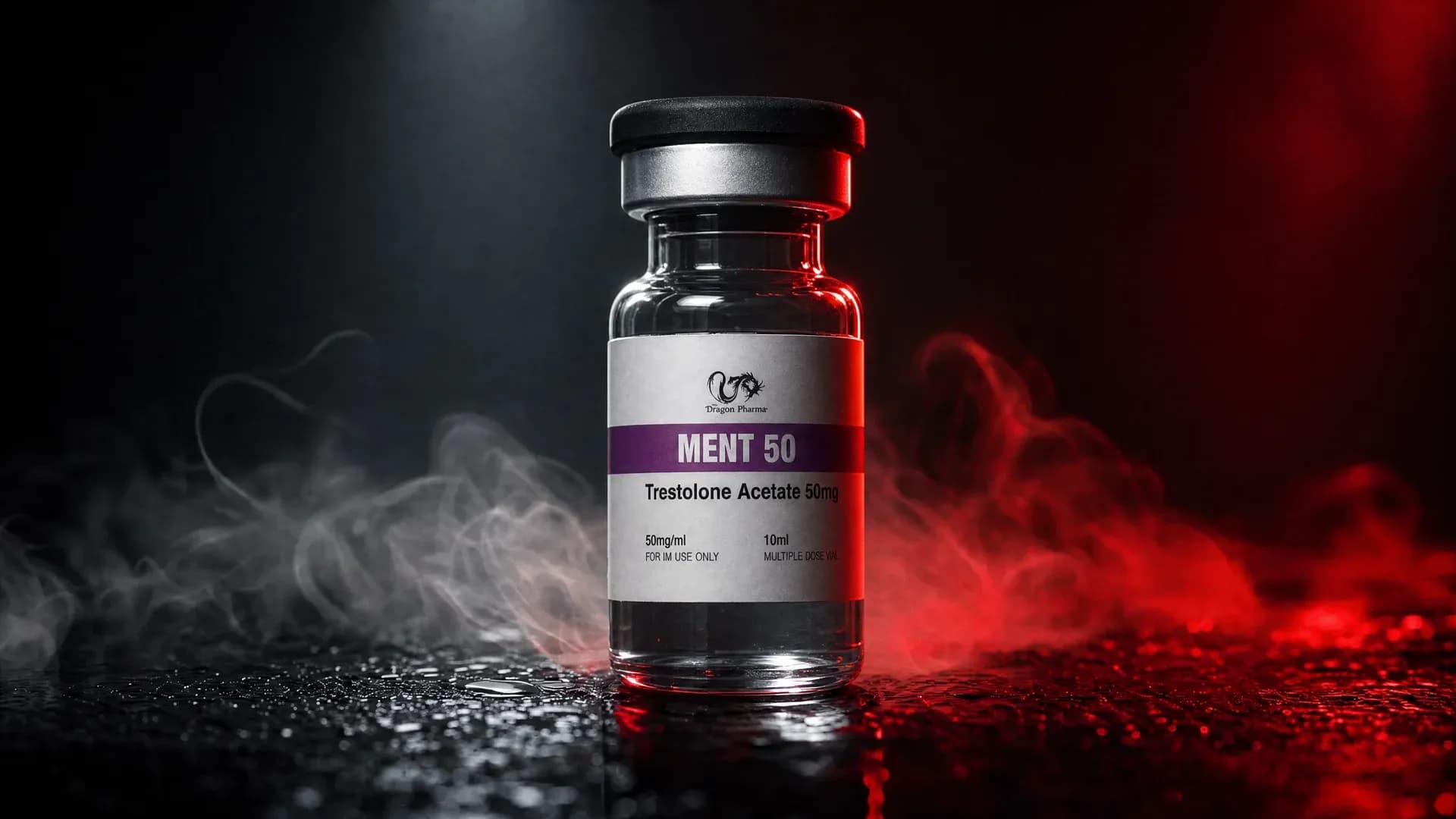
How to Spot Fake Steroids: Packaging, Verification Codes, Lab Tests
Counterfeit and underdosed steroids flood the grey market. Learn how to spot fakes through packaging red flags, official verification codes, lab testing, and bloodwork before you inject anything.
How to Spot Fake Steroids: Packaging, Verification Codes, Lab Tests
TL;DR
- Counterfeit and underdosed anabolic steroids are widespread on the grey market; assume any product needs verification before you inject it, not after you suspect something.
- Packaging tells you a lot: blurry printing, spelling errors, inconsistent fonts, missing batch numbers, and sloppy seals are classic counterfeit giveaways.
- Scratch-off verification codes checked on the manufacturer's official website — typed in manually, not via a QR link from the box — are the strongest first-line check.
- Colour reagent test kits identify whether a compound is present, but not its purity or concentration; only HPLC/mass spectrometry testing quantifies what's actually in the vial.
- Bloodwork is the final verification layer: mid-cycle total testosterone well above reference range confirms an injectable test product is real and dosed.
- The cheapest counterfeit insurance is buying from sources that publish batch verification and third-party lab results — and never buying based on price alone.
How Big the Counterfeit Problem Actually Is
The unregulated market for anabolic steroids is one of the most counterfeited categories of any consumer product. Analyses of seized and voluntarily submitted samples across Europe consistently find that a substantial share of grey-market products are either underdosed, contain a different compound than the label claims, are contaminated, or contain nothing active at all. Testosterone enanthate and nandrolone decanoate are among the most frequently faked injectables; oxandrolone (anavar) is the most commonly substituted oral, because it is expensive to produce and easy to replace with cheaper compounds like methandienone or stanozolol.
The risk profile falls into three tiers. Best case, an underdosed product wastes your money and blunts your cycle. Middle case, a substituted compound delivers side effects you never planned for — progestogenic activity from a hidden nandrolone, hepatotoxicity from an unlisted oral. Worst case, unsterile or contaminated oil causes abscesses, systemic infection, or heavy-metal exposure. That last tier is rare but documented, and it is the reason verification is a health practice, not just a consumer one.
The mindset shift that matters: on a regulated market, the pharmacy vouches for the product. On the grey market, nothing vouches for it except checks you perform yourself.
Reading the Packaging: What to Examine Before Anything Else
Counterfeiters copy labels, but they rarely copy manufacturing quality. Lay the product under good light and work through it systematically:
Feature | Genuine product | Common counterfeit tells |
|---|---|---|
Print quality | Sharp text, consistent font weight | Blurry edges, pixelated logos, uneven ink |
Spelling/grammar | Clean, consistent language | Typos, odd phrasing, mixed languages |
Batch number + expiry | Printed or laser-etched, matches box and vial | Missing, smudged, stickered over, or identical across many boxes |
Hologram/security seal | Crisp, multi-layered, hard to peel intact | Flat printed "hologram," loose or resealable seals |
Crimp cap (vials) | Evenly crimped aluminium, centred | Crooked crimp, tool marks, loose cap |
Rubber stopper | Uniform colour, no puncture marks | Discoloured, pre-punctured, or crumbly |
Label adhesion | Flush, no bubbles, straight | Peeling corners, bubbles, misaligned wrap |
Oil appearance | Clear to slightly yellow, no particles | Cloudy, floating particles, crystallisation at room temp |
A few points deserve emphasis. Batch numbers should be unique per production run — if you find forum posts or photos showing your exact batch code on boxes sold months apart, treat that as a red flag. Crystallisation (visible "crash") in a vial is not automatically proof of a fake — high-concentration preparations can crash in cold storage and often re-dissolve with gentle warming — but combined with any packaging flaw, it stacks the evidence. Cloudiness or particles that persist after warming, however, are a hard stop: do not inject, regardless of what the source tells you.
Cross-reference visually. Most established underground and pharmaceutical-grade brands have extensive photo documentation online. Compare font, label layout, cap colour, and box dimensions against multiple independent photos, not just the seller's own listing.
Verification Codes and Manufacturer Checks
Many producers — both pharmaceutical companies and larger grey-market labs — now ship products with anti-counterfeit systems. The typical format is a scratch-off panel on the box revealing an alphanumeric code, which you enter on the manufacturer's official verification page. The response tells you whether the code exists and, critically, how many times it has been queried. A code that has been checked hundreds of times is a cloned code: counterfeiters buy one genuine box and print its code on thousands of fakes.
The correct procedure matters more than the existence of the system:
- Find the manufacturer's URL independently — through a search engine or the brand's known official domain — and type it in yourself. Never follow a QR code or shortened link printed on the packaging, because counterfeiters print their own fake verification pages that "confirm" anything.
- Enter the code exactly as printed and note both results: valid/invalid, and query count.
- Check domain age and consistency. A verification page on a domain registered three months ago, or one that validates obviously fake test strings, is decoration, not security.
This applies beyond steroids. Stimulant and peptide products face the same counterfeiting pressure — a product like DMAA Rapid 50mg – Knoll Pharmaceuticals | 30 Tablets ships with exactly this kind of manufacturer verification, and the same discipline of typing the official address manually applies. Likewise, peptide vials such as Glutathione are prime counterfeit targets because lyophilised powder is visually anonymous — white powder in a crimped vial could be anything, which makes the batch-code check the only meaningful pre-use verification for that product class.
Verification codes have limits. They confirm that a box matches a code in a database — not that the lab's database is honest, and not that the oil inside is what the label says. Treat a passed code check as one layer, not as clearance.
Lab Testing: From Colour Reagents to HPLC
If packaging and codes are the first line of defence, chemical testing is the second — and the only layer that examines the substance itself.
Colour reagent kits are the accessible option. You place a drop of oil or a fragment of tablet into an ampoule of reagent; the resulting colour change indicates the presence of a specific compound class. They answer one question well — "is compound X present at all?" — and answer it for a few euros. Their blind spots are equally important: they cannot measure concentration (a 50% underdosed product passes), they struggle with blends, and oils and excipients can distort colours. Test kits, storage accessories, and related equipment are typically found alongside other harm-reduction supplies in categories like Accessories Other.
Laboratory analysis answers the questions reagents cannot. Harm-reduction organisations in several European countries operate drug-checking services that accept anonymous samples; some private labs offer paid analysis. The methods differ in what they deliver:
Method | What it tells you | Cost/access | Limitation |
|---|---|---|---|
Colour reagent kit | Compound present (yes/no) | Cheap, at home | No purity, no concentration |
HPLC | Identifies and quantifies the active compound | Lab submission, moderate cost | Requires a reference standard |
GC-MS / LC-MS | Full identification incl. unexpected contaminants | Lab submission, higher cost | Expensive; turnaround in days–weeks |
A quantitative HPLC result stating "testosterone enanthate: 243 mg/ml against a labelled 250 mg/ml" is the gold standard of grey-market verification — this is exactly what community-funded testing programmes publish, and checking whether your brand and batch appear in published test results is free. If your batch has been tested by anyone and failed, that information usually circulates; a brand with zero third-party results anywhere is a brand you are testing with your own body.
What the Product Does in Your Body: Bloodwork as Detection
The last verification layer is pharmacological: real, correctly dosed compounds produce measurable effects, and blood tests measure them.
The cleanest case is injectable testosterone. On 500 mg/week of genuine enanthate, mid-cycle total testosterone should sit well above the top of the reference range — typically several times the upper limit. If week-6 bloodwork shows total testosterone within or barely above the natural range, the product is underdosed, fake, or your pinning schedule is broken. This is one of the core reasons mid-cycle bloodwork is non-negotiable, and the full marker list — total and free testosterone, oestradiol, lipids, liver enzymes, haematocrit — is laid out in Blood Tests On A Steroid Cycle 12 KEY Markers Reference Values.
The inverse problem is just as diagnostic. An unexpectedly extreme response can indicate overdosing or substitution: if your haematocrit climbs far faster than your dose and history would predict, the vial may contain more than the label claims or a harsher compound entirely. Managing that situation — phlebotomy thresholds, dose adjustment, prevention — is covered in High Haematocrit On Steroids Phlebotomy Dose Management Prevention.
Non-laboratory signals contribute, but weakly. Strength gains, libido changes, and pumps are too placebo-sensitive to verify anything. Two physical signals carry more weight: persistent, worsening injection-site reactions (heat, spreading redness, fever — stop and seek medical care, as this suggests unsterile oil) and side effects that don't match the labelled compound's profile, such as lactation or severe bloating on a product sold as plain testosterone.
Reducing Your Risk Before You Buy
Verification after purchase is damage control; source selection is prevention. The practical hierarchy:
- Prefer sources that support independent testing — vendors who welcome community testing and whose batches appear in published lab results with passing grades.
- Be suspicious of prices far below market. Raw material costs set a floor; an oxandrolone priced like methandienone is probably methandienone.
- Avoid repackaged or "loose" products — no box, no batch number, no seal means nothing to verify.
- Check brand reputation longitudinally. A lab with five years of consistent community test results is a different risk class from a brand that appeared last month with aggressive marketing.
- Buy small first. A single vial tested via reagent kit or a bloodwork-confirmed trial cycle is cheaper than ten vials of fake oil.
- Never inject product you haven't inspected — clear oil, intact crimp, valid batch code, every time, even from a trusted source. Batches vary; trust does not.
FAQ
Can a verification code still be fake if the website confirms it?
Yes. Counterfeiters copy genuine codes onto fake products, and some print QR codes linking to counterfeit verification pages that approve everything. Check the query count the system reports — a code verified hundreds of times is cloned — and always reach the manufacturer's site by typing the official address yourself, never via packaging links. A valid code is one positive signal, not proof of what's inside the vial.
Are colour reagent test kits reliable enough to trust?
They are reliable for one narrow question: is the claimed compound present at all? They cannot tell you the concentration, so an underdosed product passes, and they can be fooled by blends or interfering carrier oils. Use them as a cheap first screen — a negative result (wrong colour, no reaction) is a strong reason to discard the product — but treat a positive result as "contains something like the label," not "correctly dosed."
What are the most obvious visual signs of a counterfeit vial?
The highest-yield checks: blurry or pixelated label printing, spelling errors, a batch number missing or printed as a generic sticker, a crooked or loose aluminium crimp cap, a discoloured or pre-punctured rubber stopper, and oil that is cloudy or contains particles that don't dissolve with gentle warming. Any one of these warrants serious doubt; two or more together mean the product should not be injected regardless of source assurances.
Can bloodwork really tell me if my gear is fake?
For injectable testosterone, yes, quite directly. After several weeks at a known dose, total testosterone should be far above the natural reference range — if it isn't, the product is fake or severely underdosed. For other compounds the signal is indirect: oestradiol, lipids, haematocrit, and liver enzymes move in compound-specific ways, and responses that are absent or wildly disproportionate to the dose suggest substitution or misdosing. Bloodwork can't identify a compound, but it catches failures.
Is cloudy or crystallised oil always a sign of a fake?
No. Crystallisation ("crashing") happens in legitimate high-concentration preparations, especially in cold storage, and usually resolves when the vial is warmed gently in warm water and swirled. Cloudiness or particles that persist after warming are different — that suggests contamination or precipitation of something that shouldn't be there. Crashing alone is neutral; crashing combined with packaging flaws or failed verification is damning.
What should I do if I discover my product is fake?
Stop using it immediately and do not inject "just to finish the vial." If you have already used it and feel unwell — fever, spreading injection-site redness, unusual symptoms — seek medical care and be honest about what you injected; clinicians cannot treat what they don't know. Report the batch to community testing databases so others are warned, and run bloodwork to establish where your hormones, lipids, and haematocrit actually stand after exposure to an unknown substance.
Conclusion
Counterfeit steroids are not a fringe risk — they are a structural feature of an unregulated market, and every layer of the chain, from the seller to the label, has an incentive to deceive you. The realistic defence is layered: inspect the packaging like a forensic examiner, verify batch codes on the manufacturer's real website with manual URL entry, screen the contents with a reagent kit or lab analysis where possible, and confirm the pharmacology with mid-cycle bloodwork. No single check is sufficient; together they filter out the large majority of dangerous product.
The harm-reduction bottom line stands independent of any of this: anabolic steroids suppress your natural hormone production, strain lipids, blood pressure, and haematocrit, and carry real risks even when the product is genuine and correctly dosed. Nobody under roughly 25, nobody with abnormal baseline bloodwork, uncontrolled hypertension, or no access to monitoring should be using them at all — and nobody who cannot commit to baseline, mid-cycle, and post-PCT blood draws has any business injecting anything, verified or not. If a product fails your checks, the correct move is to discard it, not to gamble. If your budget only stretches to gear but not to blood tests, that is the market telling you the cycle is not affordable yet.