Androgen Receptor Tolerance: The Pharmacological Case for Structured Cycles
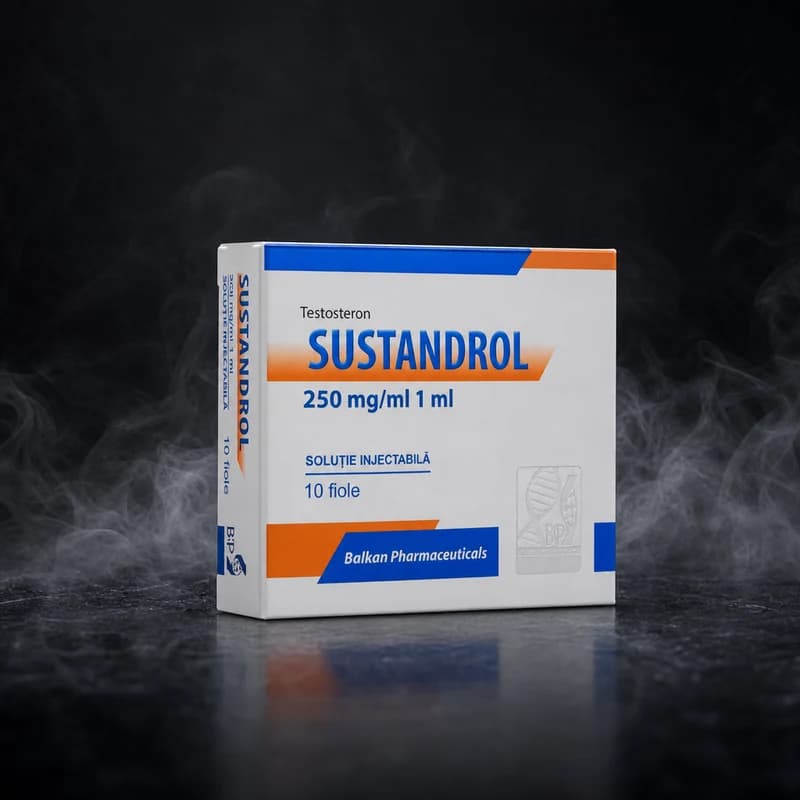
Imperia Laboratories Sustanon 250mg/ml is a multi-ester injectable testosterone preparation whose prolonged androgenic exposure profile makes androgen receptor (AR) downregulation — not mere habituation — the scientifically correct framework for understanding why cycle boundaries exist. When supraphysiological testosterone concentrations are maintained continuously, skeletal muscle cells reduce cell-surface AR density through a ligand-induced internalization process; this is receptor desensitization in the clinical sense, not a colloquial tolerance concept. Studies using radioligand binding assays have demonstrated that AR density in rodent and human muscle tissue decreases measurably after sustained androgen exposure, with recovery commencing once the androgenic stimulus is withdrawn.
How the Four-Ester Profile Relates to Receptor Occupancy
The testosterone mix in Imperia Sustanon contains propionate, phenylpropionate, isocaproate, and decanoate esters, each occupying a distinct pharmacokinetic window that collectively maintains elevated serum testosterone for up to 21 days from a single administration. This continuous receptor occupancy is both the product's therapeutic advantage and the physiological reason that prolonged, unbroken use accelerates downregulation compared to protocols with intermittent exposure windows. Compared to single short-ester testosterone products, which generate pronounced peak-trough cycling, the sustained plateau created by this blend produces more consistent AR occupancy — a double-edged pharmacodynamic reality that underscores the importance of structured off-periods.
Single-Dose Ampoules and Analytical Quality
Each 1ml ampoule in the Imperia 10-ampoule carton is terminally sealed and sterility-verified as an individual unit, removing cross-contamination variables that arise from multi-use vial puncture. Reversed-phase HPLC quantification confirms that testosterone ester content meets the declared 250mg/ml specification at batch release; an LAL (Limulus Amebocyte Lysate) endotoxin assay provides independent pyrogenicity clearance. These two analytical gates — HPLC and LAL — represent the minimum quality standard Imperia applies before any production lot is released to distribution.
Dosing Frequency and Receptor Recovery
Recognizing the decanoate fraction's extended terminal half-life — approximately 15 days — is essential when calculating receptor recovery windows at the end of a cycle. Practitioners focused on AR sensitivity preservation typically allow a clearance interval calibrated to that longest-acting ester before initiating PCT, allowing endogenous LH and FSH to resume stimulation of now-recovering Leydig cells. Androgen receptor re-sensitization at the target tissue level is the biological objective of the inter-cycle break, and the decanoate-dominated clearance curve from Sustanon sets the minimum timeline for that recovery to occur meaningfully.

 GMP Standard