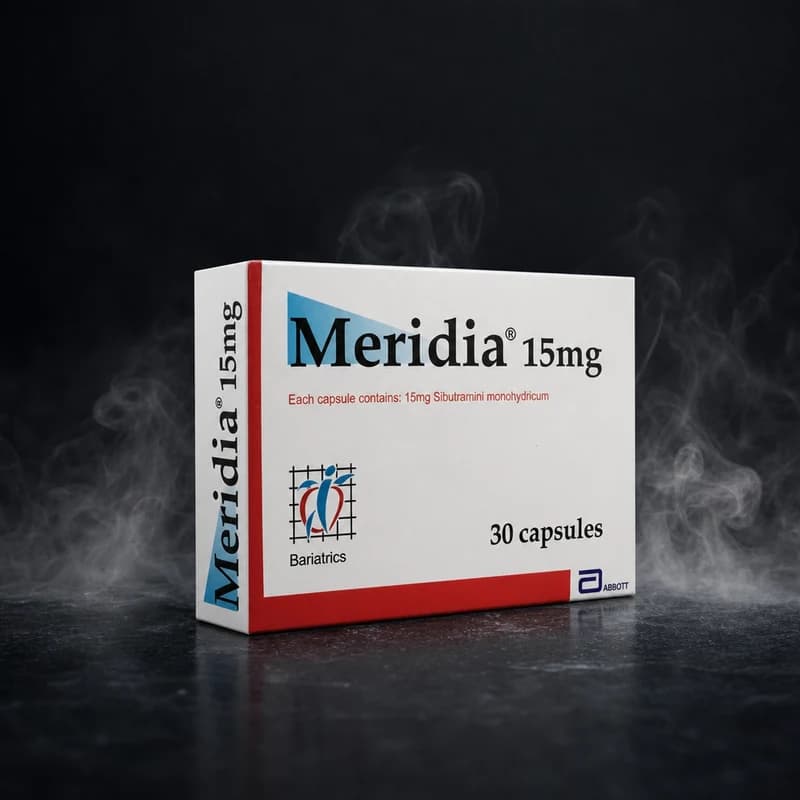
contraindications: Established coronary artery disease, arrhythmia, or uncontrolled hypertension — Sibutramine raises sympathetic tone and is incompatible with pre-existing cardiovascular pathology.
Concurrent use of MAO inhibitors or other serotonergic agents (SSRIs, SNRIs) due to serotonin syndrome risk.
History of eating disorders, psychiatric conditions managed with monoaminergic medications, or closed-angle glaucoma.
Pregnancy, breastfeeding, or individuals under 18 years of age.
side_effects: Elevated resting heart rate — the most commonly reported effect; requires weekly self-monitoring.
Dry mouth, headache, and constipation during the first two weeks of use in a subset of users.
Insomnia or reduced sleep quality if the dose is taken after early afternoon.
Mild elevation in blood pressure; typically dose-dependent and reversible on cessation.
monitoring: Measure and record resting heart rate and seated blood pressure at least twice per week throughout the protocol.
Obtain a baseline lipid panel and repeat at the end of the protocol cycle to detect any diet-plus-compound-driven shifts in LDL or HDL.
If systolic blood pressure rises more than 10 mmHg above personal baseline on two separate readings, discontinue and consult a physician.
pct: Sibutramine does not suppress the hypothalamic-pituitary-gonadal axis; formal post-cycle therapy targeting testosterone recovery is not required.
A structured off-period following the 30-tablet protocol allows adrenergic receptor sensitivity to normalize before any repeat exposure is considered.

 Lab Tested