Chlordehydromethyltestosterone and the Stack-Compatibility Problem
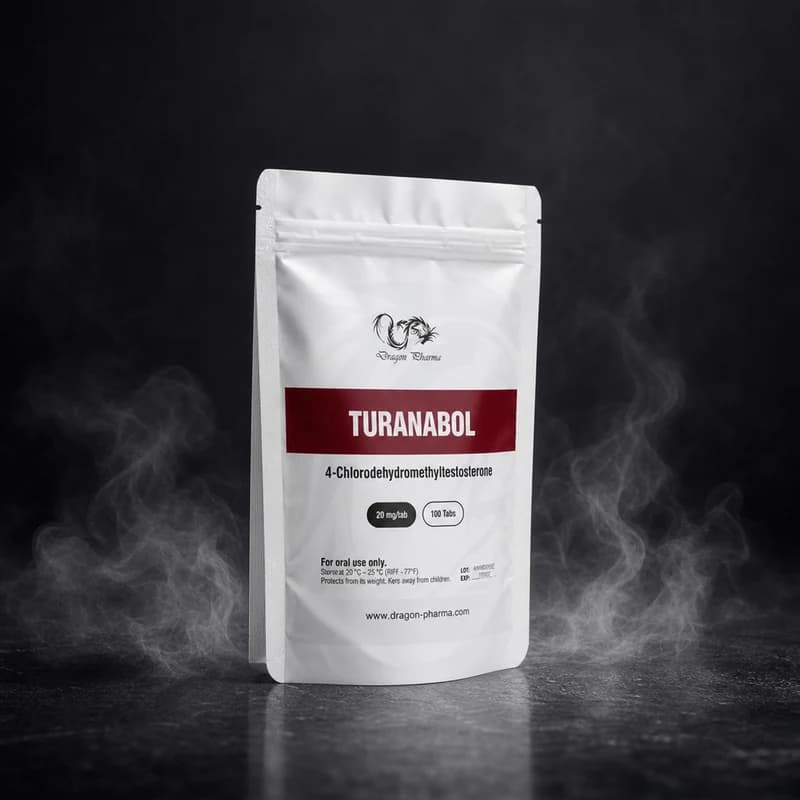
Para Pharma Turinabol 20 is a 17α-alkylated oral anabolic compound delivering Chlordehydromethyltestosterone at 20 mg per tablet — the highest discrete tablet strength in its product class — positioned specifically for athletes who need to audit their stack for unfavorable pairings before the first dose is administered. Identifying dangerous combinations is not a peripheral concern: hepatic enzyme load, cardiovascular strain, and HPG-axis suppression depth are each compound-additive, meaning that poor stack selection converts a manageable compound into a serious clinical risk. Chlordehydromethyltestosterone itself carries measurable hepatic exposure due to 17α-alkylation, and that exposure accumulates when co-administered with other hepatotoxic agents.
Combinations That Amplify Hepatic Risk
Stacking Turinabol with any second 17α-alkylated oral anabolic — Oxandrolone, Stanozolol, or Oxymetholone — produces additive ALT and AST elevation because each alkylated compound imposes an independent hepatic metabolic burden. Clinical hepatology literature documents that concurrent dual-alkylated oral exposure raises transaminase values non-linearly rather than in simple arithmetic proportion, meaning that combining two alkylated agents at individually tolerable doses can produce an enzyme profile that warrants discontinuation. Para Pharma's 20 mg tablet strength allows practitioners to reduce Turinabol dose precisely — in single-tablet steps — when a stack architecture unavoidably includes a second oral compound, limiting cumulative hepatic signal without abandoning the compound entirely.
Cardiovascular and Hormonal Incompatibilities
Chlordehydromethyltestosterone suppresses HDL cholesterol through hepatic lipase upregulation, an effect documented by equilibrium gradient ultracentrifugation in controlled androgen-exposure studies. Combining Turinabol with high-dose 19-nor compounds — Nandrolone or Trenbolone — compounds this cardiovascular liability because 19-nor androgens independently reduce HDL through separate lipase-mediated pathways, creating a dual-mechanism HDL suppression that exceeds either compound's individual contribution. Compared to Turinabol paired with a standard testosterone ester, the Turinabol-plus-19-nor combination produces a measurably more adverse LDL/HDL ratio as indexed by direct enzymatic lipid panel methodology. Additionally, combining Turinabol with a non-aromatising injectable at the exclusion of any exogenous estrogen source risks joint lubrication deficits and libido disruption through estrogenic insufficiency, a hormonal incompatibility practitioners frequently underestimate.
Para Pharma Manufacturing and Batch Verification
Para Pharma's tablet dissolution programme for Turinabol 20 addresses a specific formulation variable at the 20 mg strength level: that disintegrant-to-API ratio must be engineered to deliver consistent in-vitro dissolution profiles across the full 100-tablet compression run, not only at batch midpoint sampling. Excipient specification — microcrystalline cellulose as primary filler, a controlled-release disintegrant, and magnesium stearate within validated lubricant-phase tolerances — is fixed prior to compression and verified against USP dissolution method II (paddle apparatus) at 50 rpm in phosphate buffer. HPLC content-uniformity data are recorded per unit across the run, and finished-goods release requires both assay compliance and dissolution profile confirmation before lot dispatch.

 Lab Tested